


Chemicals
What are forever chemicals?
Forever chemicals, or PFAS (per- and poly- fluoroalkyl substances), are a group of several thousand chemicals that are polluting our ocean. The name ‘forever chemicals’ comes from the fact that they remain in the environment without breaking down for generations, if ever. Forever chemicals are essentially impossible to remove once they enter the environment.
Where are forever chemicals found?
Forever chemicals can be found all around us, including in the products we likely use every day. It might be easier to ask, “Where aren’t forever chemicals found?” instead!
Here are some household items which often contain forever chemicals:
- Some cosmetics
- Firefighting foam
- Non-stick pans
- Paints and dyes
- Takeaway food containers like pizza boxes
- Waterproof clothing and shoes
Forever chemicals can give items both waterproof and greaseproof properties. They can also withstand a lot of heat. However, the characteristics that make them so valuable in manufacturing are also what makes them such a threat to nature: they are incredibly long-lasting, and do not break down.
How do forever chemicals end up in our ocean?
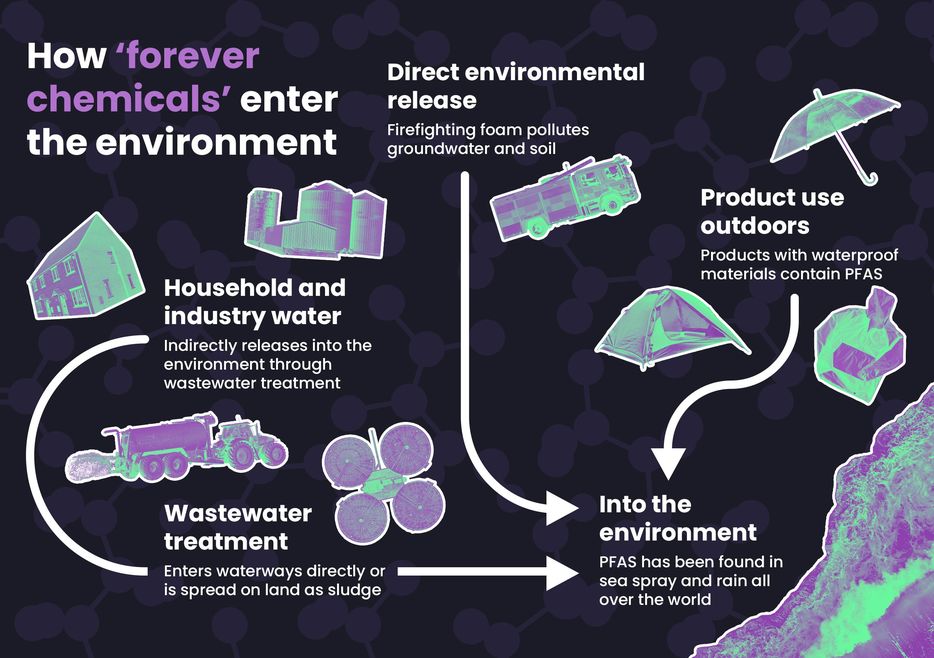
There are many routes for forever chemicals into the environment. For example, firefighting foam can be directly released into the environment, and household cleaning products and cosmetics containing forever chemicals can be washed down the drain.
Forever chemicals can move in water very easily. As a result, they’ve been found in rivers, seawater and even drinking water. Water treatment plants are currently unable to effectively remove forever chemicals. In fact, forever chemicals are so pervasive that they can now be found in all sources of water on Earth including the polar regions, miles from any industrial or consumer behaviour involving them.
A map of UK PFAS pollution in wildlife was published by Watershed Investigations, the Marine Conservation Society and the Guardian, identifying official data on more than 1,000 animals to reveal widespread contamination. This illustrates the scale and severity of the problem, underscoring the desperate need for action.
The problem with forever chemicals
The environment needs to be protected from the threat of forever chemicals. The sheer extent of their uses and occurrence in everyday products makes them a formidable foe. Once they’re in the environment, they wreak havoc on some of our most beloved species.
Forever chemical exposure has:
- Been linked to impacts on immune, blood, liver and kidney function in bottlenose dolphins.
- Been shown to damage immune function in sea otters.
- Been linked to neurological impacts in polar bears, which could impact behaviours from searching for food to mating.
And that's not all:
- High levels of forever chemicals in marine birds are correlated with disruption of the thyroid hormone and poorer body conditions.
- Forever chemicals have been shown to disrupt reproduction, thyroid activity, metabolism and development in fish.
- Forever chemicals have been shown to pass from sea birds to their eggs, pre-polluting their offspring before they’ve hatched.
What needs to be done
We urgently need to move towards a PFAS-free economy by stopping PFAS forever chemicals at source. We want to see all PFAS banned from all uses where there are alternatives, including things like firefighting foams and consumer uses. This has already been achieved in other countries: Denmark, France and some states in the USA have banned (or are in the process of banning) consumer uses of PFAS like waterproof clothing, cosmetics and food packaging.
Our YouGov survey showed that:
94
%
of UK water firms showed PFAS detected at source
68
%
of the UK public are concerned about the impact of PFAS on the environment
57
%
of the UK support a Government ban on PFAS where alternatives are available
Discover more findings from our YouGov survey on forever chemicals.
We need people to be aware of these chemicals and understand their impact so that they can add to our outrage and call for better protections.
Dr Francesca Ginley, Chemicals Policy and Advocacy Manager at the Marine Conservation Society
What we're doing
Our goal is to stop the continued impact of forever chemicals on our marine environment and the wildlife that lives there.
To do this, we’re continually researching the presence of forever chemicals in the marine environment and the impacts they’re having. We’re also working to raise awareness of forever chemicals and demanding for legislative change. For example, we’re working with other NGO’s (CHEM Trust, Fidra and Wildlife and Countryside Link) to conduct roundtable discussions with Ministers and regulators, which feed into consultations and amplifying our different campaigns.
We continue to call for the Government to urgently move towards a PFAS-free economy, starting by banning the use of all PFAS forever chemicals in uses where there are alternatives, and asking businesses to remove forever chemicals from their products.
Our successes so far
We won’t stop campaigning until our oceans are safe from forever chemicals. This year, we’re planning more action than ever to help save our seas. Keep your eyes peeled for more updates.
What you can do
It’s not feasible for the public to completely avoid forever chemicals in the products they purchase. Finding out which products contain forever chemicals and sourcing suitable alternatives would be incredibly difficult. Action needs to come from the top.
Help us demand the changes that will stop forever chemicals ever reaching the sea. If you want to do more, we need your help to spread the word. Talk to your friends, family and colleagues about forever chemicals.
You might also like

Forever chemicals: what are they?
Many of us are becoming increasingly aware of the use of ‘forever chemicals' in everyday products. But why do manufacturers choose to use these harmful chemicals and where can they be found?

The problem with forever chemicals
Our protected waters are not protected from chemical pollution - instead, these vulnerable and vital habitats and species are at risk. We must act now to truly safeguard these priority areas.
Campaigns
For over 40 years, we’ve been campaigning tirelessly to secure protections, bans and commitments from governments across the UK to restore the health of our marine environment.

