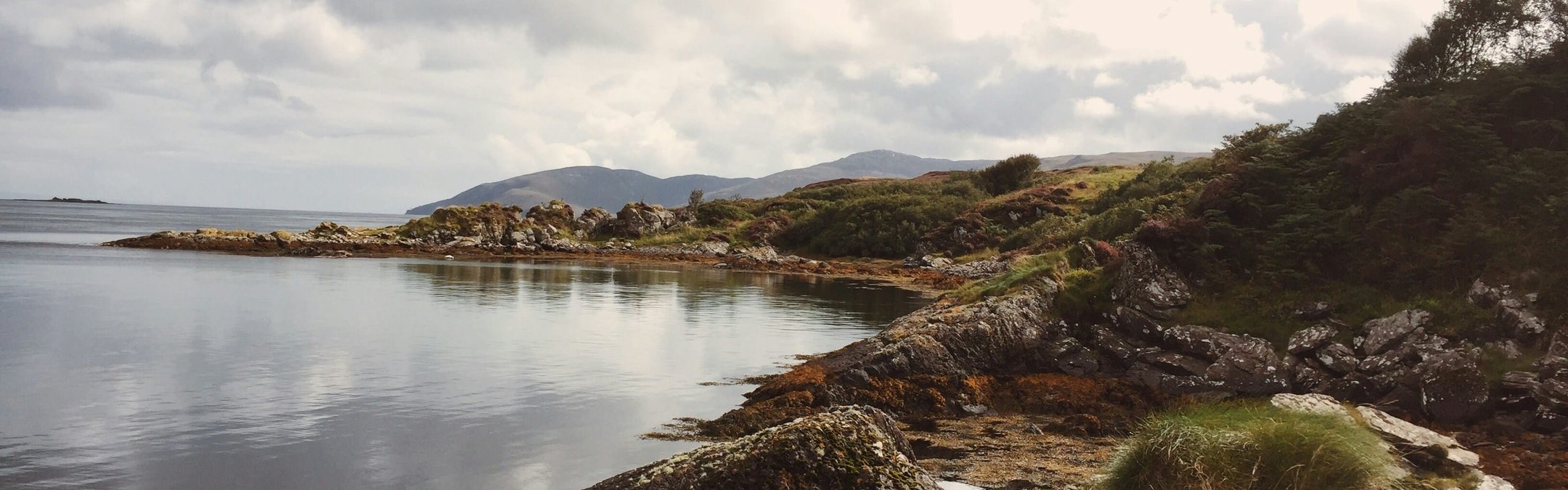
For many of us living inland, the sea can often feel out of sight and out of mind. But our behaviour is having a harmful impact on the sea. It’s time for a change. It’s time to reconnect with the sea, learn all that it has to offer us, and what we can offer in return.
What is the Scottish Seas Roadshow?
Thanks to funding from the National Lottery Heritage Fund, between April 2026 and April 2029, we'll be working closely with a broad range of communities across Scotland, including remote, rural and inland populations to grow ocean literacy and raise participation in volunteering for 8,000 people across the region.
What we will do?
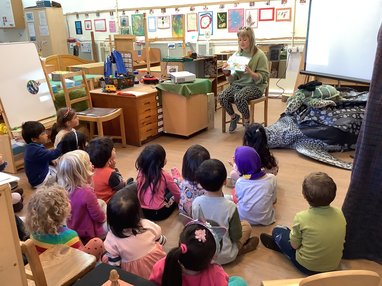
A member of Marine Conservation Society teaching a class about sealife | Image credit: Kirsty Crawford
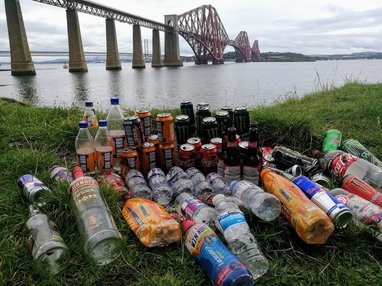
Drinks litter picked up from a beach clean near the Forth Bridge, Edinburgh | Image credit: Catherine Gemmell
Although the Scottish Ocean Literacy Survey (2022) shows that 85% of respondents value protecting the marine environment, almost half (49%) do not believe their own lifestyle affects ocean health. This gap between concern and understanding highlights the urgent need for accessible, community‑based ocean literacy. At the same time, more than 80% of people report wellbeing benefits from being near the coast, reinforcing the importance of connecting communities with local blue spaces.
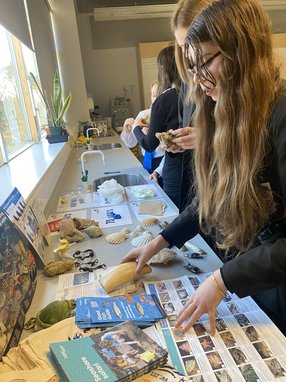
Ocean literacy event in East Renfrewshire | Image credit: Kirsty Crawford
This project intends to bridge these gaps; empowering thousands of people to understand the ocean’s importance, take part in marine citizen science, and adopt behaviours that reduce threats to Scotland’s natural heritage.
By building ocean literacy across communities, educators, and young people, the project supports meaningful, long‑term action for both people and the sea.
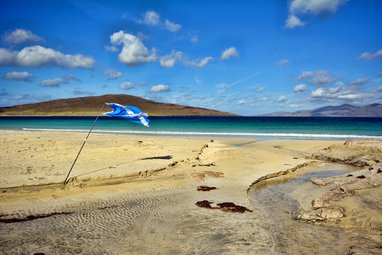
A Scottish flag planted on Luskentyre Beach, Isle of Harris, Scotland | Image credit: Petia Koleva
To address inequality, 20% of our programme will specifically target the most deprived areas in Scotland, as defined by the Scottish Index of Multiple Deprivation (SIMD).
Why does ocean literacy matter?
Research shows that spending time by the coast and sea offers significant benefits for both physical and mental wellbeing, and that people who recognise this personal connection are more likely to take action to protect the marine environment. Coastal places also carry deep cultural significance, with strong personal histories and heritage rooted in local communities.
Caring for and connecting with the ocean matters for many reasons:
- The Scottish Seas Roadshow sits within many key protection areas for wildlife: On the west coast, the Inner Clyde Estuary SPA and SSSI protects birdlife including redshank, oystercatchers and curlew. The Outer Firth of Forth and St Andrews Bay Complex SPA provides the feeding grounds for thousands of northern gannets, black-legged kittiwakes, Atlantic puffins and supports more than 35% of migrating common eider populations in winter. In the south, the Solway Firth SAC with its mudflats and sandbanks supports the Svarlbard barnacle goose and pink-footed goose. The beautiful Moray Firth in north-east Scotland supports the only known resident population of bottlenose dolphin in the North Sea. Covering island populations, the Inner Hebrides and The Minches SAC is home to 23 marine mammal species including harbour porpoise and minke whale, making it one of the richest environments in the UK.
- We need the ocean to survive: The ocean produces around 50% of the Earth’s oxygen.
- The ocean supports our economy: The coastal and marine environment is a great natural asset, contributing £6.5 billion to the UK economy and supporting more than 750,000 jobs.
Book a session
Our FREE marine education sessions cover topics such as: climate change, litter and pollution, ocean protection and local marine wildlife. Sessions last up to 1 hour and include an interactive presentation and activity.
If you're a school, or group that works with young people, and would like to request your FREE session, please use our booking form.
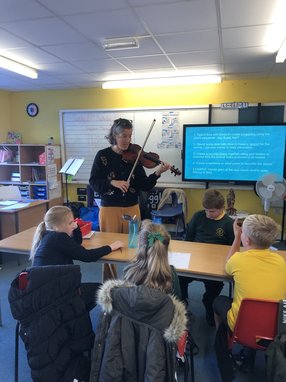
A musical marine workshop at a school | Image credit: Kirsty Crawford
One Ocean Focus Group
We’re looking for people who can help us shape the Scottish Seas Roadshow so it continues to evolve and respond to the diverse needs of Scotland’s towns, cities, and coastal and inland communities.
Each year, we'll invite a small, representative group of participants from the previous 12 months to join a focus group. Their insights will help ensure the project complements existing marine programmes in each region and remains genuinely community‑led, with decisions informed by the people who live and work there.
If you’re interested in taking part in a future focus group, please contact education@mcsuk.org to express your interest.
Contact us
If you have any questions or want to get in touch please use our schools booking form or for anything else contact rebecca.crawford@mcsuk.org
About our funders
National Lottery Heritage Fund
The National Lottery Heritage Fund is the largest funder for the UK’s heritage. Using money raised by National Lottery players they support projects that connect people and communities to heritage.
Their vision is for heritage to be valued, cared for and sustained for everyone, now and in the future. From historic buildings, our industrial legacy and the natural environment, to collections, traditions, stories and more. Heritage can be anything from the past that people value and want to pass on to future generations. They believe in the power of heritage to ignite the imagination, offer joy and inspiration, and to build pride in place and connection to the past.