Ocean facts & stats
The ocean still holds many mysteries
There is still so much that we have yet to discover in our ocean, especially when it comes to the deep abyss. In fact, we invest more in space exploration than we do in exploring the deep sea. This means we have only truly mapped out approximately 25% of the ocean floor compared to all of the observable universe.
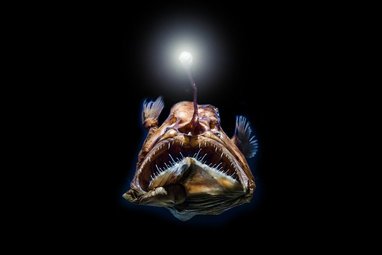
Some anglerfish have been found to live up to roughly 4,000 meters deep near the Mariana Trench. However, the very bottom of the Mariana Trench is over 10,000 meters deep! | Image credit: Superjoseph
Underwater microphones pick up a lot of eerie-sounding noises underwater
Although the ocean seems quiet it is actually extremely noisy, our ears just can’t hear the low frequency noises that travel under the sea. Using underwater microphones we have begun to truly understand just how loud it can be and, in the process, have also picked up rather spooky recordings.
Though they conjure up thoughts about undiscovered giant sea creatures living in the deepest darkest parts of the ocean, the answer to what is making the noise often has a much less mysterious answer which ranges from underwater icequakes to whale sounds. Answering what makes these noises has also helped marine conservation. Recordings of ‘biotwang’ in 2014, which we now know were made by Bryde’s whales, have resulted in these sounds being used to help map the population and migration patterns of this elusive whale.
The recording below is of The Bloop. It was recorded in 1997 by NOAA which, while eerie, was later determined to be caused by icequakes, or ice cracking and breaking away from glaciers in Antarctica.
Sperm whales are recorded as the loudest marine animals with clicks that can reach 230 decibels. That’s louder than a jet engine!
The ocean is a lifesaver
Without the ocean, life on Earth would not have even been possible. All life originally came from the sea and it was roughly 1 billion years after life first appeared that the first land-dwelling organisms evolved. This means the ocean has been a consistent home to life on our planet for a very long time.

A seagrass meadow in Mounts Bay, Cornwall | Image credit: Heather Hamilton
244 million tonnes of carbon are locked away within the top 10cm of the UK and Isle of Man seabed.
The ocean receives the equivalent energy of 7 Hiroshima bombs every second
It might sound extreme but the ocean absorbs a phenomenal amount of thermal energy from the sun. The ocean then transports it to the poles, moderating temperatures across the globe and making the planet hospitable so that the equator isn’t too hot and the poles aren’t too cold for life to exist. However, the energy that the ocean is absorbing is unfortunately increasing due to a mixture of global warming and natural climate change.
In 2024, over 90% of coral which makes up the Great Barrier Reef was affected by a global bleaching event caused by increased temperatures, reminding us of the fragility of these unique animals and the urgency to protect them
The Gulf stream alone transports 550 trillion calories of heat energy across the North Atlantic every second.
The ocean can be pretty gross!
When people talk about the ocean, they usually mention how beautiful and majestic the creatures that swim in it are. However, just like anywhere else on Earth, there are some creatures that can be pretty disgusting.
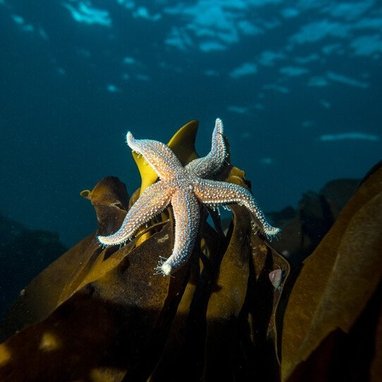
A common starfish seen around Shetland Islands, Scotland. | Image credit: Billy Arthur
There's a parasite that replaces a fish’s tongue
The tongue-eating louse (Cymothoa exigua) is a type of isopod (part of the crustacean family) which has an uncanny way of living. It will enter a fish through their gills, move to the base of the fish’s tongue, latch on to it and begin to suck the blood and feed on the fish’s tongue until the tongue withers away. It will then move itself inside the fish’s mouth to act as its new tongue. It will remain there stealing food that the fish swallows. If its host does die though, the tongue-eating louse will simply detach itself and look for a new host to swim into and start the process all over again. Interestingly, it's the only parasite that is known to fully replace an organ in a host’s body.
Whales shoot snot out when they exhale
A whale’s blowhole is basically their version of a nose so it is no surprise that when they shoot water out of it, what we are actually seeing is a whole lot of mucus, water vapour and other gross particles being blown out from the whale. Basically when a whale is blowing through their blowholes, it is to force anything in their airways out. Researchers will often collect whale snot to help monitor the health of the whale and the ocean ecosystem in general. One way they collect it is by piloting special drones called snotbots to hover near a whale’s blowhole as the whale exhales.
Some whales have been known to shoot this gross concoction up to 10 feet high.
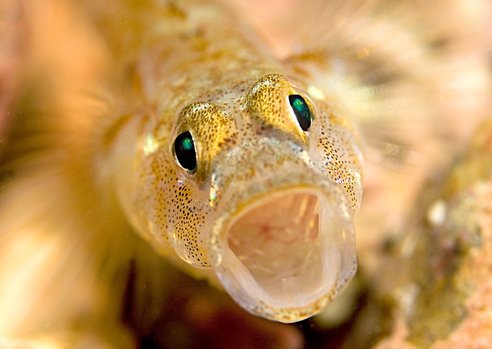
The ocean needs our help
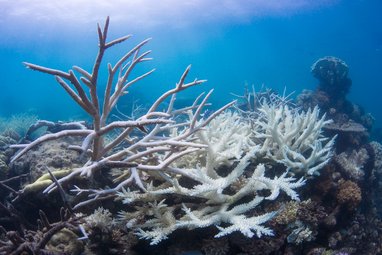
Bleached coral at the Great Barrier Reef | Image credit: The Ocean Agency
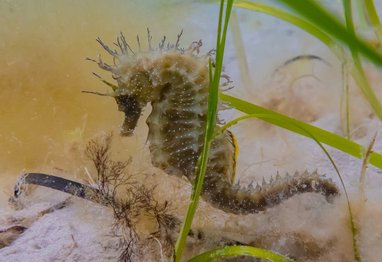
Long-snouted or spiny seahorses use seagrass as an anchor point so they don't get swept away by the current. | Image credit: Georgie Bull
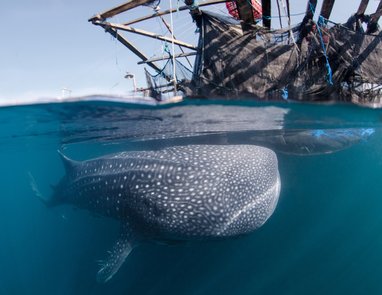
A whale shark swimming next to a fishing boat in West Papua. | Image credit: Toby Matthews, Ocean Image Bank
It is estimated that over 1000 cetaceans such as dolphins, porpoises and whales are killed each year in UK fisheries alone.