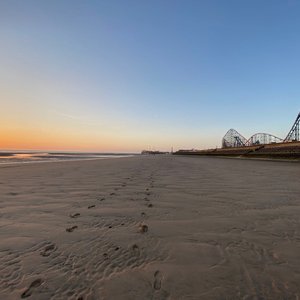
a person standing at the edge of the sea while holding a pair of shoes

What is ocean literacy?

Ocean literacy is an integral part of making positive change. Explore how it helps us understand our role in protecting the ocean

    How does the ocean influence us and how do we influence the ocean?

    Ocean literacy is often defined as “an understanding of your influence on the ocean, and its influence on you”.

    In the beginning: The concept of ocean literacy was originally developed in the USA in 2004 by a group of educators to encourage teaching about the ocean in formal education. Ocean literacy was focused on improving people’s knowledge about the ocean.

    What’s changed: Since the early 2000s, the concept of ocean literacy has been used globally to encourage positive action. This growth led to recognition that knowledge was not the only important dimension for a person to be ocean literate – someone could have a strong connection with the ocean which is based on how they feel, or an experience they have had.

    To accommodate this, ten elements of ocean literacy have been identified. Below you can read about each of these, alongside some examples of how you could develop your ocean literacy.

    A woman wearing a Marine Conservation Society t-shirt speaking to an adult audience in front of a banner that reads 'Cymryd camau i adfer iechyd y môr' and 'taking action to restore marine health'."

    A member of Marine Conservation Society speaking at a One Ocean Forum  |  Image credit: Mark McNulty

    The 10 Ocean Literacy elements

    Why does it matter?

    Our goal is creating a society deeply connected to our marine environment and ready to take positive action for our blue planet. We're all on a journey to becoming ocean literate by developing our understanding and appreciation of our ocean.
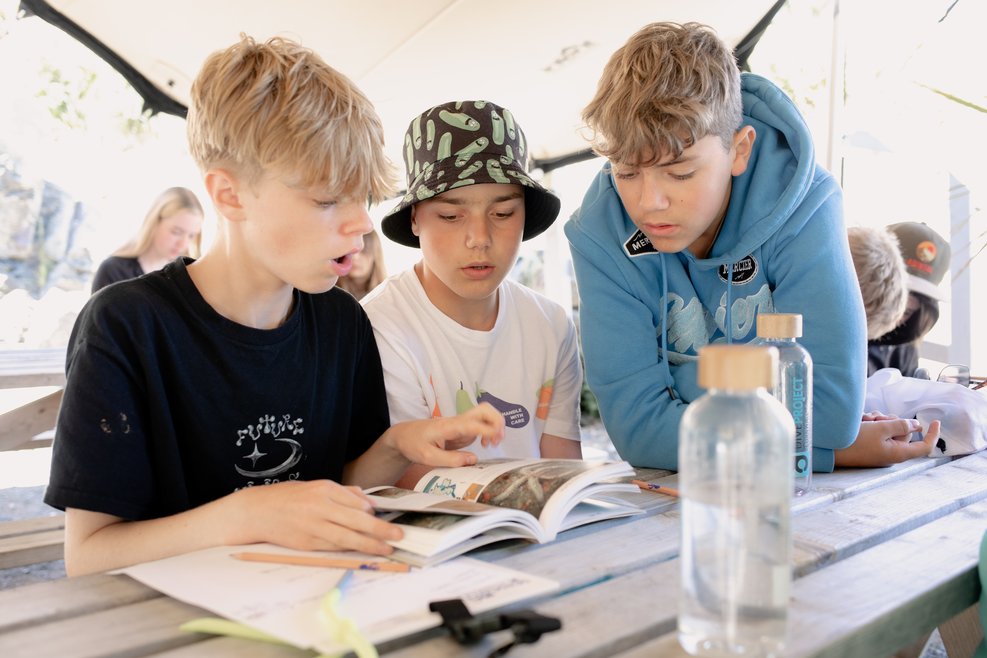
    3 boys learning about starfish at a Marine Conservation Society event

    Image credit: Billy Barraclough

    The Ocean Literacy Principles

    Explore your connection to the ocean through the seven essential principles of ocean literacy.
    Principle 1

    The Earth has one large ocean

    Our one ocean has a global circulation system that moves cold and warm water around the world.

    70

    %

    of our planet is covered by the ocean

    Principle 2

    The ocean and life within it shape Earth’s features

    The ocean plays a key part in sculpting our landscape through sea level changes, coastal erosion and sand distribution.

    Principle 3

    The ocean greatly affects weather and climate

    The ocean absorbs, stores and cycles carbon, water and heat which determines our climate and weather conditions.

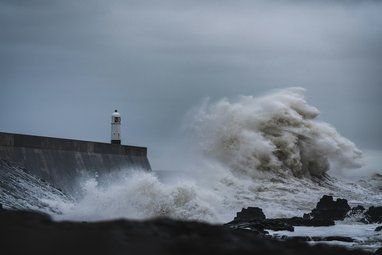
    Large white waves hitting a wall at Porthcawl, Wales, with a dark grey sky above the coastline

    Storm and waves hitting pier in Porthcawl, Wales  |  Image credit: Marcus Woodbridge
    Principle 4

    The ocean makes Earth suitable for life

    The ocean makes life on Earth possible by providing water, oxygen, and nutrients. Most of the oxygen in the atmosphere originally came from the activities of ocean organisms.

    ~50

    %

    of the oxygen produced on Earth comes from the ocean

    Principle 5

    The ocean supports a wide variety of life and ecosystems

    The ocean contains the greatest diversity of life on our planet ranging from the smallest living thing to the largest animal found on Earth.

    Principle 6

    The ocean and humans are deeply connected

    Humans rely on the ocean for oxygen, food, energy, medicine, jobs, transportation and recreation. Spending time by the coast and sea also makes us feel happier and healthier.

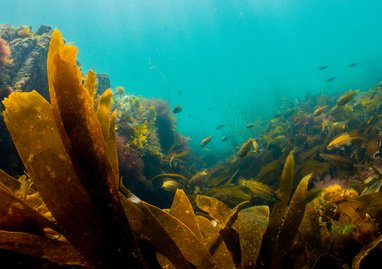
    An underwater photo of a healthy kelp forest. The the background some fish can be seen.

    Cornwall coast underwater  |  Image credit: Sam Mansfield

    Principle 7

    The ocean is largely unexplored

    The ocean is very big, and most of it remains a mystery.

    <5

    %

    of our underwater world has been explored

    Find out about some of our current Ocean Literacy projects
    Explore our education activities

    Dive in