Seagrass restoration
Seagrass is an incredibly important plant for the ocean and our planet, but it's extremely vulnerable to human activity and environmental change. Find out what we're doing around the UK to protect precious meadows.
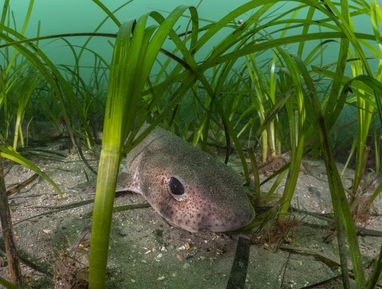
A catshark in seagrass | Image credit: Ocean Image Bank, Sharron Moran
Why is seagrass important?
Carbon storage
Seagrass is the single most important species in the sea for locking in CO2. As a habitat it is far more carbon-rich and effective at absorbing carbon than an equivalent area of rainforest.
Protecting coasts
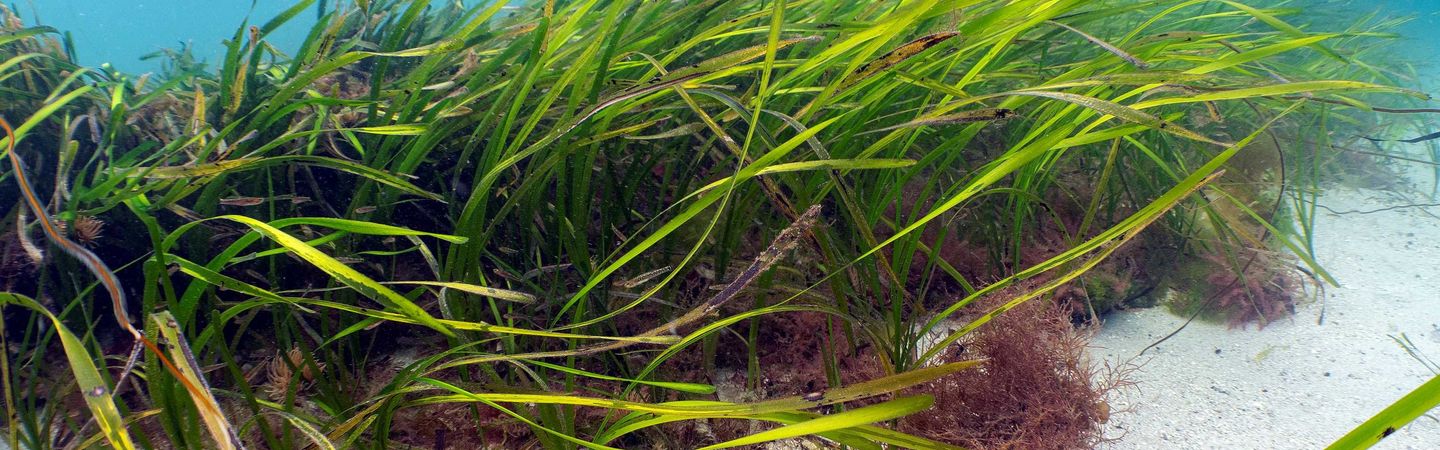
With rising sea levels causing coastal erosion, healthy seagrass blades – often up to 1m high – can reduce the power of waves washing away our sheltered coves and beaches.
Biodiversity hotspots
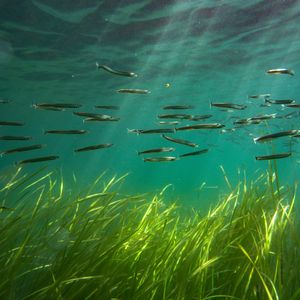
The UK’s seagrass meadows are home to the two species of seahorse which live in UK waters - the spiny seahorse and the short snouted seahorse. They're also breeding grounds for cuttlefish and sharks, and nurseries for cod, plaice and pollock.
A forest shelter
Seagrass is a complex ‘forest’ that supports and protects many animals, and increases the organic enrichment of the sand and muds around the root systems. This is a vital shelter and food source for molluscs, shrimp, crustaceans, anemones and other invertebrates to thrive in.
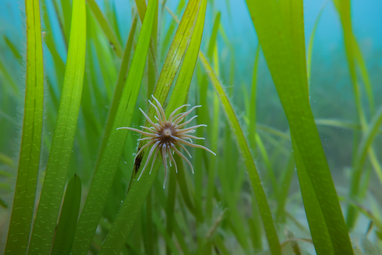
Snakelocks anemone on seagrass | Image credit: Georgie Bull
10
%
of the carbon buried in ocean sediment each year is absorbed by seagrass
35
x
more CO2 is thought to be absorbed by seagrass than rainforests
92
%
of UK marine meadows may have been destroyed as a result of pollution, disease and damage caused by people
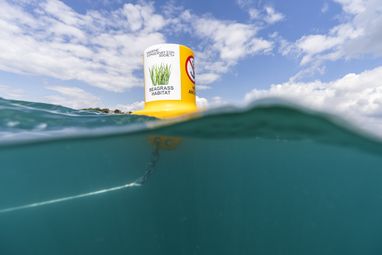
A yellow buoy protects a sensitive seagrass area from anchoring. In partnership with Salcombe Gin | Image credit: Salcombe Gin
Conservation and restoration
Through numerous collaborative projects, focussed on the south coast of England, we're working to protect, restore and conserve seagrass habitats.
Boating
Since 2019, we've been working to support the replacement of traditional block-and-chain moorings with sophisticated Advanced Mooring Systems. So far, we’ve replaced five traditional block and chain systems that scraped across the seabed, ripping up seagrass, with mooring ‘riser’ chains which are suspended above the seabed using submerged buoys.
An additional significant benefit is that we’ve used screw piles to secure the riser chain to the seabed rather than the concrete-filled tyres commonly used to hold down moorings. Already there are signs of seagrass regeneration close to the moorings themselves since installation in spring 2019.
Water quality
The Marine Conservation Society has long been campaigning for significantly improved water quality in our seas. When waters are polluted there is less light for photosynthesis to take place in marine plants such as seagrass. Polluted waters also mean an increase in the amount of algae growing on seagrass blades and in the water column – both of which are bad for the health of seagrass.
More needs to be done over combined sewage overflows and farming practices which can leach nitrogen, pesticides and other chemicals into our rivers and ultimately into our coastal waters.
Fishing
Since 2009, we've been working to get damaging fishing (trawling, scallop dredging) out of seagrass beds in English Marine Protected Areas (MPAs). In 2014 we were successful in getting regulators, like the local inshore fishing authorities, to protect all English seagrass beds in MPAs.
Trawlers and dredgers sometimes ‘cleaned their gear’ by towing it through seagrass – thankfully that is now illegal. However, there is still an issue with recreational fishers digging out bait from muds and intertidal seagrass beds in places such as Essex and the Solent. It’s essential that this sort of activity is stopped through the use of measures like no access zones, voluntary codes, and information to fishers.