Community projects

Lasting marine conservation starts with empowered communities who understand and care for the sea around them

Spending time by the coast or in “blue space” genuinely boosts our happiness and health. Research consistently shows that being near the sea provides real benefits for people’s wellbeing.

But the relationship goes both ways. When people recognise how much the ocean supports their own wellbeing, they’re more inclined to care for it in return.

We work with local people to better protect and manage our sea by amplifying the voices of coastal communities and improving nation-wide ocean literacy. We believe that our health and wellbeing are deeply connected to the health of our ocean and that by looking after it, we look after ourselves.
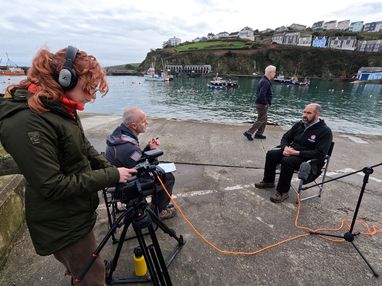
The community voice method

If we're going to recover and safeguard our ocean, the people who use and depend on it need to be part of shaping a future that is good for us and good for the ocean.

Thats why we focus on making sure that conversations regarding the management of the ocean considers the many different voices of the people who care about and depend on it. This helps ensure a more inclusive and holistic approach is taken in forming long-lasting marine conservation efforts.

A film crew recording an interview with a man by the water in a busy harbor setting for the Valued Seas project

Marine Conservation Society employees recording an interview to understand local opinions on the use of a harbour  |  Image credit: Peter Richardson
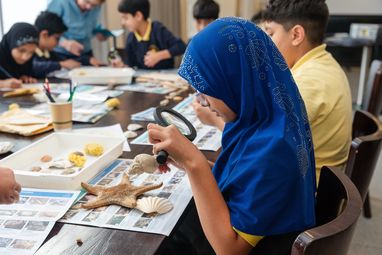
One Ocean Roadshow

The One Ocean Roadshow is a major project dedicated to improving ocean literacy in the north of England. By working closely with a broad range of communities through interactive sessions, citizen science, beach cleans and wellbeing activities, the goal is to support transformational change; creating a region of ocean-literate teachers and young people, plus leave a legacy of community-wide behaviour change, driving benefits for local people and our ocean.

A girl in a blue hijab using a magnifying glass to examine a shell during an educational workshop on marine life.

A student observing a starfish as part of the One Ocean Roadshow  |  Image credit: John Westgarth
Our work in the UKOTs

The UK Overseas Territories are home to countless species including sharks, penguins, whales and seabirds that are found in habitats including coastal mangroves, deep sea mounts, polar seas and the world’s largest coral atoll.

For over 20 years, we’ve been working in the Caribbean UK Overseas Territories of Anguilla, British Virgin Islands, Cayman Islands, Montserrat and Turks and Caicos Islands.

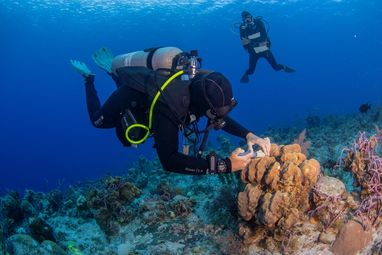
Our key focus is to help support our Caribbean UKOT partners in significantly improving the management of their existing marine protected area (MPA) networks. We often use the community voice method to amplify local voices.

An underwater photograph of two scuba divers near a coral reef. The diver in the foreground, wearing a black wetsuit and fins, is injecting medicine into a large coral formation. Another diver is visible swimming in the blue water in the background.

A diver applying treatment to counter coral disease in Turks & Caicos  |  Image credit: David Gallardo
Project successes

By strengthening ocean literacy and creating spaces for coastal communities to share their experiences, we’ve helped residents recognise the powerful link between their own wellbeing and the health of the sea.

Through collaborative workshops, community-led initiatives, and inclusive decision‑making, we’ve seen a noticeable shift toward more sustainable use of marine resources demonstrating that when people feel connected to the ocean, they are inspired to care for it.

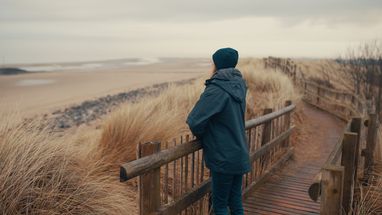
Woman standing over a fence looking towards a beach. She is wearing a dark coat and beanie. She is facing away from the photographer.

Nat, Hiraeth Yn Yr Môr Project Support, looking over Barkby Beach, Prestatyn, Wales  |  Image credit: Yoke Creative


Get involved in your community