Meet the seaweed types

There are over 650 species of seaweed found around the UK and we’re on the lookout for 14 of them for The Natural History Museum and Marine Conservation Society's Big Seaweed Search.

    Why these 14 specifically?
    The Big Seaweed search is a citizen science project that encourages you head to the coast and record the presence of 14 key seaweed species around the UK, contributing our joint data to scientific research on the impacts of environmental changes, such as rising sea temperatures and ocean acidification.

    The 14 species were chosen because they're good indicator species – a species whose presence, absence or abundance reflects a specific environmental factor. Indicator species can mark a change in the condition of an ecosystem.

    We've split the species into three groups to highlight the environmental change they indicate.

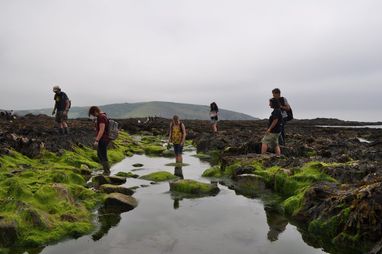
    A group of people participating in a Big Seaweed Search. They are exploring a rocky intertidal zone covered in bright green seaweed, with some individuals standing in shallow pools of water. Green hills are visible in the background under an overcast sky.

    A volunteer group looking for seaweed at Wembury, England  |  Image credit: Anna Holt

    Rising sea temperature

    UK sea temperatures have risen 2°C in the past 40 years. Research suggests that cold water seaweeds are moving further north where it's cooler, while the range of warm water species is expanding.

    These are the species which may respond to temperature change:
    Dabberlocks

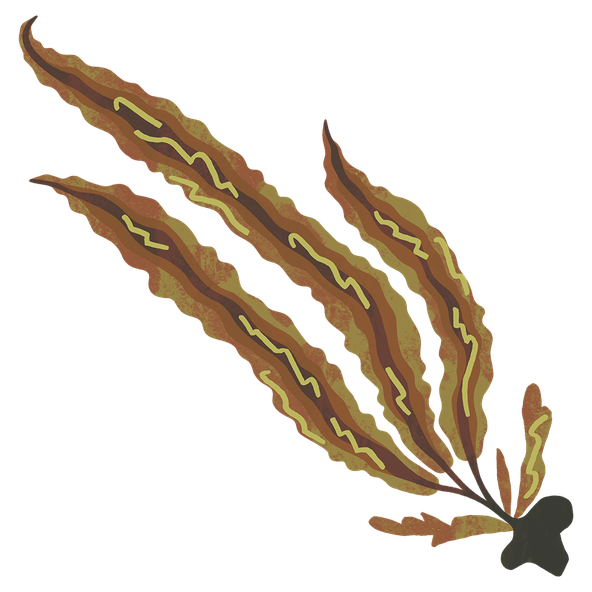
    Dabberlocks can be confused with sugar kelp and wakame.

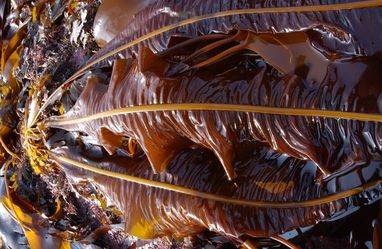
    This long, brown seaweed has a distinct central midrib and wavy, wrinkled fronds. At the base, you might see long finger-like growths. Dabberlocks like the lower shore, closest to the sea.

    Dabberlock seaweed  |  Image credit: Mike Guiry
    Sugar kelp

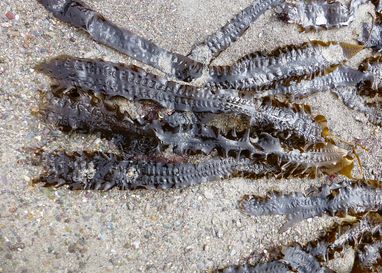
    Sugar kelp can be confused with dabberlocks and wakame. It's long, brown and wrinkly with a very thin stem and lacks an obvious central midrib. Sugar kelp is often farmed at sea and is used in cosmetics and animal feeds.

    Sugar kelp  |  Image credit: Keith Hiscock
    Serrated wrack

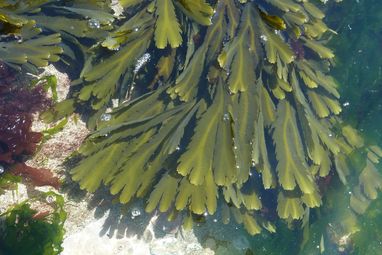
    This is a brown seaweed, but can sometimes be yellow or green in colour. As its name suggests, serrated wrack has sharp toothed edges on flattened fronds.

    Serrated wrack  |  Image credit: Keith Hiscock
    Bladderwrack

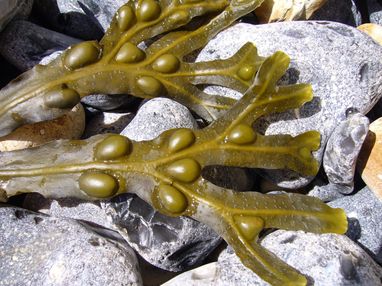
    This brown seaweed has paired air bladders (which look like bubbles). Air bladders help seaweeds float so they can reach the sunlight and photosynthesise at the ocean surface.

    Bladderwrack  |  Image credit: Lucy Robinson
    Knotted wrack

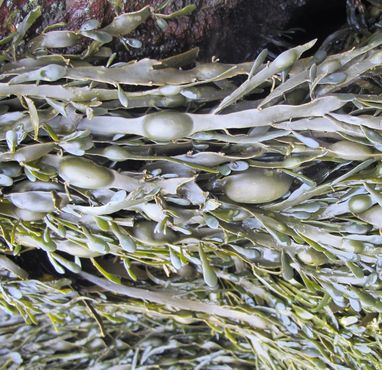
    Knotted wrack has narrow, strap-like fronds with large single air bladders. This species prefers the mid-shore and you might spot red seaweed species attached to it.

    Knotted wrack  |  Image credit: Juliet Brodie
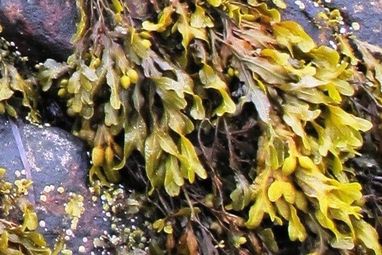
    Spiral wrack

    As the name suggests, this species grows in a spiral. Instead of air bladders, spiral wrack has goo-filled bladders with a distinct rim around the edge.

    Spiral wrack  |  Image credit: Juliet Brodie
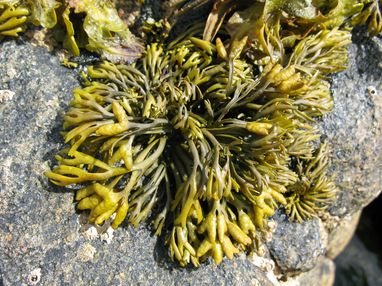
    Channelled wrack

    This brown seaweed has deep grooved channels in its fronds and the end of each branch is evenly forked. You're most likely to spot channelled wrack on the upper shore.

    Channelled wrack  |  Image credit: Juliet Brodie
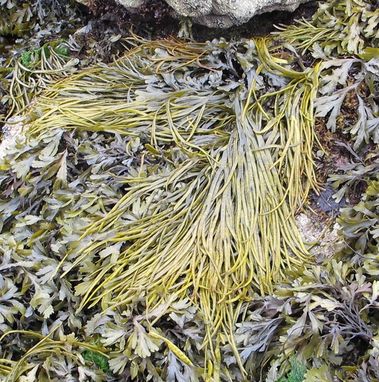
    Thongweed

    Thongweed has long, narrow straps with no air bladders and grows in large clumps. This species starts its life growing as a small button-like structure on the rocks.

    Thongweed  |  Image credit: Juliet Brodie

    Non-native species

    Non-native species are those that wouldn’t normally be found in the UK. They've found their way to our seas - mostly due to human activity - and settled here. They can outcompete other native species for food, light or space, forcing them to move or die out altogether.
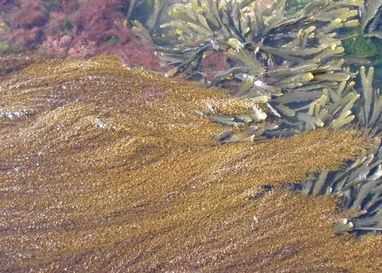
    Wireweed

    Wireweed has long, stringy fronds covered in hundreds of tiny round air bladders. This species originates in Japanese waters and was first recorded in the UK in 1973.

    Wireweed  |  Image credit: Juliet Brodie
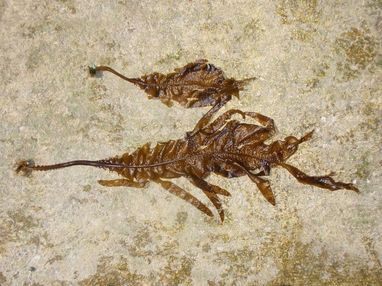
    Wakame

    This species is often confused with dabberlocks and sugar kelp.

    It has a distinct central midrib, but its base has a large frilly growth. Wakame was first recorded in the UK in 1994, where it arrived from the temperate waters of Japan, China and Korea.

    Wakame  |  Image credit: Juliet Brodie

    Harpoon weed

    Harpoon weed is sometimes confused with coral weed.

    This small, red species has tiny harpoon-shaped structures along each branch. It originates in the Pacific and Indian oceans.

    Harpoon weed  |  Image credit: Keith Hiscock
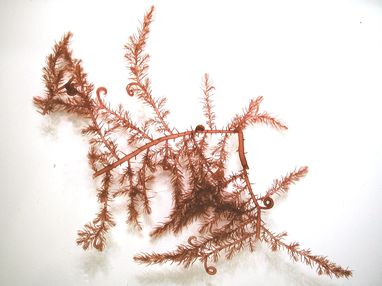
    Bonnemaison's hook weed

    This small, red seaweed was first recorded in South West England in 1890 having been introduced from Japan. This species is soft to touch and has large, obvious curved hooks.

    Bonnemaison's hook weed  |  Image credit: Francis Bunker

    Ocean acidification

    The sea is becoming more acidic as it absorbs increasing amounts of carbon dioxide in our atmosphere. Lots of ocean species, like seaweeds, struggle to grow in these conditions.
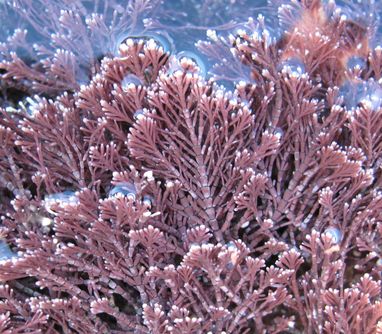
    Coral weed

    This species can be confused with harpoon weed.

    Coral weed is made of tiny individual segments which are hard and gritty if rolled in between your fingers.

    Coral weed  |  Image credit: Jessica Wardlaw
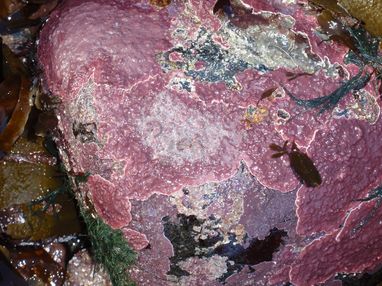
    Calcified crust

    This unusual seaweed varies in colour from pink to white. Calcified crusts are often found on harder rocks and can be seen lining rockpools. You might spot ridges where neighbouring crusts meet.

    Calcified crust  |  Image credit: Juliet Brodie

    Our handy seaweed identification guide

    Identifying seaweeds on the shore can be difficult. We've created this photograph ID guide to make it a bit easier. This guide only includes the 14 species which we're looking to record, but you might find other species on the beach, too. Keep your eyes peeled for the key ID features and take lots of pictures when you submit your survey.

    This project is funded by the Government's Green Recovery Challenge Fund. The fund was developed by Defra and its Arm's-Length Bodies. It is being delivered by The National Lottery Heritage Fund in partnership with Natural England, the Environment Agency and Forestry Commission.

    Report your seaweed search findings

    Tell us what you found