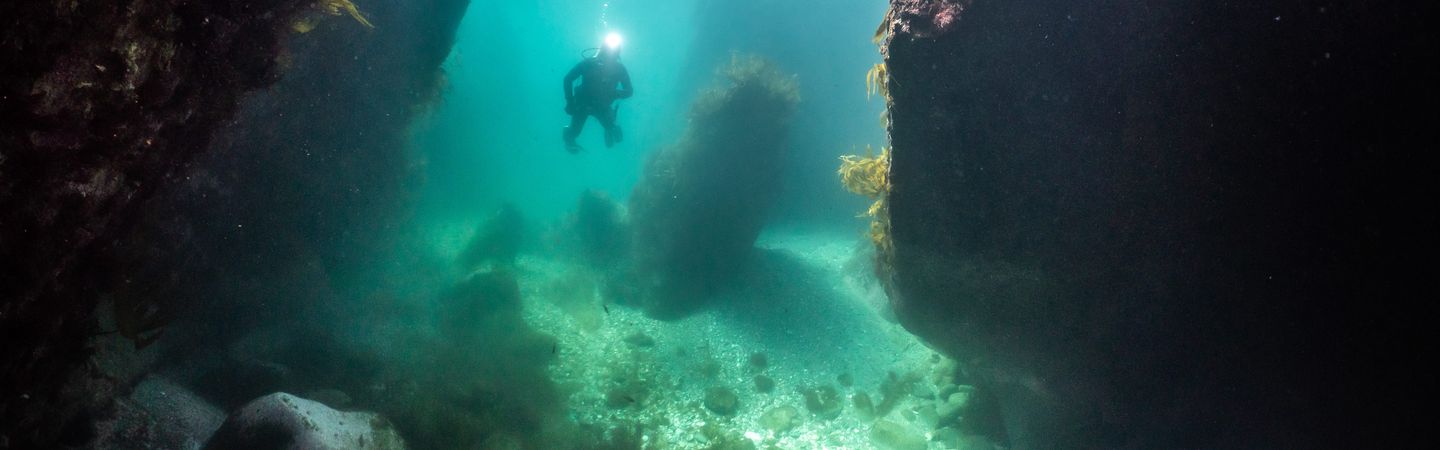
A scuba diver lighting up a dark underwater cave with a head torch, as sunlight filters down from the surface

Seasearch

Seasearch is a project for recreational divers and snorkellers who want to do their bit for the marine environment by collecting information about habitats, plants and animals that they see under the water.

Seasearch is a leading provider of vital marine biodiversity data and a legacy project of Marine Conservation Society. It has now evolved independently from our organisation becoming a non profit Community Interest Company (CIC) in its own right.

What does Seasearch do?
Seasearch divers are all volunteers who, while diving, carry out underwater surveys of sites all around Britain and Ireland, including the Channel Islands and Isle of Man, so wherever you dive or snorkel, you can take part.

Seasearch divers record habitat details, species found there and the conditions at the time of surveying. The sites they dive in are chosen because they’re identified as important for a particular reason (like being a ‘priority habitat’ or containing ‘priority species’) or if there’s a lack of data, so the specific focus each dive can vary.

Although everything is recorded, there’s a particular focus on species and habitats that have been identified as ‘priority’ due to their scarcity, being in decline, or under threat. Seasearch is also interested in recording and monitoring any invasive species.

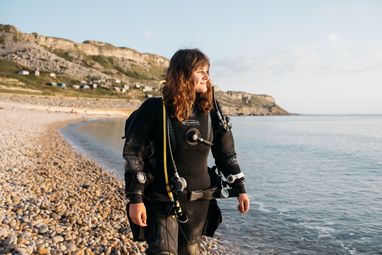
A woman wearing full black scuba diving gear, including a drysuit and a regulator, standing on a pebble beach at the water's edge, smiling and looking out towards the sea and a large cliff face in the background.

A volunteer diver at Chesil beach  |  Image credit: Billy Barraclough

What do the findings from Seasearch dives tell us?
The data gathered by Seasearch volunteers is used to make a real difference. The survey forms submitted after Seasearch dives are checked by the local coordinator, before being passed on for additional checks and verification to ensure all records are as robust as possible.

The data then gets added to the NBN Atlas, where it can be used to inform decisions about marine management, monitoring the spread of invasive species or the condition of habitats such as maerl or seagrass beds. Seasearch also works with many conservation and marine management organisations and sometimes receive funding from them to carry out these surveys.

Visit www.seasearch.org.uk to find out more.

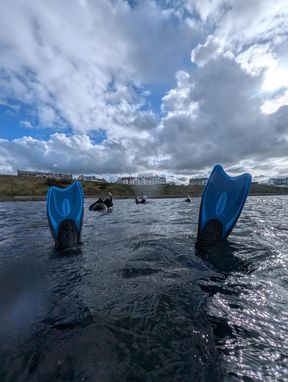
A low-angle, first-person view from the water of two blue swimming fins. In the background, several people are diving. A row of buildings under a partly cloudy sky can be seen behind them. The water is choppy and reflects the sunlight.

Seasearch volunteer's legs sticking out of hte water at Portballintrae, Northern Ireland  |  Image credit: Alice Moore


Other citizen science projects to try