

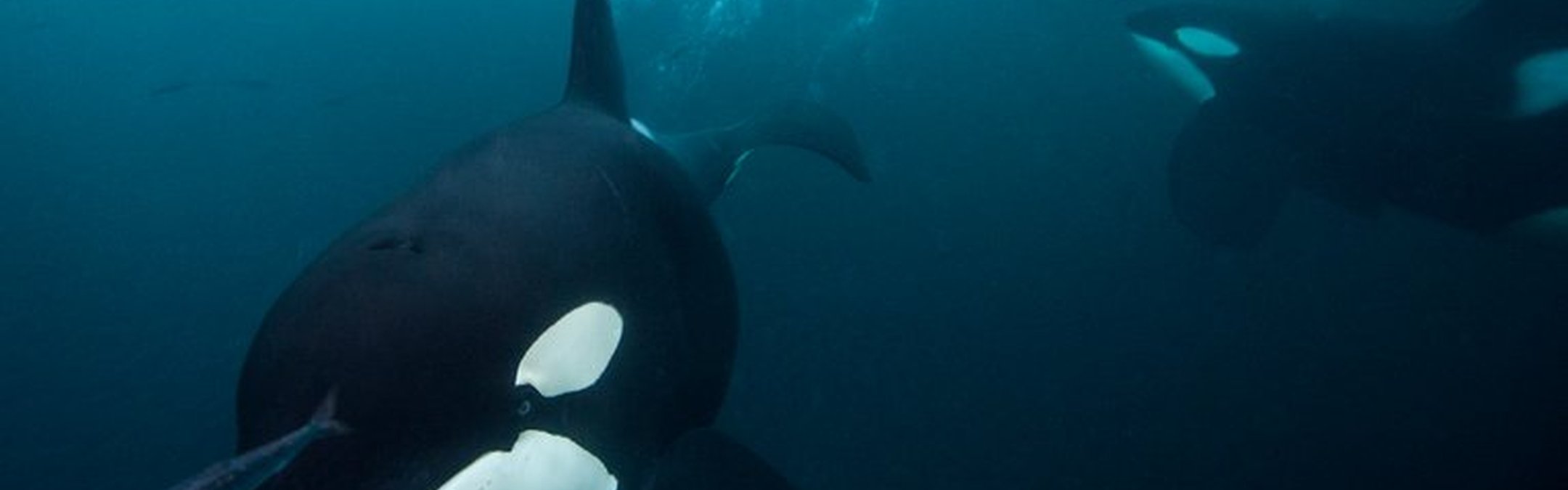
2 orcas swimming underwater. One is facing the camera and swimming towards it while the other is ithe background and is swimming towards the ocean surface. There is a small fish in front of the orca swimming toward the camera

Positive Ocean News April '26

24 Apr 2026

2 minute read

Discover the latest species news, sightings, and rescues, plus a major move to safeguard precious mackerel populations in this month’s ocean-positive round-up.

Good Fish Guide review finds reduced fishing pressure for yellowfin tuna and red mullet

The latest Good Fish Guide ratings review, which assesses the sustainability of different seafood species, has found improvements in population numbers and reduced fishing pressure for Northeast Atlantic red mullet and Indian Ocean yellowfin tuna. 
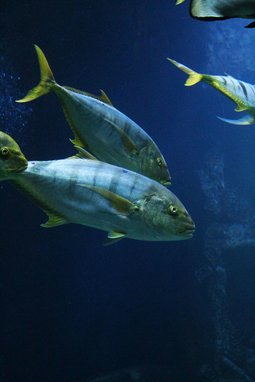
A new stock assessment of Indian Ocean yellowfin tuna revealed a more positive picture of populations and fishing pressure than previously, with the ratings for the species improving on the Good Fish Guide as a result. It is no longer being overfished, and spawning populations are higher than the target level, which is encouraging news for the species. 

Fishing pressure on red mullet has continued to decrease gradually since 2022, although it is still slightly higher than target levels and improvements to management measures are needed. 

Visit the Good Fish Guide.

Image credit: Nikola Bacanek

Eight rescued otters released back into the wild 

Following months of rehabilitation, eight orphaned otter cubs have been returned to various wild habitats in England which will give them the best chances of long-term survival.
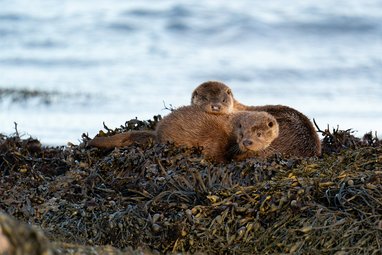
The otters had all been found alone having been separated from their mothers, potentially because of road accidents or habitat destruction, and were in poor health when they were brought to the UK Wild Otter Trust rescue centre to recover.  

Over the course of months, they were nursed back to health and all successfully released back into the wild, where it’s hoped that they can thrive. 

Read more on the Devon Live website.

Two Eurasian otters are snuggled together on a rock. The rock is covered in seaweed, and the sea is behind the rock.

Image credit: Chrispo

Waitrose stops selling mackerel due to overfishing

Waitrose is the first UK supermarket to suspend sales of mackerel, due to concerns of overfishing. It has stopped sourcing fresh, chilled and frozen mackerel, and tinned mackerel once its current stock has sold. 

The move comes after the latest assessments by the Marine Conservation Society and the International Council for the Exploration of the Sea (ICES) revealed that mackerel populations are in decline, are consistently overfished, and that current management measures are insufficient. 
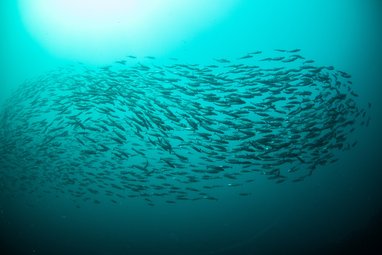
Mackerel is a key food source for marine creatures such as whales, dolphins, and tuna, playing an important role in ocean food chains. By suspending sales of the seafood and instead promoting more sustainable alternatives, Jake Pickering, head of agriculture, aquaculture and fisheries at Waitrose, said it is “acting to tackle overfishing and protect the long-term health of our oceans and this crucial fish." 

Read more on the MSN website.

Shoaling mackerel against a deep teal Scottish sea backdrop.

Image credit: Cathy Lewis

Rare sea slug spotted in Devon 

Citizen scientists taking part in an intertidal shore survey with Devon Wildlife Trust were lucky enough to see a Hermaea variopicta, a fire-tipped sea slug, in what is only the seventh record of the species in the UK. 
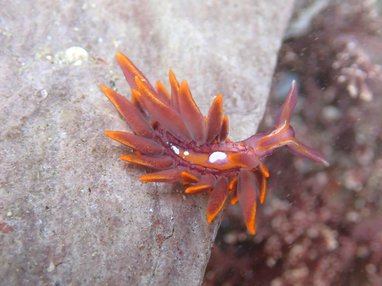
The 3cm-long sea slug, typically found in the Mediterranean, was seen grazing on red algae, despite its red and orange colouring designed to help it blend into its favoured habitat among red seaweeds.  

As it typically lives in warmer waters, the sighting may be an indicator of changes in our seas due to climate change, highlighting the value of citizen science activities that record and track the species living in and using various waters. 

Read more on the BBC News website.

A rare red coloured sea slug, called Hermaea variopicta, is pictured on a rock in Devon

Image credit: Jake Taylor-Bruce

Ancient fossil provides insights into when octopuses came to be

A 300-million-year-old fossil that was believed to be octopus is in fact a different animal altogether, new scans have found. The findings give scientists a much better idea of when octopuses first appeared on Earth.  

Discovered 26 years ago, the fossil has several features that suggested it was an octopus – the oldest one ever recorded – leading scientists to believe octopuses must have appeared 150 million years earlier than previously thought.  
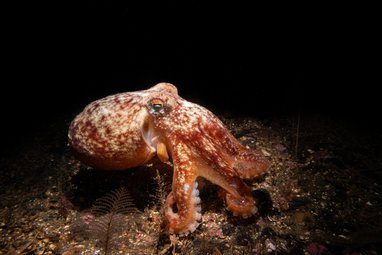
However, recent analysis by the University of Reading shows that the creature had tiny teeth, ruling out the possibility of it being an octopus. Instead, it’s believed to be related to a Nautilus, which has several tentacles and an external shell. Octopuses are now thought to have appeared after the Jurassic period.  

Dr Thomas Clements, lead author and Lecturer in Invertebrate Zoology at the University of Reading, said: “It's amazing to think a row of tiny hidden teeth, hidden in the rock for 300 million years, have fundamentally changed what we know about when and how octopuses evolved." 

Read more on the Independent website.

A curled octopus is pictured on the sea floor. Its orange, mottled skin shines brightly against the darkness of the deep water.

Image credit: James Lynott

24,000 volunteers take part in Europe's largest one-day clean-up

50 tonnes of litter were removed from the natural environment by volunteers in Limerick, Ireland on 4th of April. The event marked the largest one-day clean-up in Europe, with volunteers from 90 schools, 42 Tidy Towns groups and 48 sports clubs taking part.
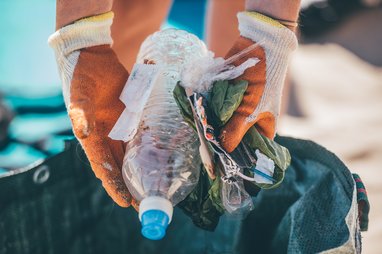
This was the eleventh year of the Team Limerick Clean-Up, a county-wide litter pick initiative, which has been growing each year. It aims to bring local communities together, protect the environment, and help people feel connected to and proud of their county. 

By taking part in the clean-up, volunteers helped prevent litter from entering rivers – and eventually, the sea – reducing pollution and protecting local wildlife. 

Read more on the RTE website.

A pair of gloved hands holds a selection of plastic litter above a bag. The plastic litter was found during a beach clean

Image credit: Aled Llywelyn

Two orcas spotted off Cornish coast 

The two last remaining members of the West Coast Community orca pod were spotted for the first time since 2021. 

The pod originally had 10 members which were often seen around the UK and Irish coasts, but only John Coe and Aquarius remain after Lulu’s death in 2016. The pair were seen off Lizard Point, Cornwall, jumping and diving.
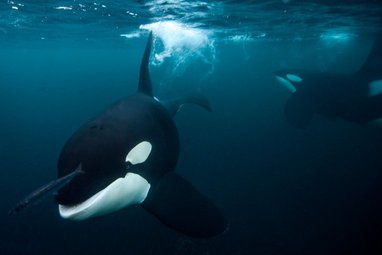
Wildlife explorer Steve Backshall, who watched the brothers for an hour, said, "It was just the most overwhelming, emotional, beautiful experience and even more so because they are such well-known characters."  

A few weeks later, a separate pod of between eight and 10 orcas were seen off the Northumberland coast, including a calf. 

Read more on the BBC News website.

2 orcas swimming underwater. One is facing the camera and swimming towards it while the other is ithe background and is swimming towards the ocean surface. There is a small fish in front of the orca swimming toward the camera

Image credit: Petr Slezak

Two rescued puffins released back into wild 

Two puffins found on Fife beaches in the aftermath of January’s Storm Chandra have been returned to the wild following a three-month recovery at the National Wildlife Rescue Centre. 
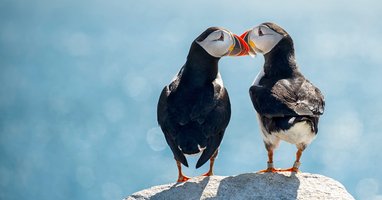
The birds, named Arnie and Danny, were weak and starving when found, but were nursed back to health at the centre, before being released together on the water near the Isle of May, an island in the Firth of Forth renowned for puffins.  

Read more on the BBC News website.

Two puffins stand on top of a rock with the sea in front of them. The puffins beaks are touching.

Image credit: Ann Stryzhekin

Marine Conservation Society

24 Apr 2026

