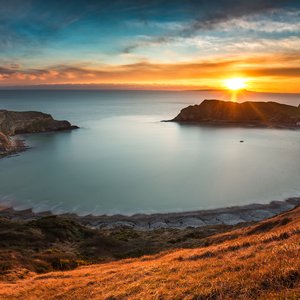
Tenby Harbour is captured at night time. The colourful lights from the buildings around the bay are reflected in the sea

Guided meditation

Meditation is a method of focusing the mind, and there are lots of different types and variations. This meditation will be guided, meaning there is a voice to direct you throughout. It’s suitable for complete beginners or advanced meditators.

Before you begin

Before starting the meditation, write down the percentage of worry, fear or guilt you feel when you think about the ocean. Don't overthink this, just the first number that comes to mind! For example, 70% worry, 20% fear, 10% guilt.
You will need:

  • Somewhere quiet and comfortable, with minimal disturbances. If you're listening in a group, try to make minimal noise or movement until everyone is fully present back in the room.
  • Something to listen to the meditation on, like a speaker or headphones.

Time taken:

The guided meditation is seven minutes long. The follow-up activity could take between five and 20 minutes, depending how long you want to spend on it.  

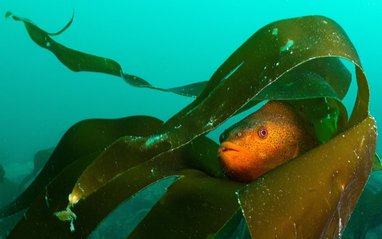
An orange lumpsucker fish hiding in some kelp.

A male lumpsucker at the Sound of Harris  |  Image credit: Kirsty Andrews
 

The activity

Play the video below. If it’s comfortable for you to do so, complete the meditation with your eyes closed. When you've reached the end of the meditation video, complete the activity below:

This project is funded by the Government's Green Recovery Challenge Fund. The fund was developed by Defra and its Arm's-Length Bodies. It is being delivered by The National Lottery Heritage Fund in partnership with Natural England, the Environment Agency and Forestry Commission.

Green Recovery Challenge Fund

Co-funded by the European Union.

Activity: What do blue spaces mean to me?

After the mindfulness exercise, you could use this template to answer the question, 'what do blues spaces mean to me?' This is a self-led reflective exercise and should be done independently.

It's vitally important that our blue spaces are protected, not only to preserve diversity, but because of the wellbeing benefits they provide for millions of people.

What blue spaces mean to me activity

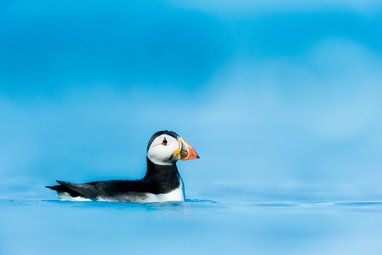
An Atlantic puffin  |  Image credit: Kevin Morgans


Other mindfulness resources