
Acorn barnacle
Semibalanus balanoides
IUCN Status:Least Concern
Remaining in one place after attaching, acorn barnacles give us a useful indication of the health of our seas.
What do they look like?
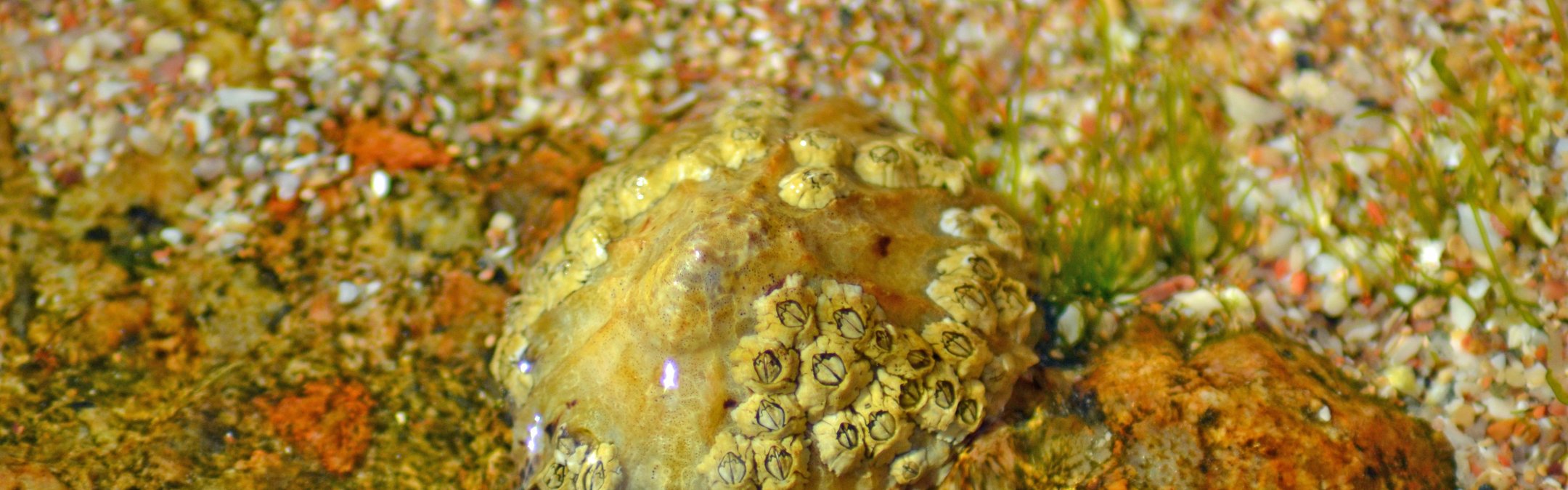
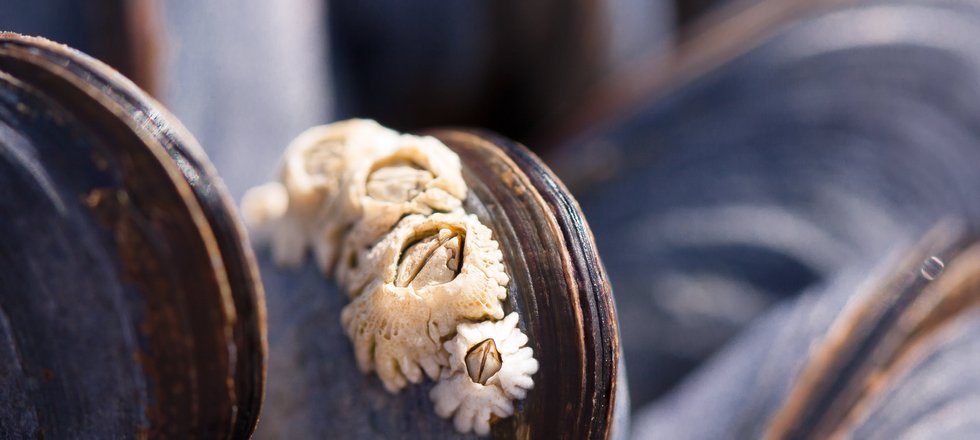
These small, tough barnacles are usually seen closed up inside the plates of its shell-like “house”. Their feeding appendages (cirri pronounced "si-ree") can appear feathery when in motion.
Where can they be found?
Rocky shores everywhere, this widespread species may also be found on boulders and larger pebbles in sandy areas.
Did you know... Though they might look like oysters and clams, barnacles are actually a type of crustacean, meaning that they are more closely related to crabs and lobsters.
Key facts
Acorn barnacles live upside down, stuck permanently to the rock with legs (thoracic appendages - cirri) poised to catch drifting food.
They can attach to almost any hard surface in the water. They're most often seen on rocks, piers and boats but can even be found on living creatures like whales, sea turtles, and even other barnacles.
Starting as a tiny (cyprid) larva, these larva will swim the ocean before attaching itself to a suitable foundation material and building calcareous (calcium carbonate) plates, which, unique to the barnacles (Cirrepedia) are not completely shed at each moult. You can determine their age by counting concentric growth lines, similar to the way you can determine the age of a tree. Since they remain in one place after attaching to a surface, acorn barnacles are actually a really useful bioindicator for recording metal contamination and microplastic pollution.
| IUCN status | Least Concern |
|---|---|
| Length | 1-2cm |
| Weight | approx 1.5mg |
| Speed and distance | Once an acorn barnacle attaches itself to a surface, it doesn't move, so its speed and distance moved is minimal. |
| Habitat | Strandline, rocky shore |
| Diet | The acorn barnacle mainly feeds on zooplankton and detritus. |
| Age lifespan | Acorn barncales have a relatively short life of around 18 months - though some of the larger species can live to around 10 years old. |