Angular roughshark
Oxynotus centrina
IUCN Status:Endangered
What do they look like?
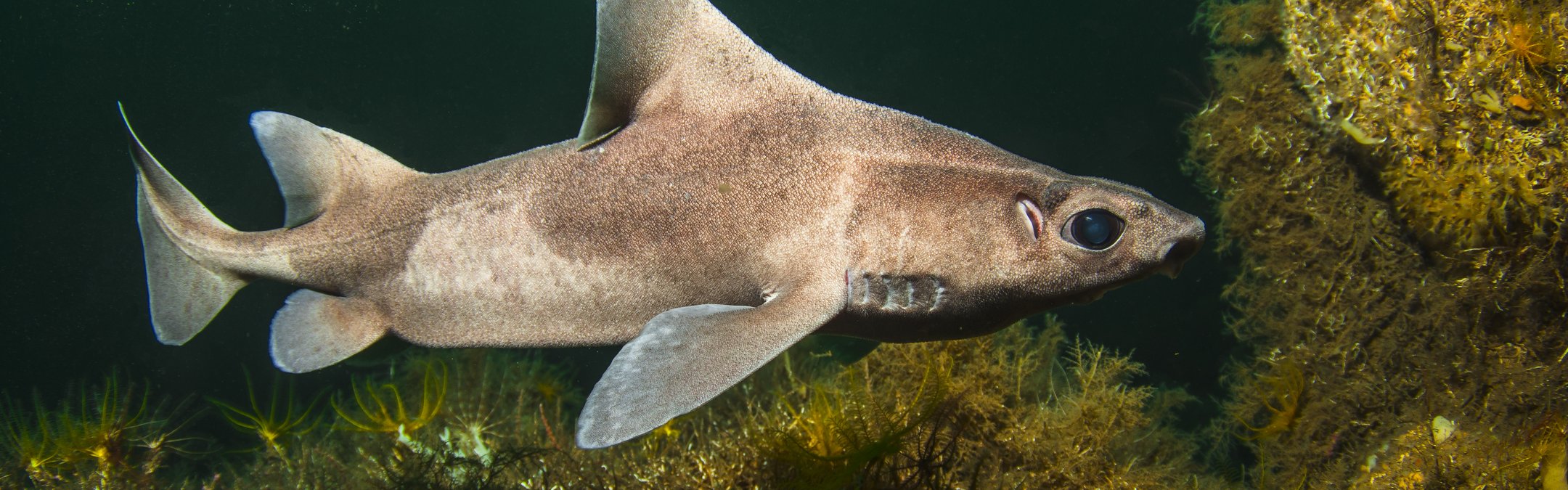
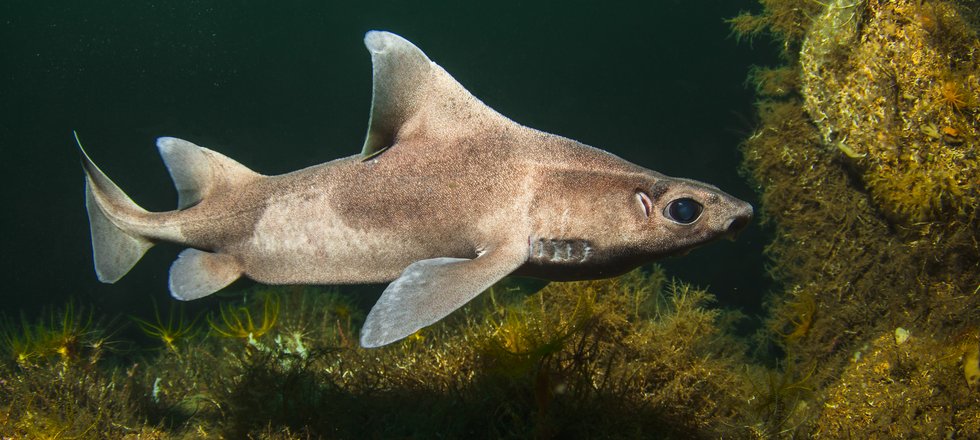
The angular roughshark is aptly named for its pointed head and fins, and the rough teeth-like scales which cover its body. It has a broad, flattened head and a short, blunt nose which has earned it its nickname as the 'pig-faced' shark. It also has two tall dorsal fins which look a little like sails. The angular roughshark eats worms, crustaceans and molluscs from the seabed, which it feeds on by using a suction technique.
Where can they be found?
Eastern Atlantic and the Mediterranean - found from South Africa to Norway.
Did you know... In 2024, an adult was caught with leucism, which is a partial reduction in pigmentation, resulting in an overall pale appearance with white-greyish patches. It is the first documented pigment disorder in the family Oxynotidae.
Key facts
Adult female angular roughsharks don’t lay eggs, but they give birth to well-developed baby sharks that have hatched from eggs inside the mother, known as pups. These pups are quite large, at between 21-24cm in length, and a female can have 10-12 pups in a litter!
| IUCN status | Endangered |
|---|---|
| Length | 1 - 1.5m |
| Weight | Specific weight data is sparse, but a 22.5cm neonate weighing was 59.6 grams, indicating adults are likely several kilograms. |
| Speed and distance | Angular roughsharks are slow swimmers and don't travel long distances, usually moving by gliding on the bottom of the sea floor, while occasionally hovering over the sandy or muddy surfaces of the seabed. |
| Diet | They feed on worms, crustaceans, and molluscs. |
| Habitat | Open ocean |
| Lifespan | Similar to other shark species, they live for around 30 years. |