Atlantic (Grey) triggerfish
Balistes capriscus
IUCN Status:Vulnerable
What do they look like?
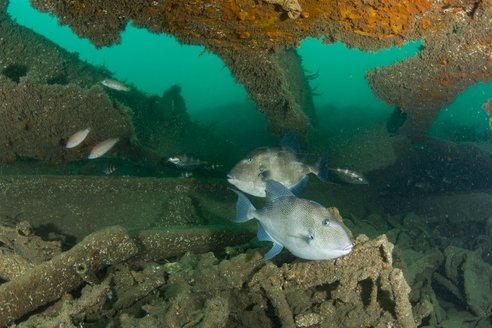
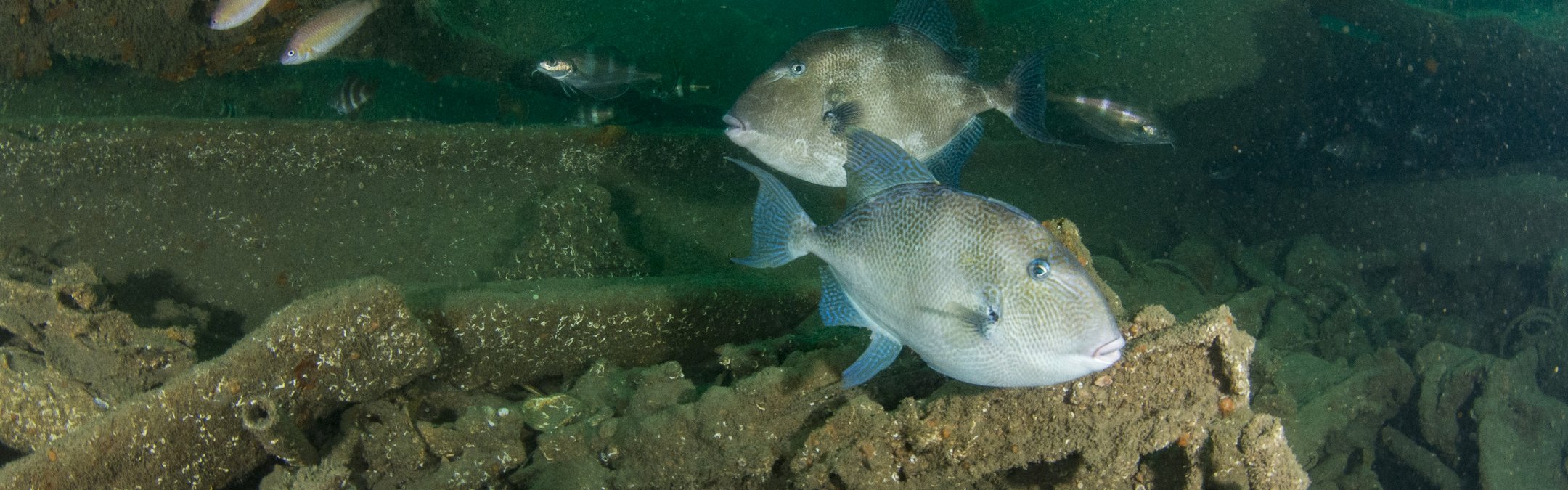
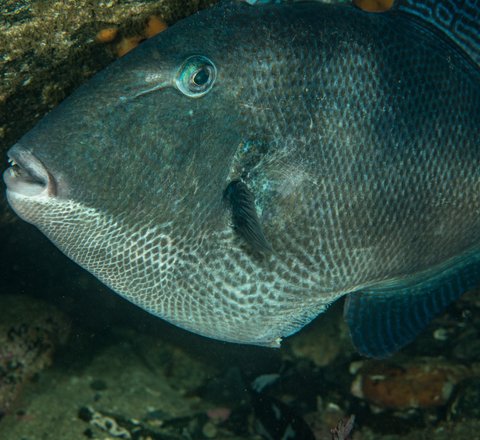
A tropical-looking fish but grey unlike its more vibrant cousins, one of the Atlantic triggerfish’s most distinctive features is its beak-like mouth, formed by fused teeth that create a powerful bite. This allows the triggerfish to crack open the toughest shells of mussels, clams, and other hard-shelled prey with ease.
Where can they be found?
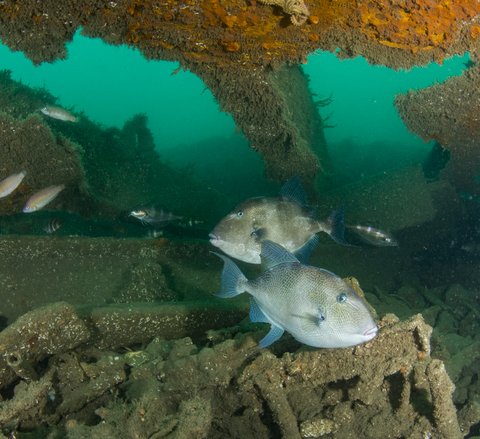
Surprisingly common around the south and west UK, where the Gulf Stream provides the warmth they need to survive.
Did you know... An interesting feeding behaviour has been observed where they position themselves vertically above a sandy seabed and puff streams of water from their mouths, disturbing the sand to reveal something edible. The prey can then be gripped with the fish's sharp teeth and eaten.
Key facts
The triggerfish gets its name from how it can lock its dorsal spine upright for defence. When threatened, the triggerfish wedges itself into a crevice and raises this spine, making it nearly impossible for predators to dislodge. A second spine acts as the release “trigger,” which lowers the first spine when danger has passed.
Although native to warmer regions, the Atlantic triggerfish is increasingly spotted in southern and western UK waters ever since the mid-2000s, and they are especially spotted during the summer months. Unfortunately, the increasing presence of Atlantic triggerfish in UK waters is widely considered a sign of rising ocean temperatures.
| IUCN status | Vulnerable |
|---|---|
| Length | 44cm |
| Weight | 2.3kg |
| Speed and distance | Atlantic triggerfish aren't great swimmers and use a swimming style called balistiform locomotion where they guide themselves using their fins. They can dart away quickly when necessary though but this is a sudden burst of speed rather than a maintained one. They are fairly lazy swimmers and use currents such as the Gulf Stream to drift around as juveniles. However as adults they usually stay in one area rather than travel. |
| Habitat | Subtidal |
| Diet | They feed on benthic invertebrates like molluscs and crustaceans. |
| Age lifespan | 8 years in the wild, but can live up to 20 years when looked after well in an aquarium. |