Atlantic mackerel
Scomber scombrus
IUCN Status:Least Concern
Known mainly as a canned or smoked seafood choice in the supermarket, the Atlantic mackerel is a lively fish which is a key part of the marine food chain as hunter and prey.
What do they look like?
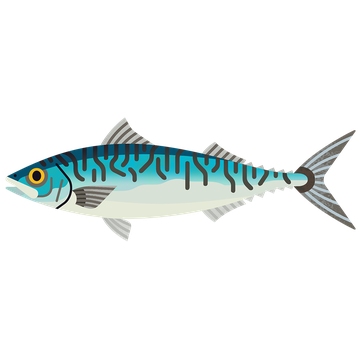
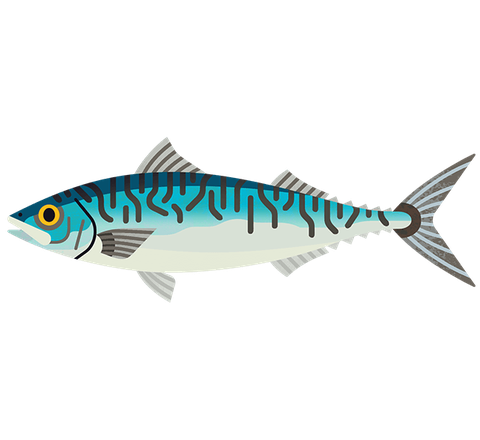
The mackerel’s body is slender and torpedo shaped, coloured steel blue with wavy black lines across the back and silvery white underneath. The snout is pointed, and it has a strong, forked tail making it built for speed.
Where can they be found?
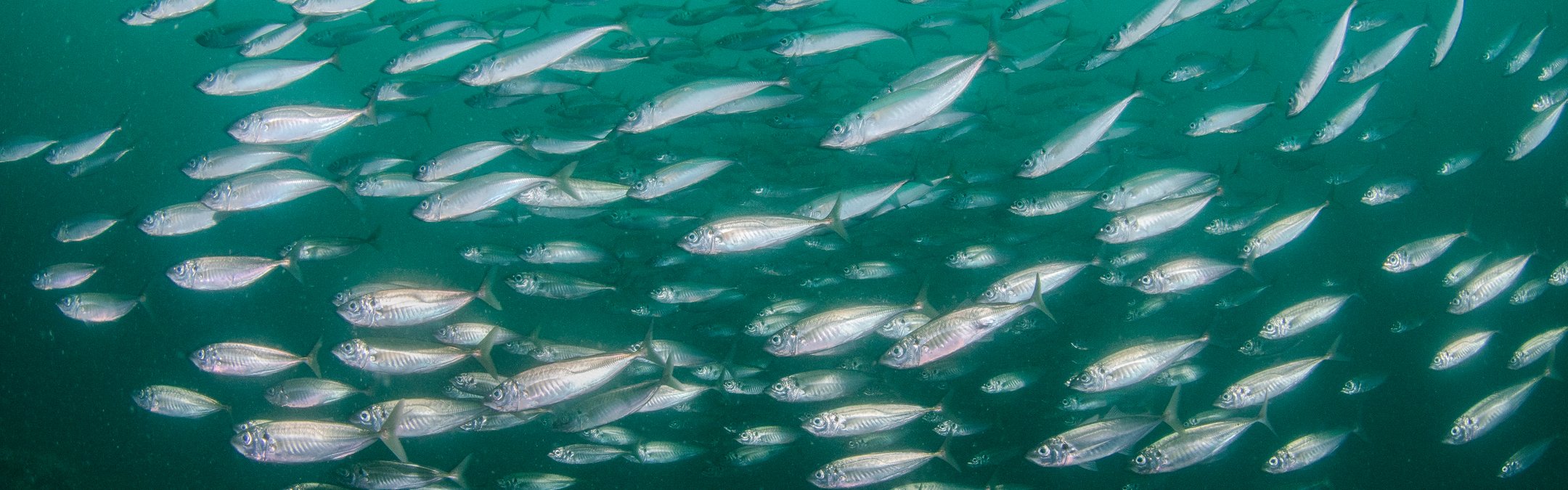
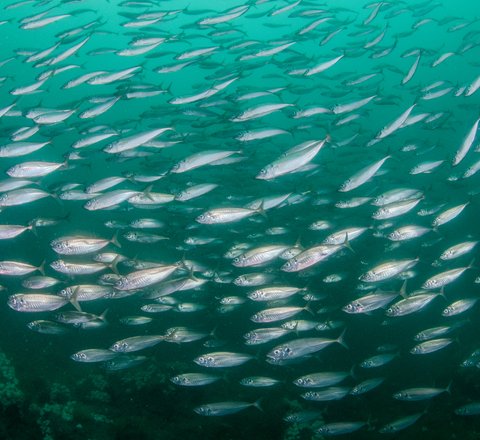
Atlantic mackerel are common around the west and northwest of the UK. They are found throughout the North Atlantic, Mediterranean, and Black Sea. They form huge shoals in the upper ocean, typically from the surface down to 200m depth. They will spend spring and summer close to shore and near the surface, moving inshore as waters warm. In autumn and winter, they migrate into deeper, warmer offshore waters, sometimes mixing with other mackerel shoals.
Did you know... Atlantic mackerel do not possess swim bladders, so they must keep swimming to stay buoyant and breathe.
Key facts
The Atlantic mackerel is a fast swimming, streamlined marine fish that often swim in huge, tightly coordinated schools, sometimes numbering in the thousands, helping confuse predators and hunt more efficiently.
They sit in the middle of the food chain with many predatory animals preying on them including sharks, dolphins, seals and some seabirds.
Unfortunately, Atlantic mackerel are a highly commercial species as huge numbers can be caught with nets by fishermen, they are predictable migrators and are highly marketable. Though IUCN ranks them as least concern because of the global number of Atlantic mackerel, the research taken as part of our Good Fish Guide shows that there are sustainabiliy concerns for Northeast Atlantic mackerel in particularly.
| Also known as | Boston mackerel, Scottish mackerel, Norwegian mackerel, Caballa |
|---|---|
| IUCN status | Least Concern |
| Diet | Primarily zooplankton, small fish, crustaceans, and squid. They mainly eat krill, shrimp and copepods |
| Length | Typically 30–50 cm |
| Weight | Atlantic mackerel can weigh between 1–1.5 kg on average |
| Distance | They are highly migratory species; forming fast-moving shoals. They are known for their long-distance seasonal migrations and will travel between spawning and summering grounds. |
| Lifespan | Atlantic mackerel usually live for 7-10 years but can live up to 20 years. They can start to reproduce when they reach the age of 2 or 3. |