Barrel jellyfish
Rhizostoma octopus
IUCN Status:Not Evaluated
One of the Marine Conservation Society's most commonly recorded jellyfish sightings around our coasts and a favourite food for leatherback turtles.
What do they look like?
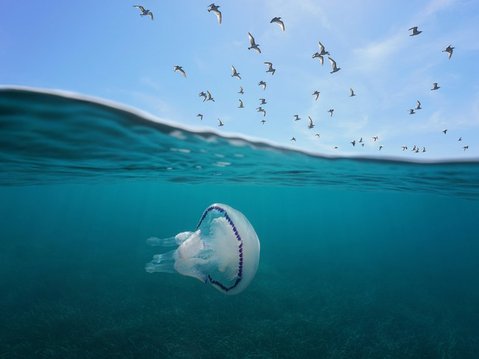
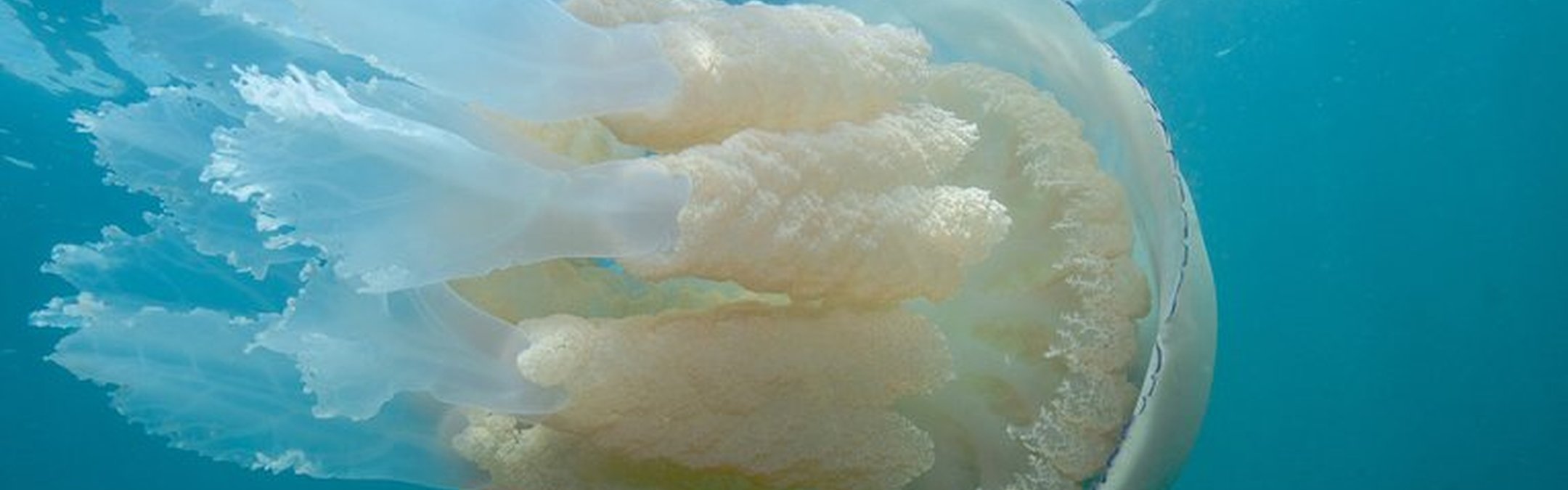
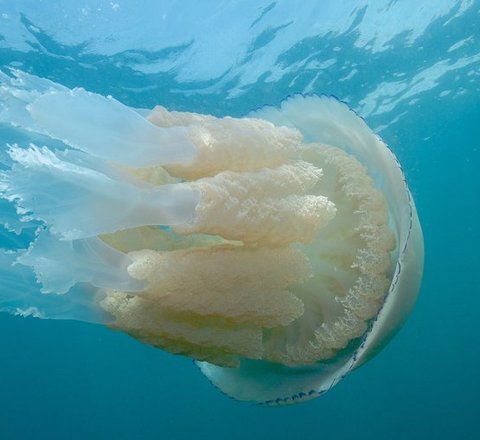
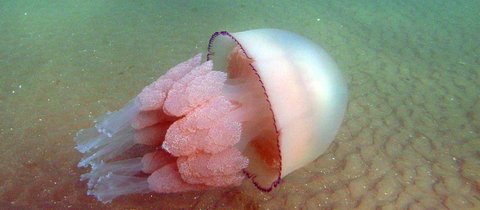
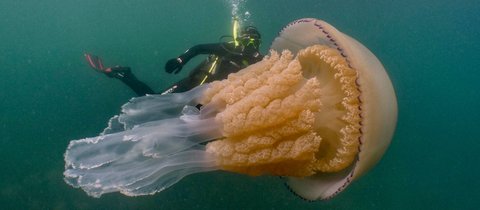
Barrel jellyfish are the UK's largest species of jellyfish. Their bells can can grow up to an incredible one metre in diameter! They have a solid, spherical, rubbery-looking bell which can be white, pale pink, blue or yellow.
Rather than thin tentacles like a lion’s mane jellyfish, barrels have eight thick, frilled arms. This is what originally gave them their Latin name – ‘Rhizostoma octopus’.
Where can they be found?
The Irish Sea seems to be a hotspot for them, in spring and summer.
Did you know... The barrel jellyfish actually has another Latin name; Rhizostoma pulmo. This is because the barrel jellyfish was discovered to be two entirely separate species. Rhizostoma pulmo is often cited as a species found in the Mediterranean and is often ca,,ed the distbin-lid jellyfish whereas rhizostoma octopus remains the species you find in UK waters.
Key facts
The barrel jellyfish is one of the most commonly recorded jellyfish as part of our annual sighting reports. We saw a massive surge in barrel jellyfish sightings in 2025 compared to the year before. Although they can often appear in large numbers, they are not that harmful to humans, as their sting is generally weak. However, it can still be painful if stung so should be avoided.
Barrel jellyfish stings have little effect on leatherback turtles which see them as a major food source because of their size. This can mean that a large swarm of barrel jellyfish in UK waters can encourage leatherbacks to visit our shores. Some research suggests increases in jellyfish numbers is tied to lower predation due to less turtles.
| IUCN status | Not Evaluated |
|---|---|
| Diet | Barrel jellyfish mainly feed on plankton. They use a form of filter feeding (unlike hunting which some other species of jellyfish do). They drift through plankton rich water and trap it in their frills before the plankton is slowly swept by microscopic hairs into the jellyfish's central mouth. |
| Length | Barrel jellyfish bells can reach up to 1m in diameter but they don’t often grow very long. They may look even larger if they end up washed up on a beach because the bell will often collapse and spread out. |
| Weight | Barrel jellyfish can weigh up to 35 kg, that's about the same as lifting a pair of heavy dumbbells. |
| Speed | Barrels are very slow as they often drift on ocean currents. However, they will pulse to keep upright and steer slightly. |
| Lifespan | Barrel jellyfish will often only live for up to 1 year. From a tiny polyp in winter, they will naturally die in late summer or autumn after spawning. This is why you might hear about lots of jellyfish getting washed up on UK beaches in May-July. |