Coley
Pollachius virens
IUCN Status:Least Concern
You may have heard of this fish because it's often suggested as an alternative choice to eat instead of cod or haddock. This is because it's also a white fish and is usually cheaper to buy.
What do they look like?
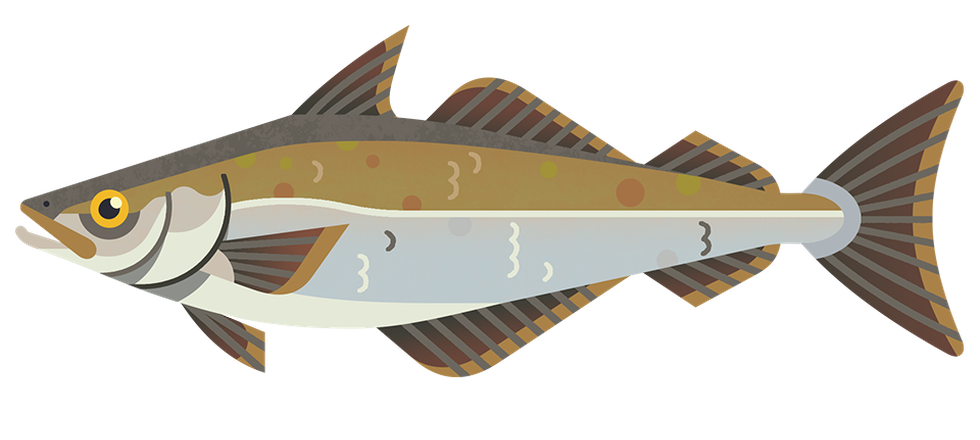
Coley (or saithe) is a dark brown fish that is part of the cod family. It's recognised by the distinctive single pale line which runs straight along the side of its body. It's often mistaken for its cousin, the European pollack, because of their similarities. Its name in the United States of ‘Atlantic pollock’ also confuses things further.
Where can they be found?
Can be found anywhere in the UK, but more common on north and east coasts. They often congregate near rocky gulleys and pier legs.
Did you know... coley have been recorded gathering around salmon farms for free food. They have learnt to feed on the leftover food that escapes the nets.
Key facts
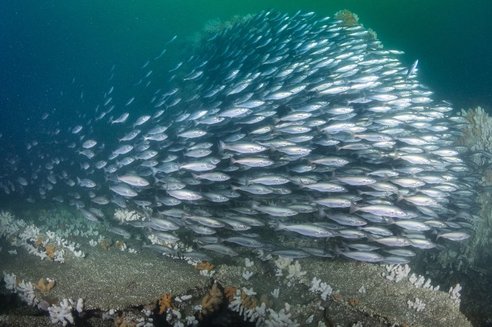
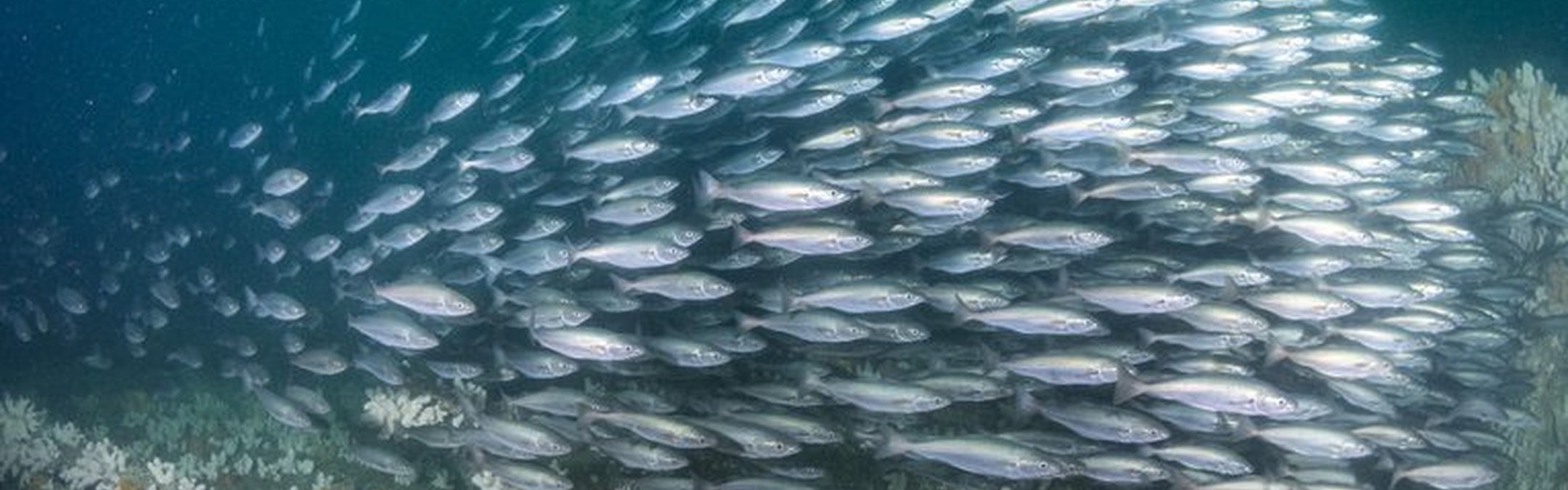
They are social, fast-moving, and agile fish that live in large schools. These schools can be found in the colder deep waters of the North Atlantic and Arctic Circle, but they move inshore during summer to feed. Although they eat other fish, coley are also eaten by a large number of marine predators such as sharks, seals, and dolphins.
| Also known as | Saithe |
|---|---|
| IUCN status | Least Concern |
| Size | Between 60-90cm, but some have been found to be 1-1.2m long |
| Weight | Because of their capacity to grow pretty large, coley can weigh over 20kg, though sadly few reach such proportions. |
| Speed | Coley tend to cruise at approximately a little over 2 mph, or 1m per second. Interestingly, studies have shown that they tend to swim faster at night. As a migratory species, they travel extreme distances across the North Atlantic, though some schools have been known to stay close to one area. Coley also travel vertically, swimming to deeper depths depending on the season. |
| Lifespan | They can live for 16 to 20 years. |
| Habitat | Subtidal |
| Diet | Coley are carnivorous fish and mainly eat smaller fish when they're adults such as sand eels, sardines and herring. Juveniles are more likely to eat slower prey such as crabs and molluscs. |