Common cuttlefish
Sepia officinalis
IUCN Status:Least Concern
With one of the biggest brain to body ratios, the amazing cuttlefish is intelligent enough to count.
What do they look like?
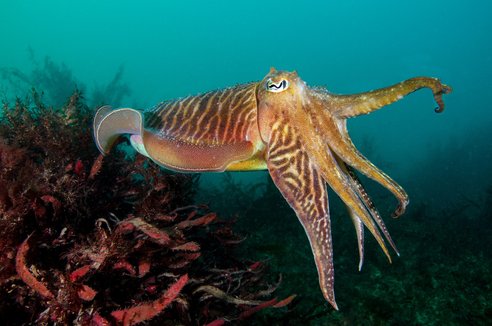
Chunky, with large eyes and excellent eyesight, they have two tentacles and eight arms with suckers all the way along them. Their internal, gas filled shell is known as a cuttlebone, which is used to control their buoyancy.
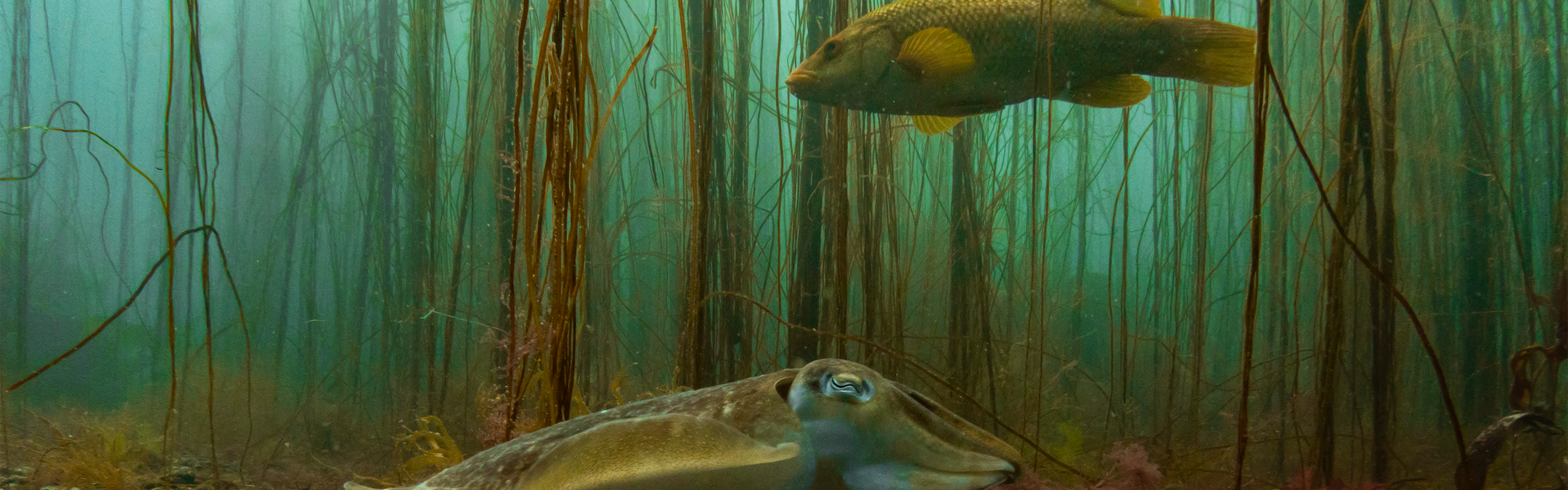
They can quickly change colour and texture to merge with their background to evade predators. They can mimic the seabed and will sometimes even sink into the seabed to hide. When cuttlefish sneak up on potential food, they shoot out their two feeding tentacles to grab their prey.
Their eggs are dyed black from their ink, making them look similar to grapes, hence their ‘sea grapes’ name.

Where can they be found?
Found around all coasts of the UK, especially south and west coasts.
Did you know... During spring and summer, the male cuttlefish will engage in spectacular displays of colour to attract females, passing pulses of colour rapidly along their body.
Key facts
Cuttlefish are molluscs, related to slugs, snails, mussels and clams. They’re a fierce predator and are even known to eat smaller cuttlefish.
| IUCN status | Least Concern |
|---|---|
| Length | Up to 45cm |
| Weight | 2-4 kg |
| Diet | Crabs and fish |
| Speed and distance | Top speed of 16 mph |
| Habitat | Lives on sandy and muddy sea beds in shallow coastal waters down to around 200 m, favouring temperate Eastern Atlantic and Mediterranean continental shelf habitats. |
| Lifespan | Usually two years with females dying after they’ve bred. |