Shore crab (Common, European)
Carcinus maenas
IUCN Status:Least Concern
What do they look like?
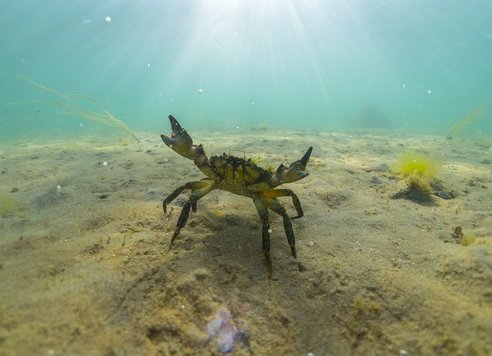
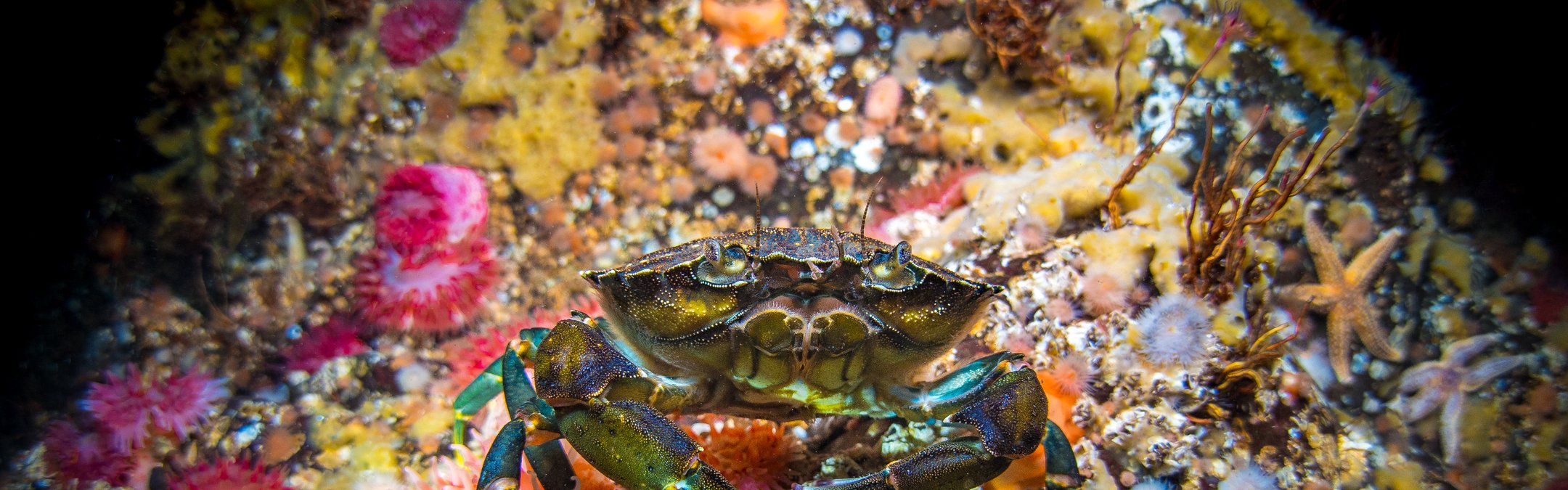
The common shore crab is typically green, though individuals can range from yellow and brown to almost black, allowing them to blend seamlessly into a variety of coastal habitats.
Where can they be found?
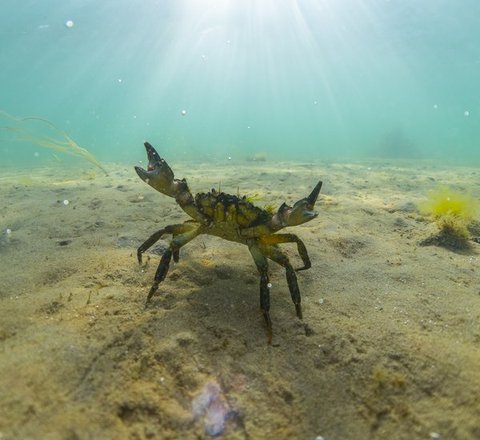
On the shore, amongst rocks or sand, and in estuaries, all around the UK and Ireland.
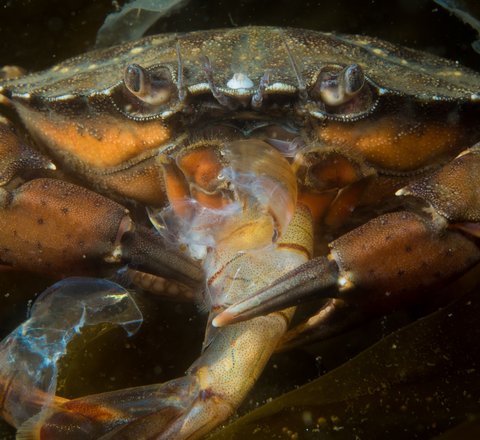
Did you know... Their shell colour often changes as they age and moult. Green crabs are usually younger, while red crabs are older.
Key facts
Around the UK, the shore crab is one of the most frequently encountered creatures while rockpooling. Although native to British and European waters, its ability to tolerate a wide range of temperatures and habitats has helped it to colonise coastlines across several continents.
Exceptionally tough and adaptable, it has unintentionally been carried globally in ships’ ballast water or clinging to hulls, which has meant shore crabs are now recognised as one of the world’s most invasive marine species.
In regions where it has been introduced, the shore crab poses a serious threat to local ecosystems. Its voracious appetite and aggressive feeding behaviour can outcompete native species, disrupt food webs, and even impact fisheries. A familiar and harmless sight on UK shores, it's become a powerful ecological disruptor elsewhere.
| IUCN status | Least Concern |
|---|---|
| Length | 5-8cm |
| Weight | 75-85g |
| Speed and distance | These little crustaceans are speedy, covering upto 1.5 meters per second! |
| Habitat | Rocky shore, lower shore, subtidal, seabed, rock pools |
| Diet | Common shore crabs enjoy molluscs, worms, crustaceans, plant material and detritus. |
| Age lifespan | A common crab has a relatively short lifespan compared to other crab species, averaging around 3-6 years. |