
Common octopus
Octopus vulgaris
IUCN Status:Least Concern
Common octopuses are surprisingly intelligent and are able to navigate complex mazes and unscrew jars in laboratory situations. In the open ocean, they've also shown this skill, being known to raid lobster pots.
What do they look like?
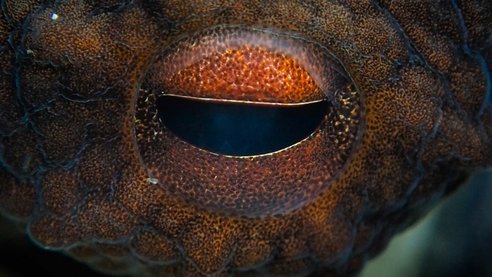
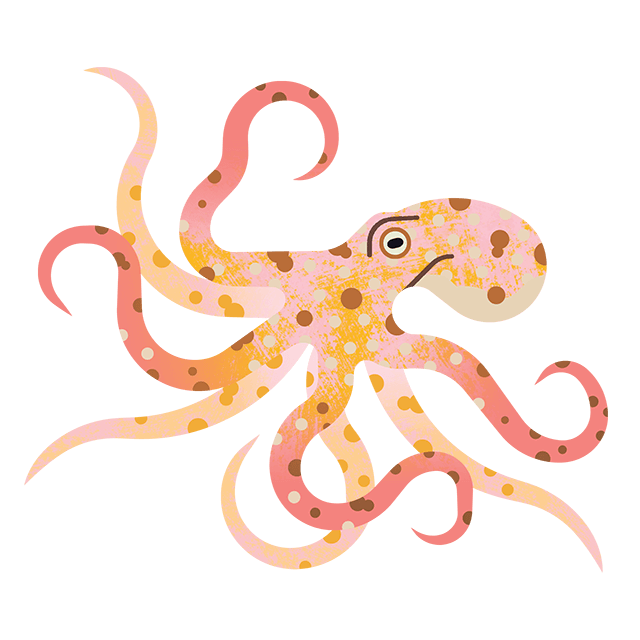
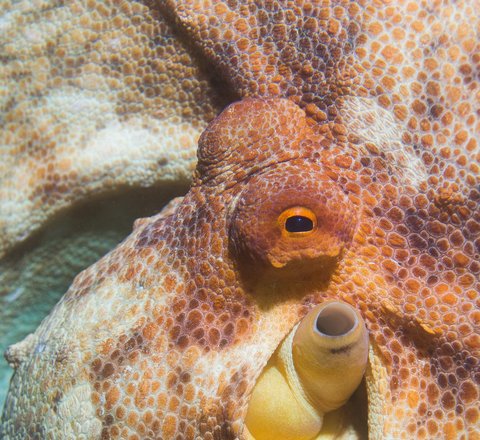
The common octopus has a warty body with two rows of suckers lining each of its eight “arms”. Like all octopuses, in its centre is a parrot like beak capable of breaking shells and, if the shell is too strong, a drill-like organ that can bore a hole into prey. This drill can inject a paralysing saliva which includes a venom that digests soft tissue. Luckily this venom is not deadly to humans, but a bite would still be incredibly painful and could break skin.
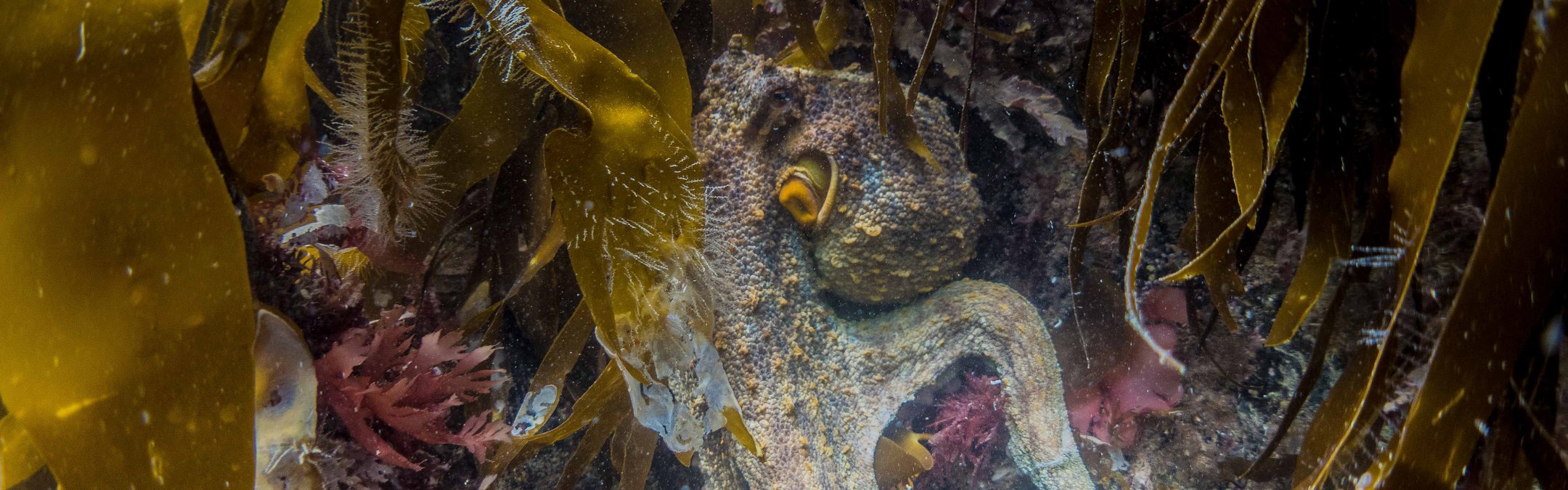
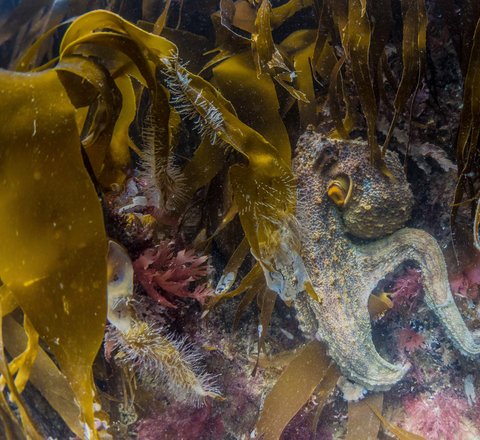
Usually brownish in colour, this octopus also uses camouflage to hide itself. Chromatophores (pigment filled cells) expand and contract to change their skin colour, and papillae (small muscles) change their skin shape to match their surroundings in both colour and texture! If their camouflage fails them though, they can also escape danger by releasing an ink cloud that confuses predators, before using jet propulsion to get away from the area quickly.
Where can they be found?
Can be found all over the world in tropical, subtropical, and temperate coastal waters, typically at depths of 0–200 meters.
Did you know... common octopuses are incredibly intelligent. They have evolved to have large brains and an extensive nervous system. Each individual has about 500 million neurons in their body, almost comparable to dogs.
Key facts
Despite the name, it's actually rarer to see one in the UK than the curled octopus - Eledone cirrhosa. However, there have been several blooms in UK waters including one in 2025, so you may see one due to the warming ocean. This may have an ongoing effect on brown crab, lobster and scallop populations which are heavily preyed on by the common octopus.
| IUCN status | Least Concern |
|---|---|
| Size | Up to 1.8 m long |
| Weight | Up to 10 kg |
| Speed | They usually move fluidly, using their arms to guide them, but they can jet forward by expelling water through their mantles for evasion. |
| Lifespan | Typically 1-2 years, though male and female adults usually die shortly after spawning and brooding, respectively. |
| Habitat | Subtidal, seabed |
| Diet | Crabs, crayfish, and bivalve molluscs (such as cockles) are preferred, although they’re opportunistic and often eat almost anything they can catch. |