Thresher shark (common)
Alopias vulpinus
IUCN Status:Vulnerable
What do they look like?
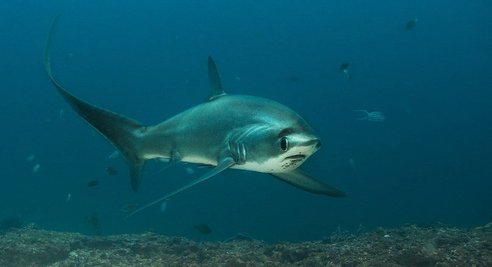
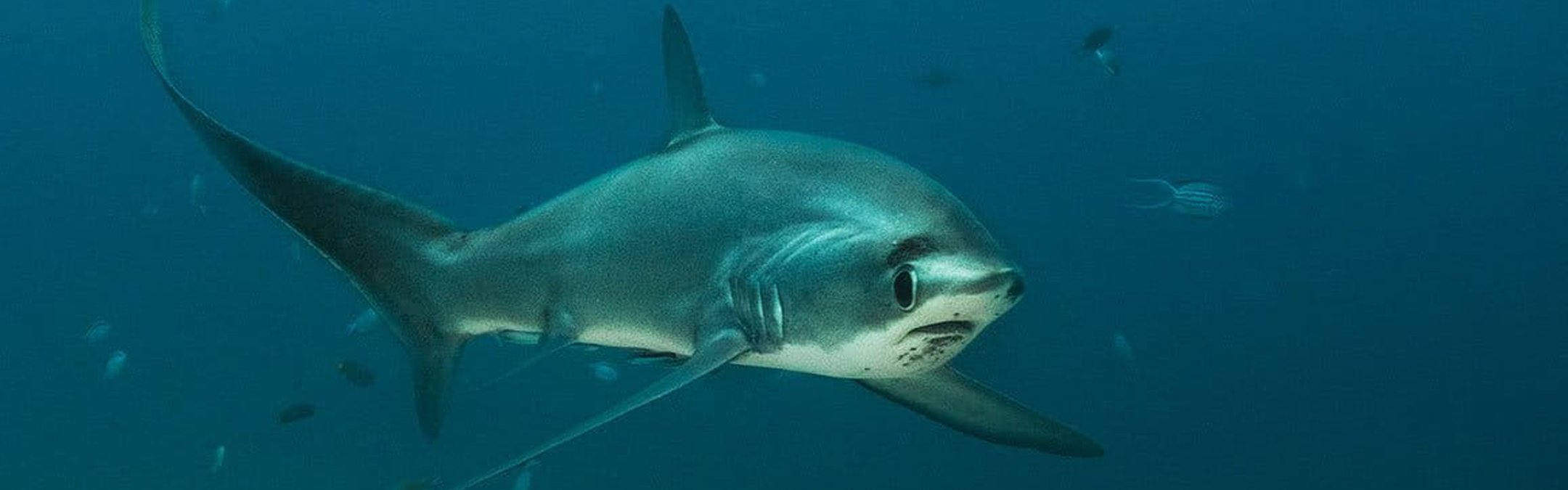
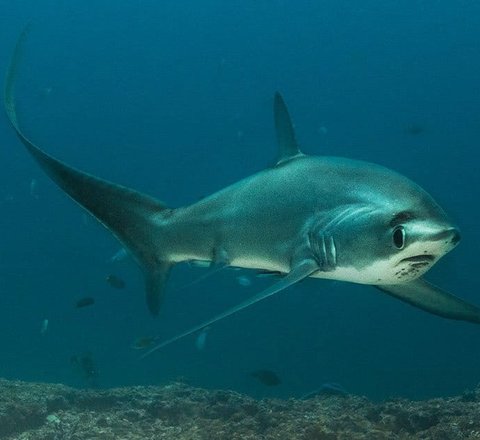
You may think this is an unremarkable looking shark - except when you see its enormously extended tail! It uses its incredible tail to corral and stun schools of fish, such as mackerel before eating its dazed prey. They have also been known to thrash around on the seabed, raising mud and disorientating surrounding fish, then easily picking them off too. It is a master at confusing its prey.
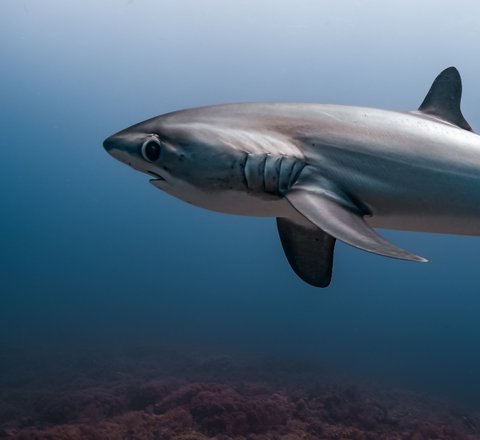
Another feature of the common thresher shark is its big eyes and small mouth make it look surprised at all times. This is proof that not all sharks are as scary looking as the great white or mako shark.
Where can they be found?
Usually south western UK coasts - may leap from the water.
Did you know... Unlike many other sharks, threshers can maintain their body temperature above the surrounding water meaning they can keep their muscles warm to reach and maintain faster swimming speeds.
Key facts
Thresher sharks have also be caught breaching out of the water with help of their powerful tails to help remove parasites and communicate with other threshers.
The common thresher is the largest of the 3 thresher shark species, the others are the bigeye thresher and the pelagic thresher. All 3 have been recorded visiting UK waters but other than the common thresher, this is extremely rare.
| IUCN status | Vulnerable |
|---|---|
| Length | 6.1m |
| Weight | 500-510kg |
| Speed and distance | They are capable of bursts of up to 30-37 mph, whipping their tail at an incredible 22-30 mph! |
| Habitat | Open ocean |
| Diet | The common thresher shark's diet primarily consists of small, schooling fish like mackerel, herring, and sardines. However, they aren't too picky. They also eat squid, crustaceans, large fish like cod and it is also thought that they might also eat seabirds if they can reach one fast enough. |
| Age lifespan | The common thresher shark cruises the ocean for approximately 38-50 years. |