Compass jellyfish
Chrysaora hysoscella
IUCN Status:Least Concern
Compass jellyfish are consistently recorded within the top 4 jellyfish seen as part of our annual wildlife sightings data.
What do they look like?
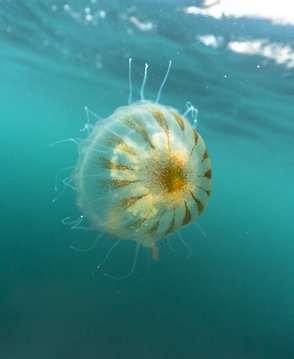
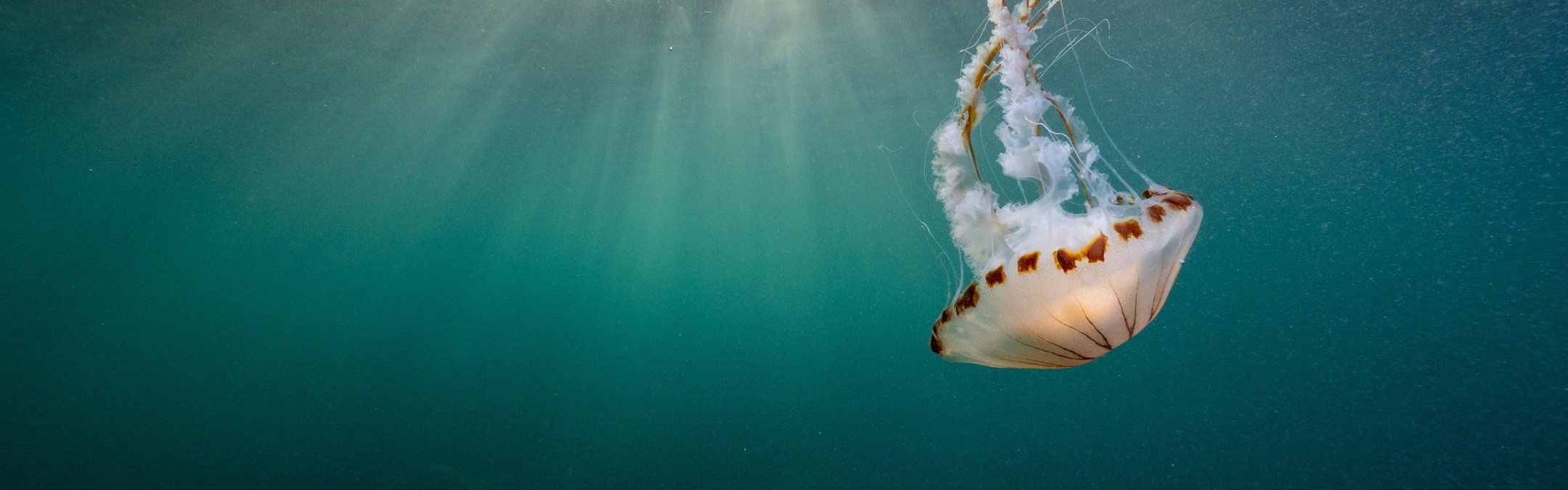
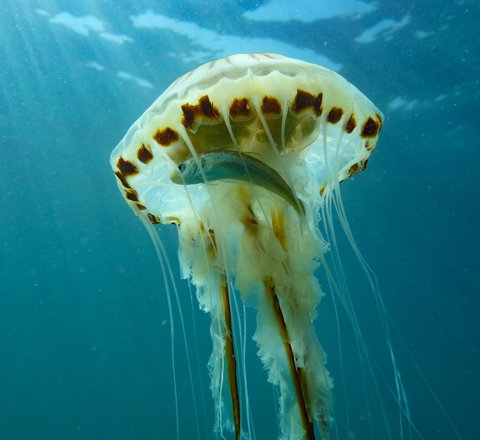
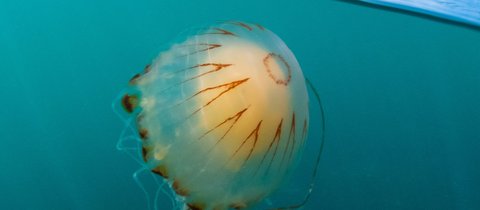
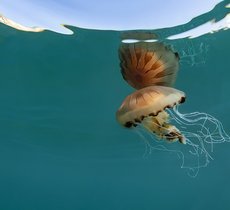
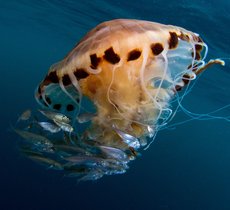
The compass jellyfish can vary in colour, but is usually recognised by its pale, umbrella‑shaped bell marked with distinctive brown V‑shaped lines, arranged like the points of a compass. With its classic rounded bell and long trailing tentacles, it’s often considered the most typical‑looking jellyfish. This species is capable of delivering a painful sting to humans.
Where can they be found?
Found mainly in the west, but can appear anywhere.
Did you know... Despite their name, compass jellyfish have no control over their direction as they have no brain. They rely on tides and currents to move.
Key facts
Occasionally, you may spot a juvenile fish sheltering safely among its tentacles - some young fish seem unaffected by the jellyfish’s stings, so use the tentacles as protection from predators.
| IUCN status | Least Concern |
|---|---|
| Length | 30cm |
| Weight | 200 – 2,400g |
| Speed and distance | Defined as a planktonic species, one which is subjected to movement through currents, winds and tides, there is no speed recorded for this species. We do know that they pulse rhythmically through the water - going with the tide as they're not strong swimmmers. |
| Habitat | Open ocean |
| Diet | Compass jellyfish are partial to small fish and, like a scene from a horror movie, enjoy tucking into other jellyfish. |
| Age lifespan | Compass jellyfish have short life spans of around a year. |