Cormorant
Phalacrocorax carbo
IUCN Status:Least Concern
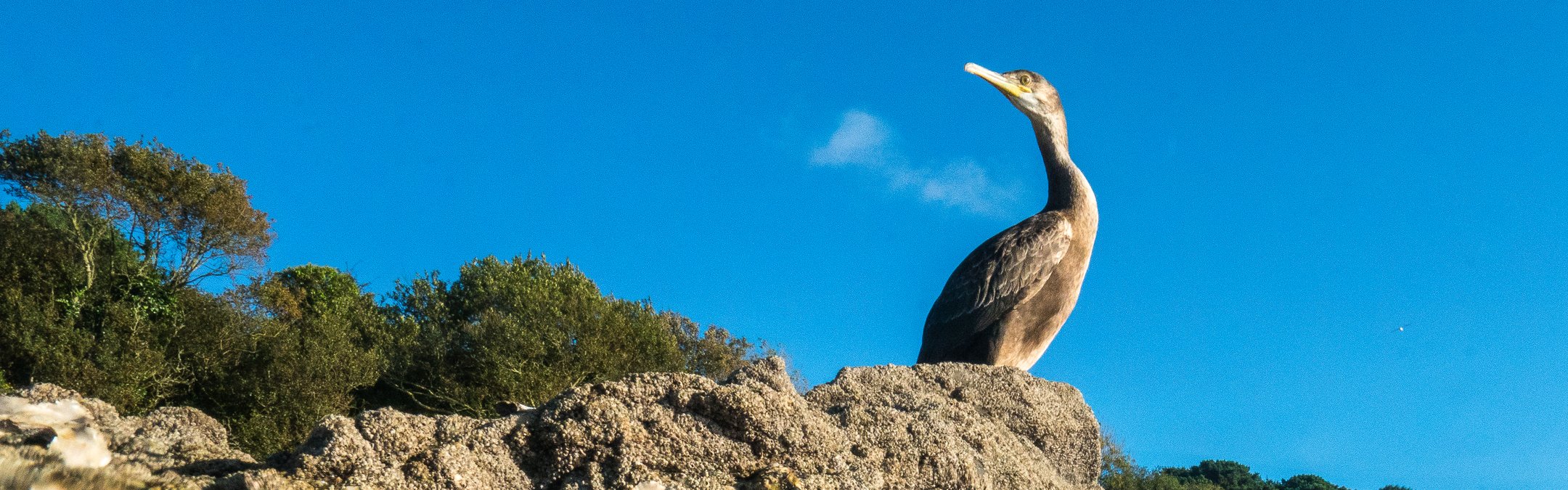
Cormorants are a common sight around UK rivers and lakes and there are two UK sub species; coastal-nesting and inland dwellers.
What do they look like?
Sleek, dark and intriguing, cormorants occupy a special place in Norse folklore as the spirit of seafarers lost to the sea. They often swim so low in the water that only their serpent-like neck can be seen amidst the waves.
Where can they be found?
All UK coasts, plus inland reservoirs and rivers.
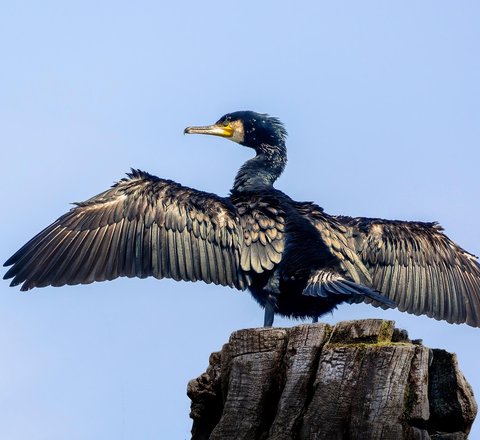
Did you know... Unlike water birds such as ducks who have waterproof feathers, cormorant feathers are only partially waterproof. This is so water can penetrate their feathers, displacing air and allowing them to dive fast and deep for fish. Hence why they need to hold their wings out to dry after hunting!
Key facts
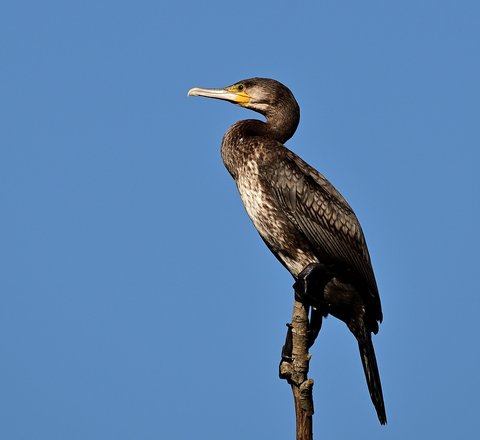
Along with their long necks, identify adults by their white throat and iridescent black plumage. Juvenile cormorants are dark brown. You can also spot them standing with their wings held open to warm up and dry in the sun.
| IUCN status | Least Concern |
|---|---|
| Size | 80-100cm, with a wingspan between 130-160cm |
| Weight | 2,100 – 2,500g |
| Speed | They are fast fliers up to 35 km/h. |
| Lifespan | 11-20 years |
| Habitat | UK populations are typically local and like marine, intertidal and wetland areas, travelling only around a 6-25 mile radius around their colonies. Birds do arrive to the UK for wintering from mainland Europe however they are capable of flying up to 600km during migration. |
| Diet | Mostly fish, typically bottom-dwelling or schooling fish less than 6 inches long. They may also eat amphibians such as frogs, crustaceans, eels and water snakes. |