Crystal jellyfish
Aequorea forskalea / Aequorea victoria
IUCN Status:Not Evaluated
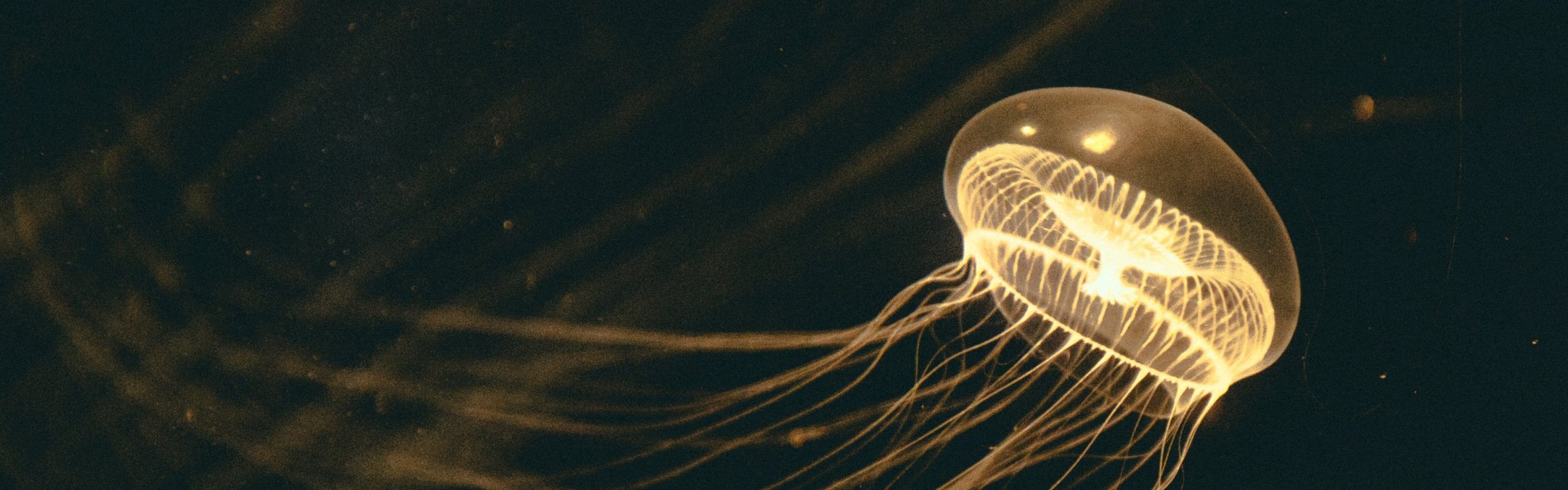
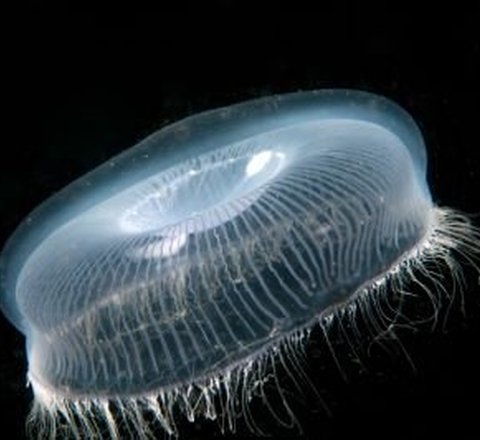
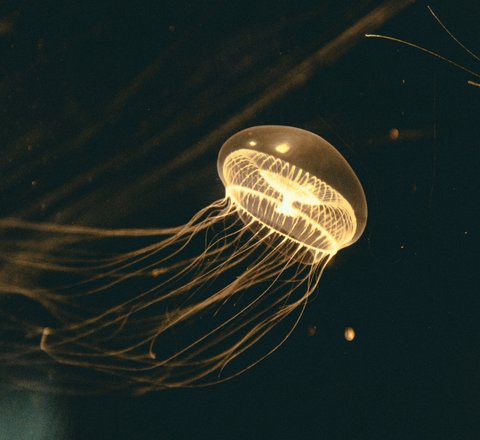
The crystal jellyfish gets its name from its translucent appearance. It has a shimmering bell of clear jelly which is fringed with short, hair-like fronds.
What do they look like?
It can have up to 150 of these hair-like fronds or tentacles. Fine white lines extend from the centre of their bells, which not only adds to their ethereal appearance but gives them their other name; the many-ribbed jellyfish.
Where can they be found?
The crystal jellyfish can be found amongst the waves in the Atlantic and North Seas, and can wash up on beaches.
Did you know... Crystal jellyfish can emit light and glow in vibrant green or blue hues due to special proteins. These naturally occurring proteins have revolutionised science and medicine in areas including cancer research, neuroscience and malaria research.
Key facts
Like some of the most recognisable jellyfish such as by-the-wind sailors and Portuguese man o’wars, the crystal jellyfish is not actually a true jellyfish, but a hydrozoan.
There are 2 species of crystal jellyfish, one found in the North Pacific (aequorea victoria) and the other found in the Atlantic and Mediterranean (aequorea forskalea). They're extremely hard to distinguish from one another and usually require expert analysis to do so. With warming waters, relying on location is also not a fool-proof way to differentiate them.
Although crystal jellyfish are commonly found near our shores, they often go unnoticed due to their small size and fragility. However, the number reported to us in our jellyfish sightings are gradually rising each year. This is most likely caused in part by people's awareness of the species, as well as warming waters. They have a very mild sting that is not generally harmful to humans.
| IUCN status | Not Evaluated |
|---|---|
| Size | Their bell-shaped bodies can grow up to 25cm in diameter |
| Weight | No data is available because there are too many factors to measure. They are made primarily out of water and collapse when taken out of water, but they are extremely light |
| Speed | Their movement is limited and they mainly bob up and down in the ocean. They rely on the currents to travel any distances and will drift rather than actively swim |
| Lifespan | Approximately 6 months |
| Habitat | Open ocean |
| Diet | Crystal jellyfish feed on other jellyfish, including comb jellyfish, and have even been observed consuming jellyfish larger than themselves. Talk about a big dinner! |