Eider
Somateria mollissima
IUCN Status:Near Threatened
What do they look like?
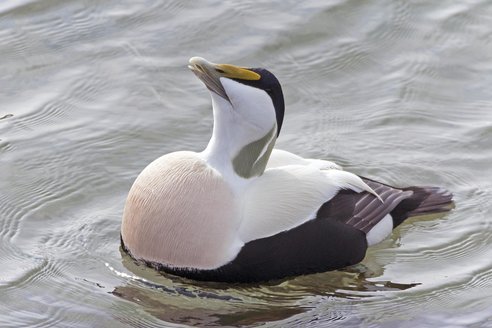
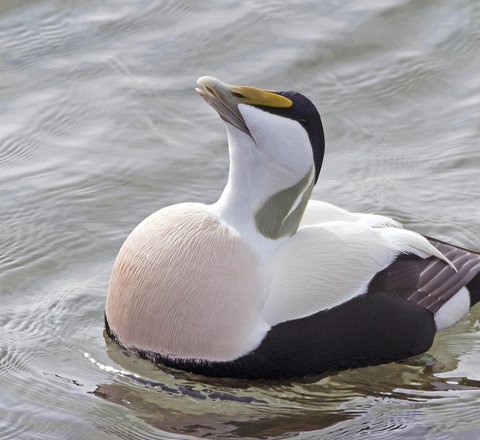
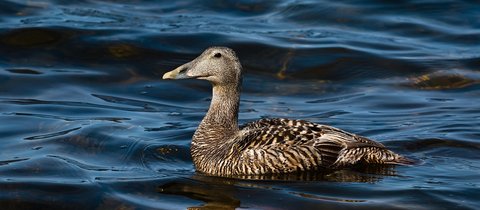
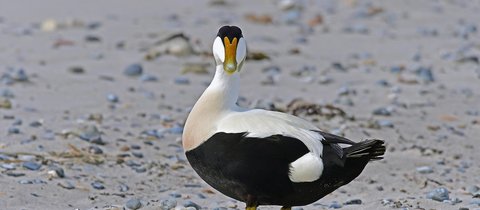
The eider is the largest and heaviest sea duck in Europe. The males are very dapper, as if in black and white evening wear, while females can appear a little dowdy in mottled brown - a colouring more practical for camouflage when sitting on eggs. Eiders are sociable animals and can be quite noisy when together in groups.
Where can they be found?
Resident populations are more common in the north of the UK. Close to the shore, bobbing about in the waves.
Did you know... Non-breeding females will often join mothers and their ducklings in the water to form a creche and help protect them from predators such as gulls and foxes.
Key facts
Their soft, warm down is used for pillows and quilts, which led to their population decline in the 1800's. Eiders are also known as cuddy ducks, after the Anglo-Saxon monk St Cuthbert, who had a soft spot for them.
They have a really distinctive call - making an "A-woooo" sound while they stretch their neck upwards to the sky.
| Also known as | Cuddy ducks |
|---|---|
| IUCN status | Near Threatened |
| Length | 50-71cm with a 80-108cm wingspan |
| Weight | 1.2-2.8kg |
| Speed and distance | Despite being on the heavy side for a bird, they can fly at surprisingly fast speeds of around 50-60mph. |
| Habitat | Shorelines |
| Diet | This seabird enjoys a seafood diet of mussels, clams, sea snails, crustaceans, small fish and even spiky sea urchins. |
| Age lifespan | As well as being one of the heaviest birds, eiders also have one of the longest lifespans of around 20-25 years. |