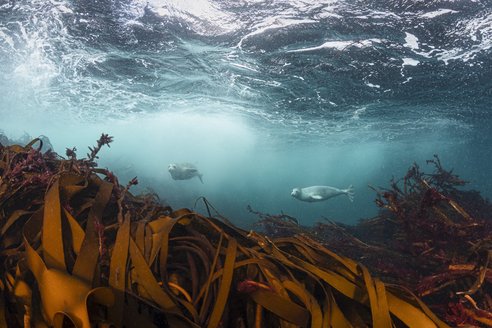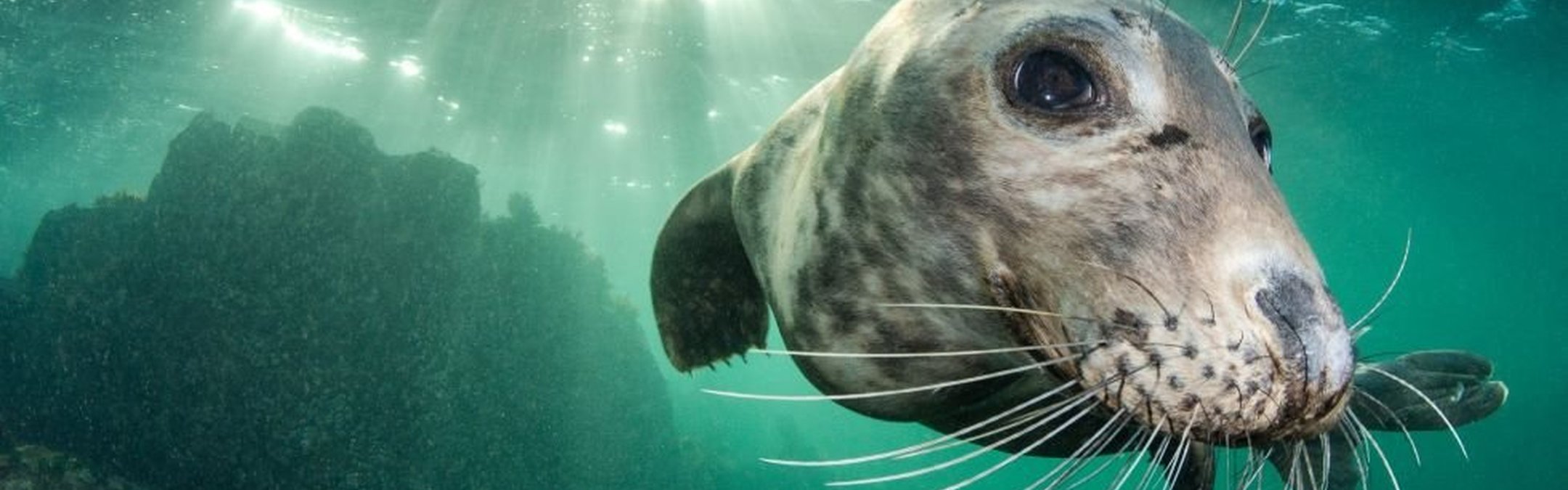
Grey seal
Halichoerus grypus
IUCN Status:Least Concern
These much-loved ‘puppy-dog eyed’ seals are the largest of the two seal species that live in the UK (the second is the common seal). Cute as they are, they are the top marine predators in UK waters, consuming up to six per cent of their body weight daily. After fishing sprees, they return to land to rest – making them a common sight on certain British beaches.
What do they look like?
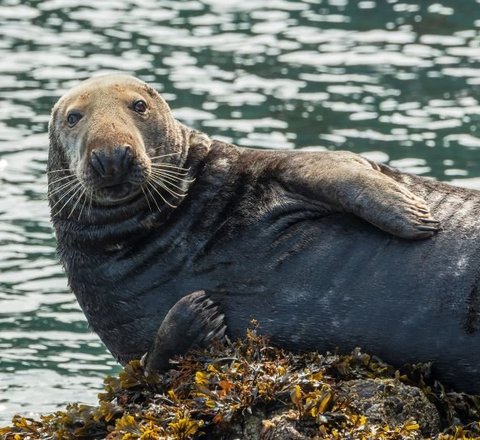
You can identify them by their dog-like faces, long whiskers and ‘earless’ appearance. Females typically have grey fur with dark spots, while males have dark fur with lighter spots.
It is similar in appearance to harbour seals except harbour seals have distinctive ‘V’ shaped nostrils.
Where can they be found?
While they look like the ultimate beach dwellers on land, grey seals can dive underwater for a maximum time of 30 minutes, and, although they prefer shallow waters, they have been recorded diving down to 412m.
Did you know... their scientific name (Halichoerus grypus) means 'hook-nosed sea pig'.
Key facts
Grey seals are a big conservation success story, and proof that with the right efforts, we can bring species back from the brink of extinction. In the early twentieth century, their numbers dropped as low as 500 due to overhunting. Today, more than 120,000 grey seals make the UK their home, representing about 40% of the global population.
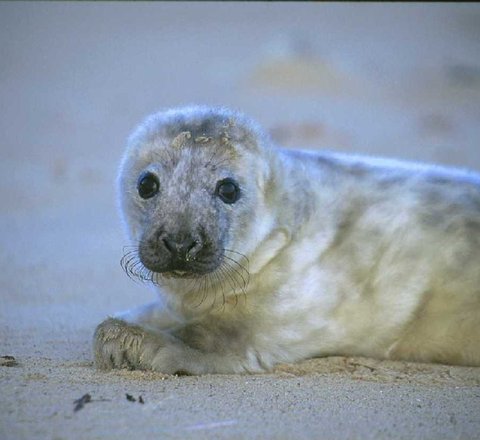
Grey seals breed from September to December with females giving birth to a single pup, born with a fluffy white coat called lanugo. We’re not biased, but we think they’re contenders for the cutest babies in the animal kingdom. During nursing, which lasts around 20 days, mothers provide their pups with nutrient-rich milk that contains 60% fat, helping them gain weight rapidly.
If you see seals on the beach, be sure to keep your distance to avoid disturbing them, and contact your local stranding team if you fear an adult seal or pup is in distress.
| IUCN status | Least Concern |
|---|---|
| Size | Up to 3 metres |
| Weight | Males up to 300 kg, females up to 200 kg |
| Speed | 10-20 km an hour with the ability to reach 25-35 km an hour if hunting or escaping predators. Most foraging occurs within 100 km of their home base, but they have been recorded travelling hundreds and even thousands of kilometres in the North Sea. |
| Lifespan | 30-40 years |
| Habitat | Coastal areas of the North Atlantic Ocean, the Baltic Sea, and the North Sea. |
| Diet | Grey seals love to eat fish such as sand eels, whiting, and flatfish |