Guillemot
Uria aalge
IUCN Status:Least Concern
What do they look like?
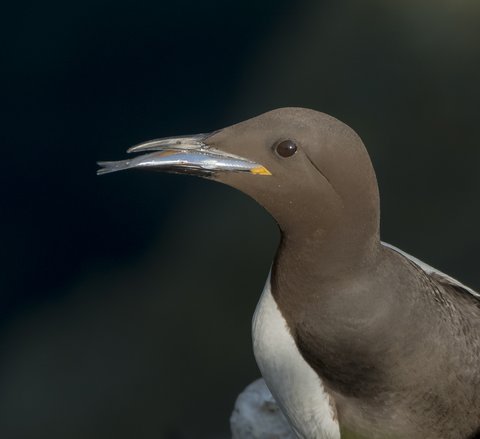
These birds are dark brown on top and white underneath, but in winter they have white faces. They have a ‘bridled’ form meaning a white ring around the eye and a stripe behind it, making it look like they're wearing spectacles.
Where can they be found?
To the north and east of the UK especially, but also breeds on the South Coast (Dorset).
Did you know... At just three weeks old, guillemot chicks will jump off the cliff and into the sea.
Key facts
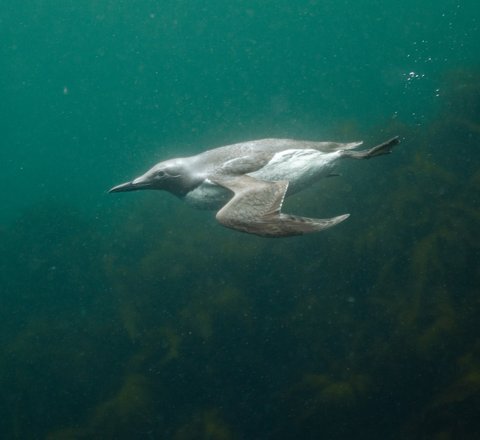
Guillemots will dive down into the sea using their wings to swim after their prey. They’re a fast flier and agile underwater swimmer, recorded diving deeper than 50 metres.
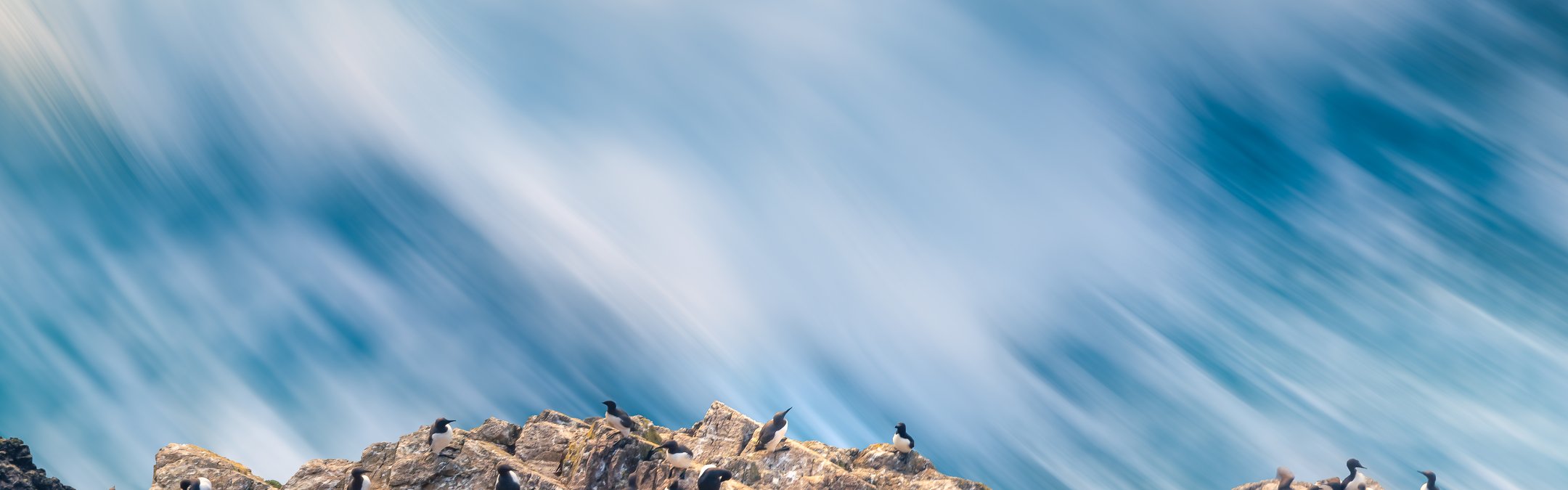
They come to land only to nest in summer, tightly packed on steep ledges and cliffs around the coast, keeping them safe from predators. Their territory is very small – only a beak’s length around their nest.
Female guillemots lay a single pear-shaped egg a year. The chick will dive off the cliff into the sea with its father, who will look after the chick in the sea until it’s old enough to care for itself.
| IUCN status | Least Concern |
|---|---|
| Length | 38 - 45cm |
| Weight | 850 – 1130g |
| Speed and distance | Speeds of almost 50 mph. They are proficient divers, hunting at depths of over 30 metres. |
| Habitat | The open ocean. Cliffs only when nesting. |
| Diet | Fish, crabs and molluscs. |
| Lifespan | Average lifespan of 23 years. |