Herring gull
Larus argentatus
IUCN Status:Least Concern
This bird needs little introduction as a regular visitor to the British seaside! Most people call these by their colloquial name ‘sea gull’.
What do they look like?
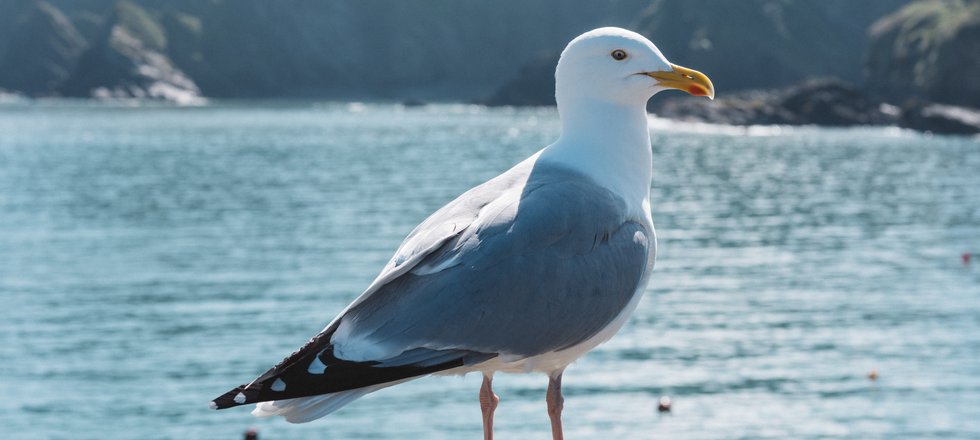
These coastal birds have grey wings, pink legs and a yellow bill marked by a distinctive red spot.
Where can they be found?
Hard to miss at the coast, easily attracted by a bag of chips!
Did you know... It can take four years for a herring gull to get their adult plumage. When they feel threatened, they will use a "dive-bomb" defense mechanism.
Key facts
There’s much more to herring gulls than their fondness for fish and chips. These birds are highly intelligent, known to use tools such as stones to crack open eggs and shellfish. Their lifespans can exceed 30 years, and they exhibit complex social behaviours like preening, courtship displays, and territorial defence within large colonies.
As opportunistic feeders, they often follow fishing boats to snatch discarded fish - as well as the odd chip from unfortunate beachgoers! Their adaptability has enabled them to thrive inland as well as along the coast.
Despite their resilience, herring gull populations in the UK have fallen by as much as two-thirds since the 1970s. Like other seabirds, they face threats including habitat loss, food scarcity, and pollution.
| Also known as | Sea gull |
|---|---|
| IUCN status | Least Concern |
| Size | 55-67cm and a 130-155cm wingspan |
| Weight | 700g-1.5kg |
| Habitat | Man-made habitats, cliffs, above high water, onland |
| Speed and distance | A capable flyer, these birds can fly at 25mph - a helpful pace as they travel significant distances, often flying up to 60 miles away from their colony on their hunt for food. |
| Diet | Herring gulls eat lots of fish, shellfish and insects, but they will also eat human food waste. |
| Age lifespan | In comparison to other sea birds, herring gulls have a relatively short lifespan of around 12 years old, but they have been known to reach 20. |