Humpback whale
Megaptera novaeangliae
IUCN Status:Least Concern
A spectacular UK visitor known for dramatic breaching and the males' beautiful song.
What do they look like?
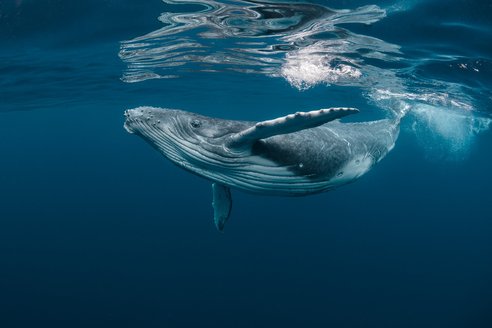
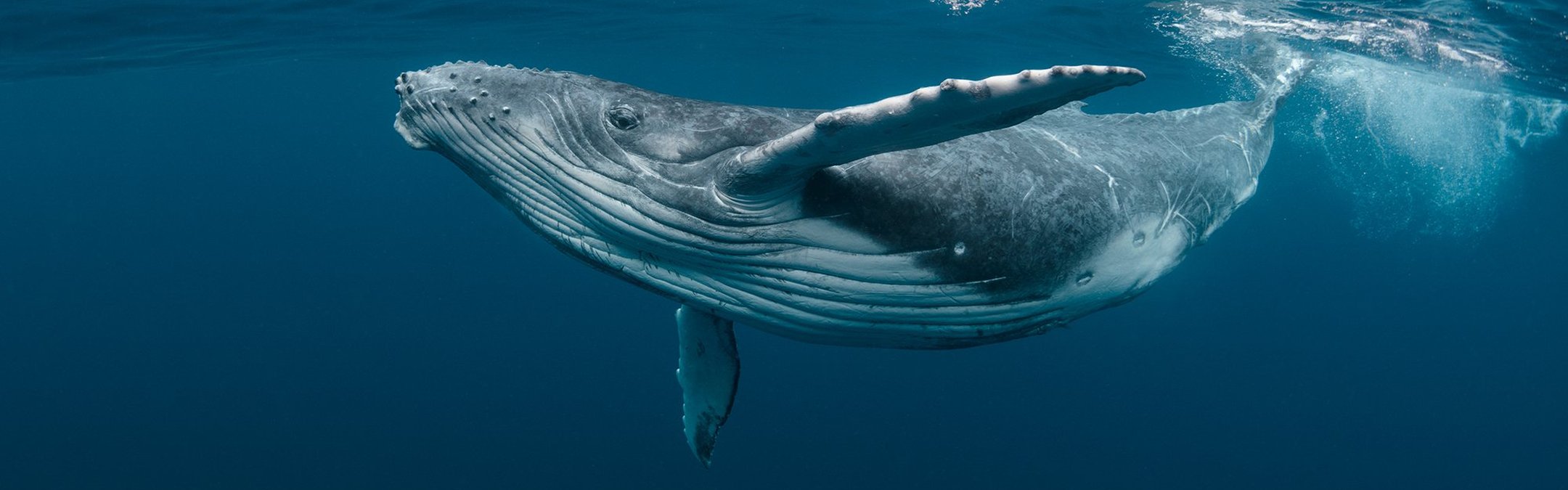
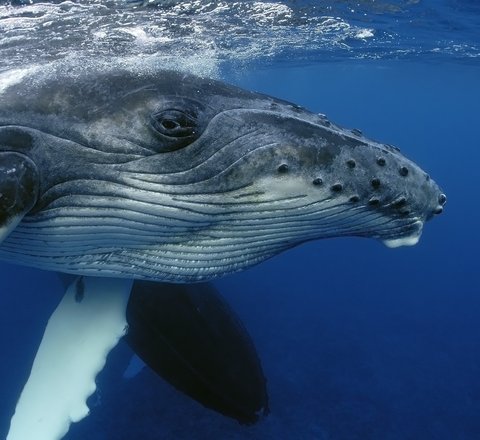
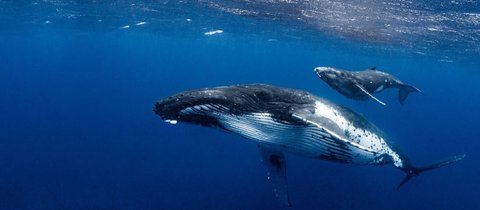
You can identify them by their dark grey colouring, white ridged underside, and long, ‘knobbly’ flippers, as well as the distinctive bumps on their head and lower jaw. Their name comes from the noticeable ‘hump’ at the base of their small dorsal (back) fin.
Where can they be found?
Global. In the UK they have recently been seen (usually during winter migration December-March) off Scotland's west coast, the Shetland Isles, Hebrides, the Cornish coast and in the English Channel.
Did you know... Humpback whales use a technique called bubble-net feeding to round-up krill and other prey. This involves diving below their prey and blowing spiral rings of bubbles from their blowholes upwards. This acts as a ‘net’ to trap prey which they then consume by lunging upwards.
Key facts
Named after the noticeable ‘hump’ at the base of their small dorsal (back) fin, humpback whales are a spectacular UK visitor.
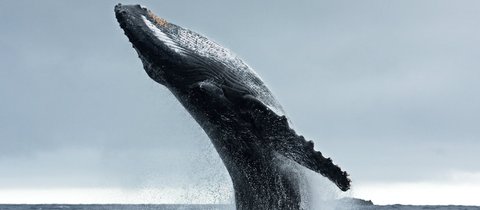
One of the most acrobatic cetacean species, breaching humpback whales are an amazing sight, leaping belly-up into the air and crashing back into the water. Scientists believe this display may be a form of communication that helps whales connect over vast distances, remove parasites, or possibly even play.
As well as their dramatic surface activity (often delighting boat spectators around the world), humpbacks are known for their song. Hauntingly beautiful, humpback males sing during breeding season to establish dominance, attract a female and communicate location. The songs are long and complex, with studies finding they mirror patterns of human language. Although most commonly heard in breeding grounds, they have also been known to sing in feeding grounds, leading scientists to continue to explore and study the complexities of their beautiful language.
| IUCN status | Least Concern |
|---|---|
| Size | 14-18 metres (46-60 feet) |
| Fin span | 5 metres |
| Weight | Up to 40 tonnes |
| Colouration | Grey with hump on their dorsal fin and white ridged underside |
| Diet | Humpbacks are baleen whales which means they have a keratin-based filtering system rather than teeth. They use their hair-like baleen to filter small prey from their huge mouthfuls of water, eating lots (and lots!) of krill per mouthful. |
| Habitat | Deep water, with a preference for continental shelves and seamounts. Summers are spent feeding in cold, productive and nutrient rich waters, while in winter they mate and nurse their young in tropical waters. |
| Breeding / Lifespan | Can live around 50 years. The gestational (pregnancy) period is around 11.5 months. |
| Migration | Humpback whales migrate further than any other mammal. They travel around 3,000 miles between their breeding and feeding grounds on a regular basis, and the longest ever recorded migration was 11,706 miles. |
| Communication | Loud, complex "songs" lasting up to 30 minutes long, with only males singing. |
| Biggest threats | Climate change, pollution. While their IUCN status is Least Concern, some sub populations are considered endangered. Humpback whales were heavily hunted through the 1960s, however populations have thankfully recovered well. |