Leatherback turtle
Dermochelys coriacea
IUCN Status:Critically Endangered
What do they look like?
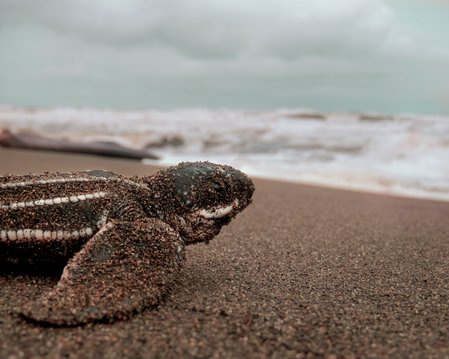
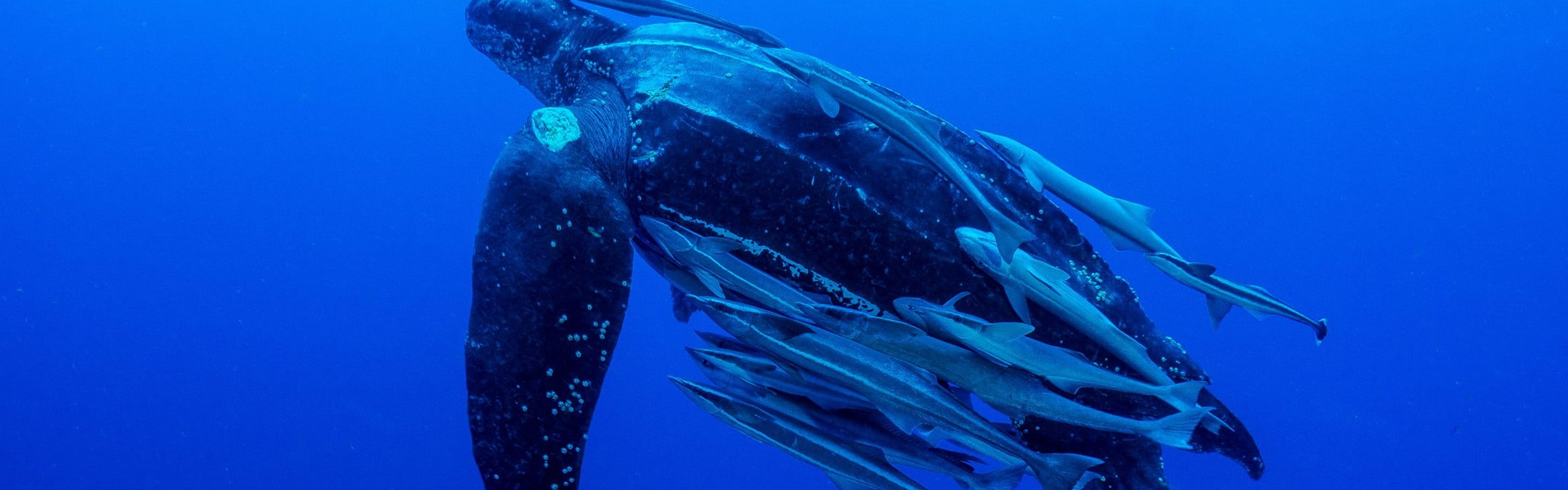
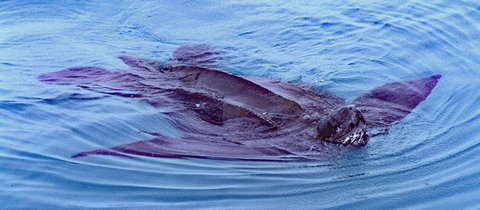
The leatherback turtle is the largest turtle species in the world, with adults known to grow more than 2 metres, and they're the only species that lacks scales and a hard shell. They’re named for their tough, rubbery skin and have been around since the age of the dinosaurs. They have downward-facing spines inside their throat to stop prey from getting out.
Where can they be found?
West coasts of the UK in the summer months. Rarely spotted elsewhere in UK seas.
Did you know... The leatherback turtle is specially adapted to be able to cope with colder seas, which allows them to dive to great depths to hunt jellyfish. The deepest recorded dive reached nearly 1,219m.
Key facts
The largest leatherback turtle was found here in the UK – spotted by a member of the public at Harlech, Wales, in 1988. They’re a regular UK visitor, looking for jellyfish which are abundant in the Irish Sea, though they also feed on squid, fish and even seaweed.
This sea turtle travels alone, only coming together to breed. They migrate further than any other reptile, nesting mainly on tropical or subtropical beaches. Some average 3,700 miles each way. Whilst they spend most of their lives in the ocean, females leave the water to lay eggs, nesting on tropical and subtropical beaches. They dig a large pit to lay their eggs and then leave them unsupervised. Once they hatch, the baby turtles make their way to the sea alone.
The leatherback population is declining in many parts of the world, and it’s estimated that the global population has declined 40% over the past three generations. They face threats on both nesting beaches and in the marine environment, such as incidental capture in fishing gear.
| IUCN status | Critically Endangered |
|---|---|
| Length | Up to 2.5 metres |
| Weight | Adults reach 250 – 700kg |
| Speed and distance | Highly migratory, swimming over 10,000 miles a year between nesting and foraging grounds. Capable of reaching speeds of up to 22mph. |
| Habitat | Open ocean |
| Lifespan | Up to 100 years |
| Diet | Jellyfish, squid, fish and seaweed |
| Threats | They face threats on both nesting beaches and in the marine environment, such as incidental capture in fishing gear. |