
Lesser (curled) octopus
Eledone cirrhosa
IUCN Status:Least Concern
A common sight at rockpools and dives, the lesser curled octopus is a staple of British waters.
What do they look like?
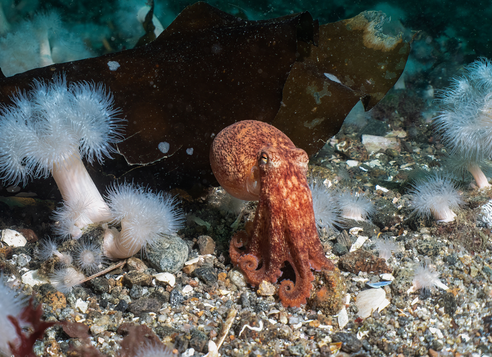
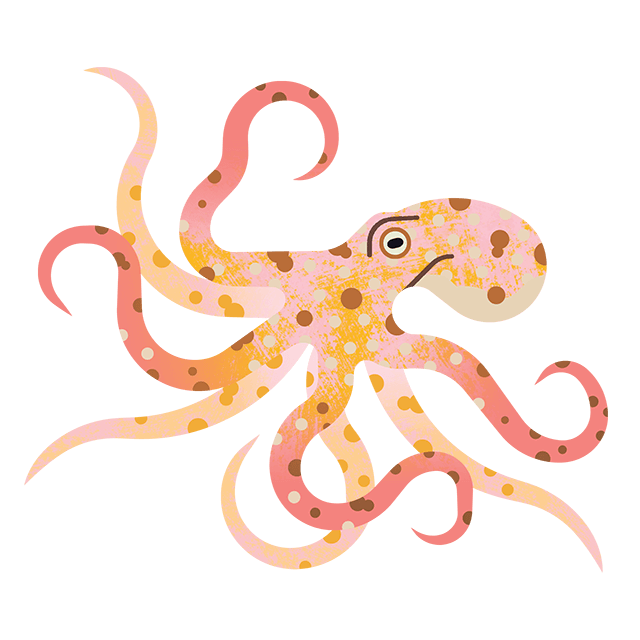
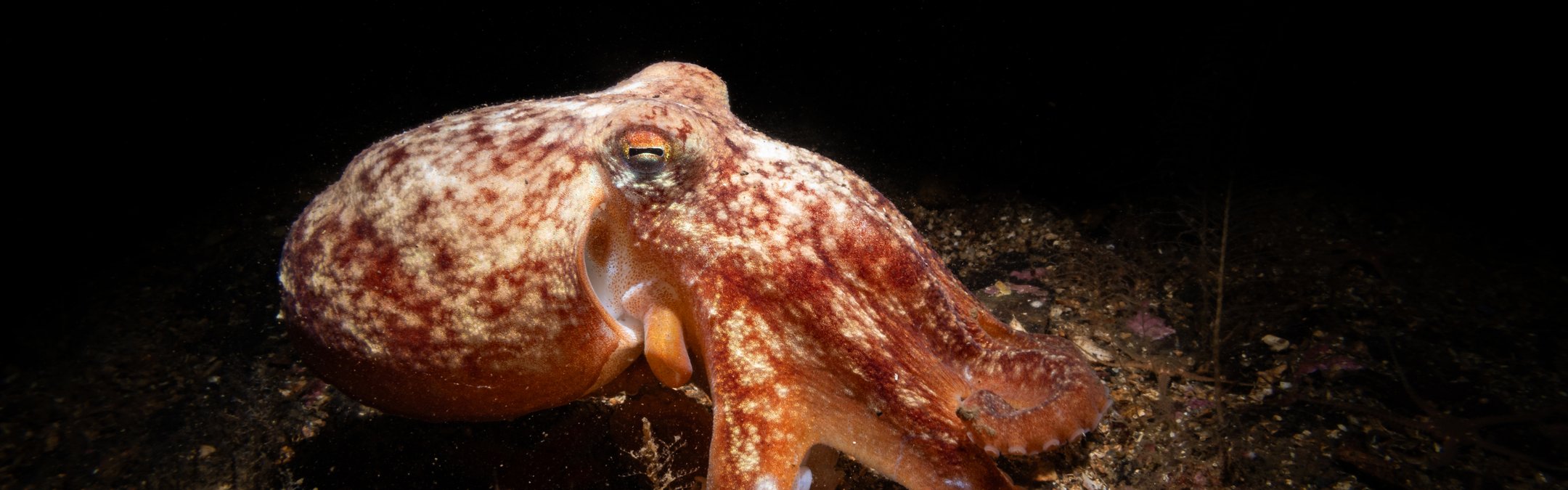
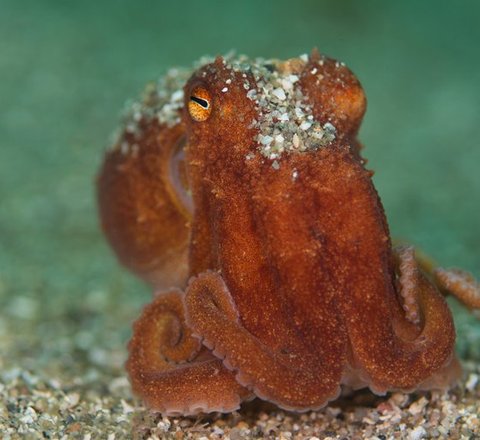
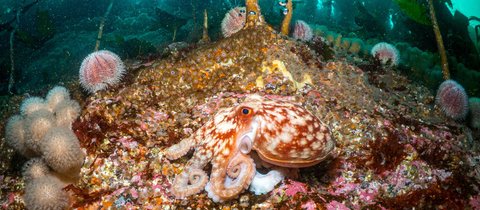
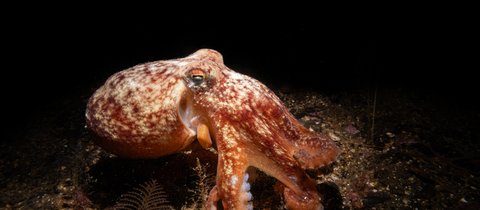
The lesser octopus is a marbled-orange colour. It can be distiguished from the common octopus by the number of suckers it has. Whereas the common octopus has two rows, the curled octopus has just one row of suckers on each arm. Their arms are slender and curl up when resting. Like other octopuses, they can change colour quickly to match their background.
Where can they be found?
The curled octopus is found all around the coasts of Britain and Ireland, making it one of the UK’s most widespread cephalopods. It typically lives on rocky shores and in lower intertidal areas, where it hides during the day and becomes more active at night. Because of its broad distribution, it’s a familiar sight to both rockpoolers and divers.
Did you know... They have three hearts and nine brains!
Key facts
With no “bone”, the lesser octopus is a very flexible creature that can squeeze through the tightest crevices. When threatened, they release a dark, inky fluid from their ink sac, making the water dark and confusing predators, allowing the octopus to escape from danger.
It eats crabs by drilling a hole through their shell and injecting toxins into the body to immobilise them. The octopus then injects saliva into the crab. The digestive enzymes contained in the saliva break down the crab’s attachment to its shell, making it easy for the octopus to remove.
They're found all around the UK, and get their name from how they curl up the end of their tentacles when they rest.
| Also known as | Horned octopus |
|---|---|
| IUCN status | Least Concern |
| Size | Up to 50cm in length (around the length of a domestic cat) |
| Weight | Maximum weight of 2kg (the same as a large bag of sugar) |
| Speed and distance | They can dive to depths of up to 500m. They are poor reluctant swimmers. For rapid escape from predators it can jet propel water from its exhalent funnel. |
| Lifespan | Can live up to 1-5 years |
| Diet | They mainly eat crabs and other crustaceans but will also eat molluscs, invertebrates and fish if they get the opportunity. |
| Intelligence | They're not as smart as the common octopus but do demonstrate some problem‑solving skills when hunting. |