Long-finned pilot whale
Globicephala melas
IUCN Status:Least Concern
Another whale that's actually a dolphin, the pilot whale gets top marks for its nicknames and Latin name translation!
What do they look like?
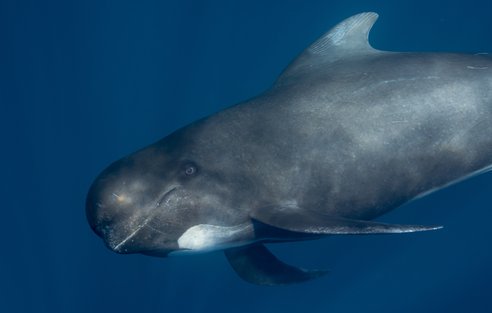
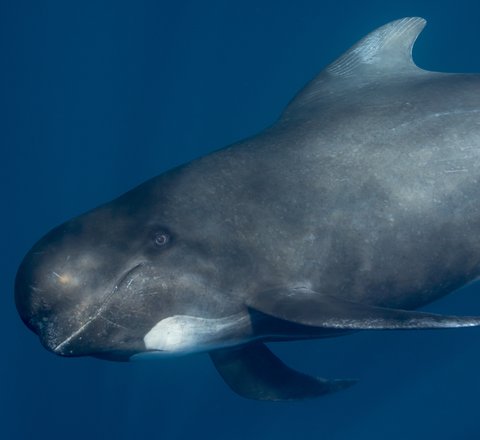
These ‘whales’ are typically dark charcoal to black in colour, often with a lighter grey patch behind the dorsal fin and a subtle anchor-shaped marking on the chest. They have long, slender flippers which can reach up to one-fifth of their body length.
Where can they be found?
Occasionally encountered in our shallow seas, including the Irish and North Seas
Did you know... They are the 2nd largest dolphin after orcas.
Key facts
The long-finned pilot whale is a marine mammal known for its sleek, elongated body and distinctive head shape. It is also lovingly called the pothead whale because its most notable feature is the blunt, bulbous forehead which inspired its Latin name; literally meaning “dark round head”. However, its common name is misleading as it is actually a type of dolphin.
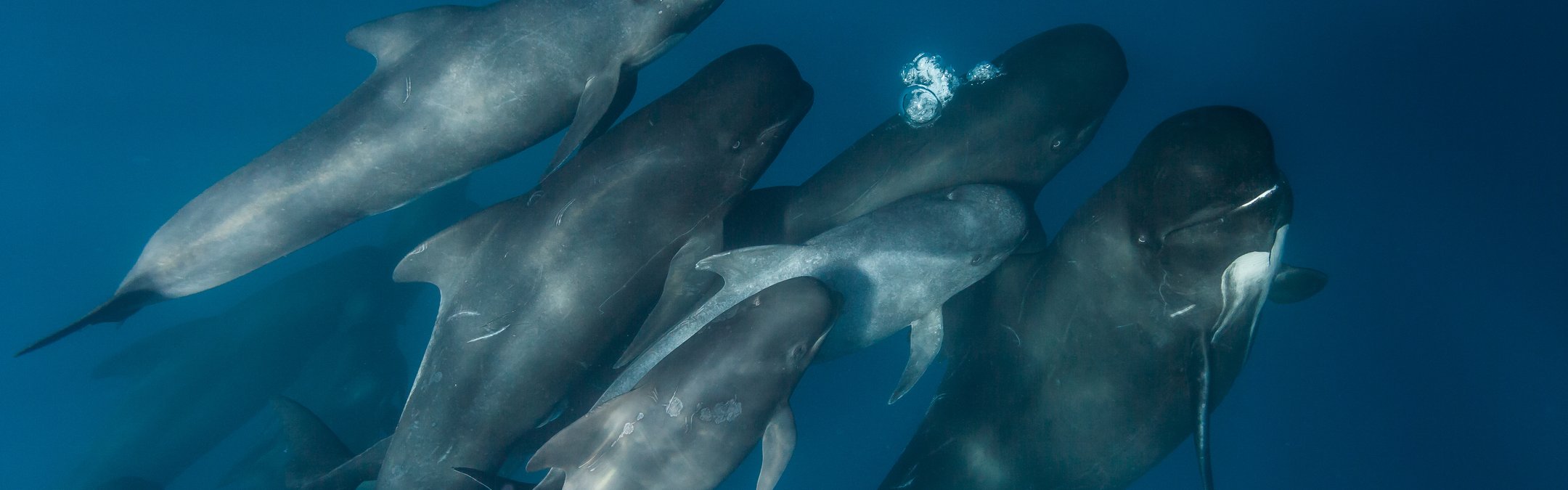
So why the name 'pilot' whale? The name came from beliefs that a single leader 'piloted' the pod. While we now know that following a single leader isn't strictly true, they do have a tendency to follow a matriarch (head female).
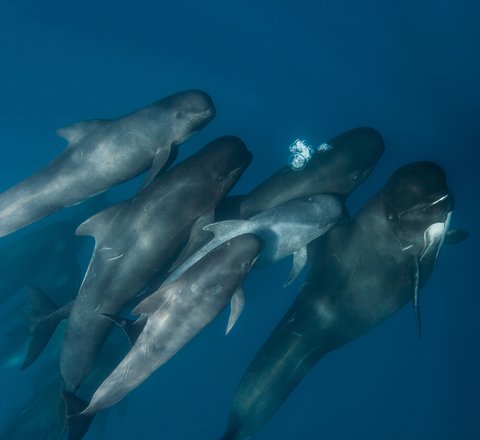
Like other dolphins, long-finned pilot whales are highly social, and can live in pods that range from a few individuals to over a hundred. They exhibit strong family bonds and cooperative behaviours, however they are known for multiple mass strandings which is thought to be linked to their tight social structure.
| Also known as | Pothead whale |
|---|---|
| IUCN status | Least Concern |
| Length | 5-6.5m |
| Weight | 2,300kg |
| Speed and distance | Unlike other dolphin species, long-finned pilot whales are not especially fast but they are strong. They can swim up to 12-18mph when chasing prey however. They are semi-migratory and mainly travel where food goes which means they are present around the UK throughout the year. They can cover up to 100km in a day if they wish. |
| Habitat | Open ocean |
| Diet | They are deep divers, capable of reaching depths of over 600 meters (2,000 feet) in search of squid, their primary food source. Since cephalopods are their preferred meal, they have actually developed mouths that are adapted for sucking up prey whole instead of using their teeth to bite and grasp what they want to eat. |
| Age lifespan | Long-finned pilot whales have a relatively long lifespan compared to many other marine mammals. They usually live up to 45 years, though some individuals have remarkably reached up to 60 years in the wild. Like many cetaceans, females tend to live longer than males. |