Lumpsucker
Cyclopterus lumpus
IUCN Status:Near Threatened
What do they look like?
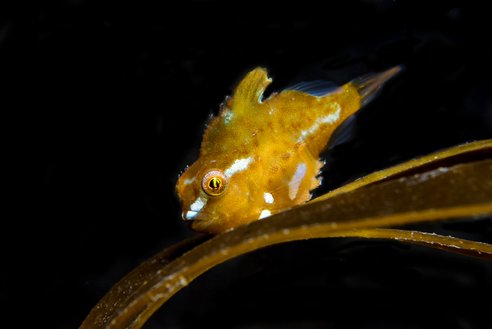
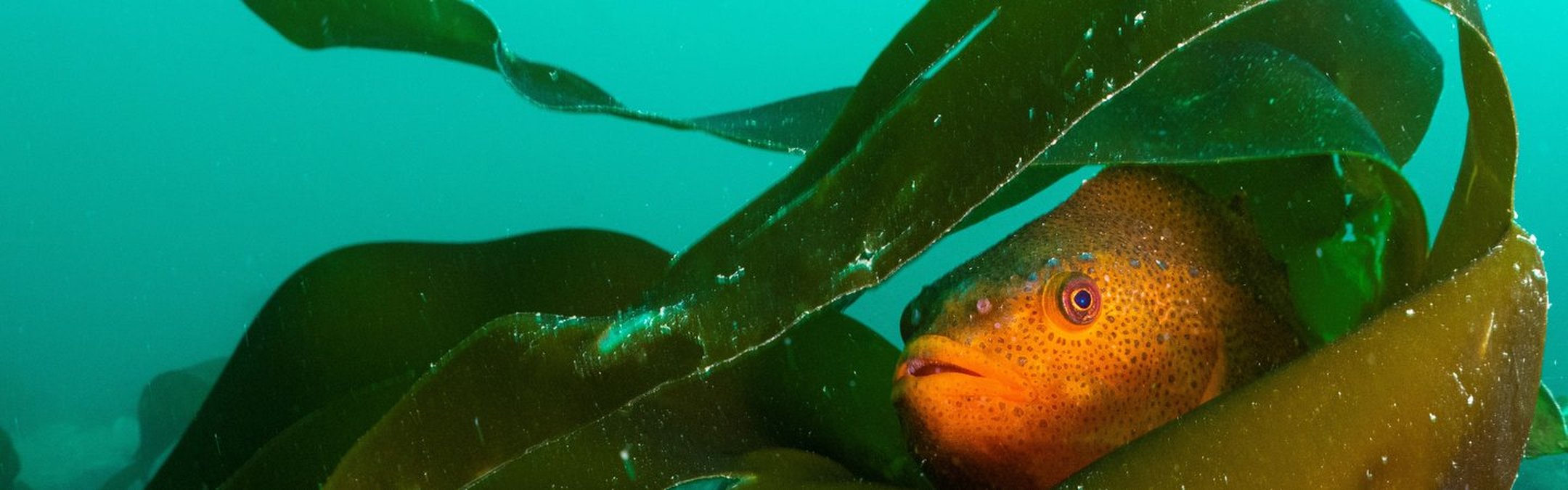
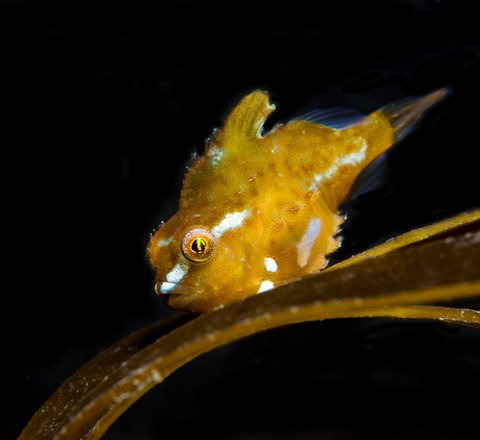
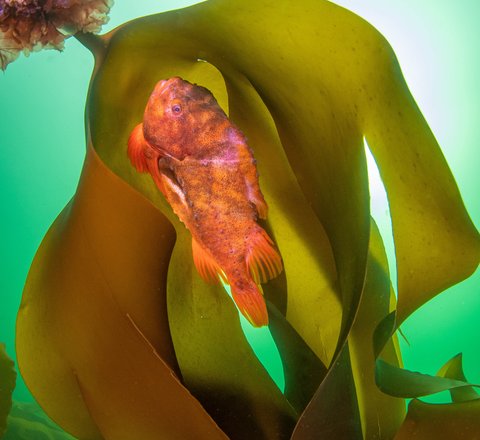
This ball-like lumpy fish has a special sucker on their belly that enables them to stick onto rocks. Their ventral fins form a suction disc to help them cling on effectively against the breaking waves. Mostly orangey in colour, the lumpsucker is scaleless, with small bony lumps.
Where can they be found?
All around the UK, but most common around Scotland and northern England. Rare on England’s south coast.
Did you know... They’re a favourite food for otters.
Key facts
They breed in rocky shores, with the female laying her eggs before returning to deeper seas. The male stays with the eggs for over a month until they hatch. During this time, he guards the eggs against predators and fans them with his tail to keep them oxygenated. As the eggs are often laid in a rough surf zone, the male’s sucker stops him from being washed away.
They are the biggest fish to be found in rockpools, but if you meet him, leave him be – he’s busy guarding his eggs.
| IUCN status | Near Threatened |
|---|---|
| Length | 30-50cm |
| Weight | Can grow up to 5kg in weight, with the largest specimen recorded at 9.6kg. |
| Speed and distance | Unknown |
| Diet | Small crustaceans, worms, jellyfish and comb jellyfish. |
| Habitat | Inhabits deep waters, returning to rocky shores in spring to breed. |
| Lifespan | 10 years |