Native oyster
Ostrea edulis
IUCN Status:Not Evaluated
Native oysters are a true superhero of the ocean, purifying water and forming rock-like reefs that provide vital habitats for other marine life.
What do they look like?
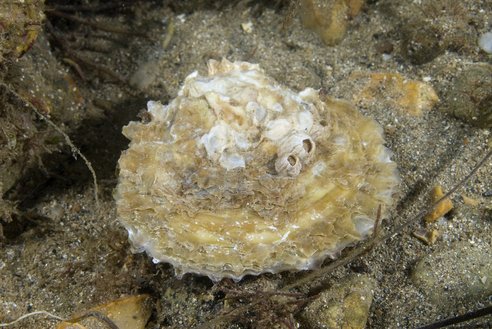
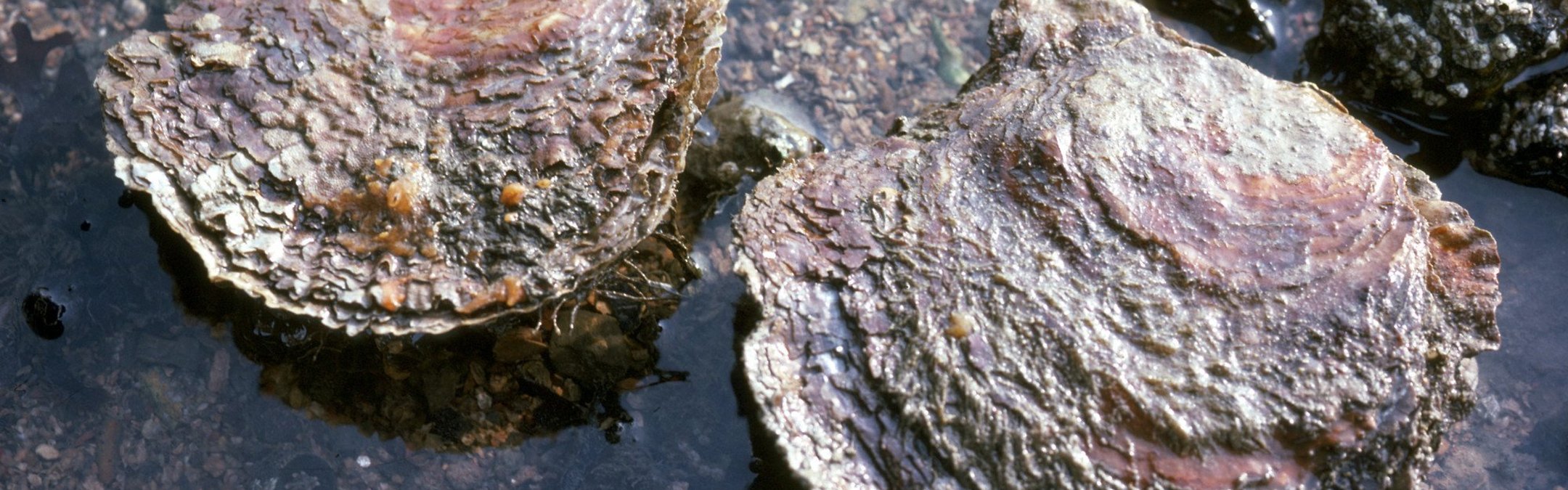
European flat oysters have a relatively flat, round, and rugged shell. Unlike the deeper, cupped shape of Pacific oysters, the European flat oyster is often described as resembling a saucer.
Where can they be found?
Can be found in suitable habitats all around the UK.
Did you know... A single oyster can filter 200 litres of water every day, and purifies it by doing so, removing pollutants, chemicals and particulates.
Key facts
As well as being top ecosystem engineers, they can also be effective blue carbon stores, fixing carbon in their shells. The exact net quantity stored is tricky to determine however, as they also produce some carbon emissions through respiration. One study of oyster farms estimated the amount of carbon sequestered at between 4.39 and 17.94 tonnes of carbon per ha per year.
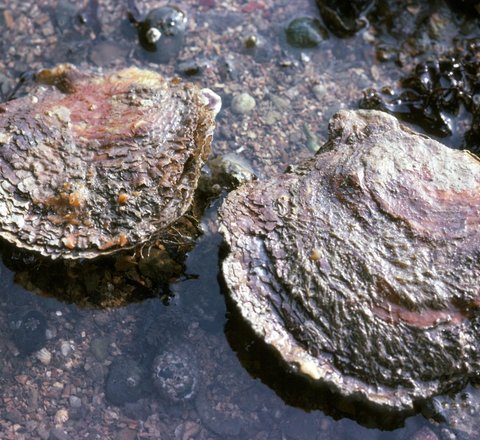
Common or native oysters live on the seabed in shallow coastal waters and estuaries. They usually live in waters up to 30 metres in depth but have been found to survive in deeper waters (up to 80 metres).
Sadly, native oysters are under significant threat with a global decline of approximately 85%. UK figures are even more concerning, with their population decreasing by 95% due to historic over-harvesting. In 19th Century Britain it is estimated that 700 million oysters were consumed in London (they were cheap back then!), decimating oyster beds. Recovery takes time and is held back by various human activity - including the introduction of parasites and pathogens, and contamination by synthetic compounds.
| Also known as | European flat oyster |
|---|---|
| IUCN status | Not Evaluated |
| Size | Up to 11cm |
| Weight | Average 60 - 175g |
| Lifespan | Typically, native oysters live for between five to ten years, but can be found to live up to 30 years of age. |
| Habitat | Seabed, shallow waters |
| Diet | Oysters, like many shellfish, get their food and nutrients by filtering it from seawater, plankton being a particular favourite. |
| Threat | Native oysters are under significant threat with a global decline of approximately 85%. UK figures are even more concerning, with their population decreasing by 95% due to historic over-harvesting. |