Northern (common) minke whale
Balaenoptera acutorostrata
IUCN Status:Least Concern
What do they look like?
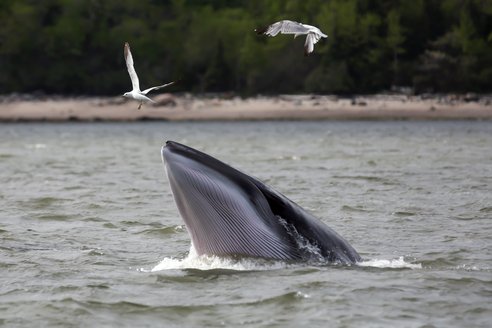
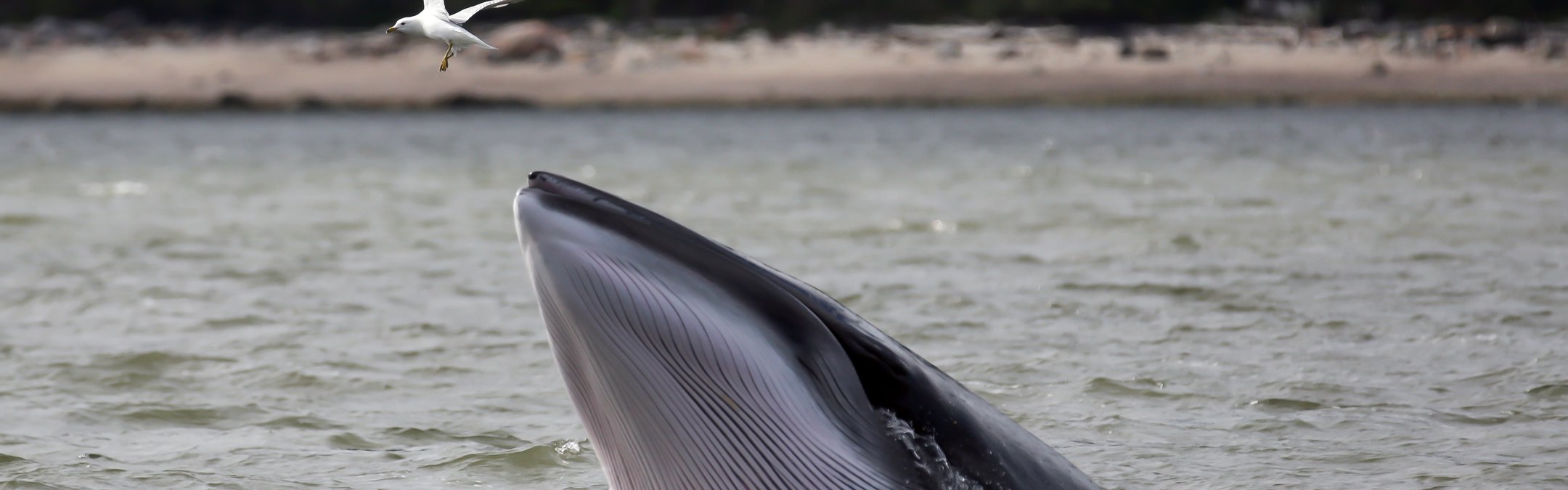
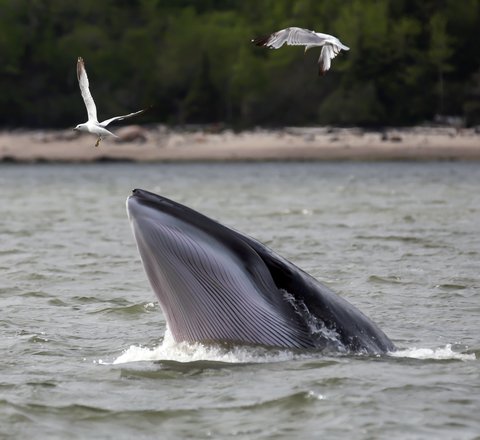
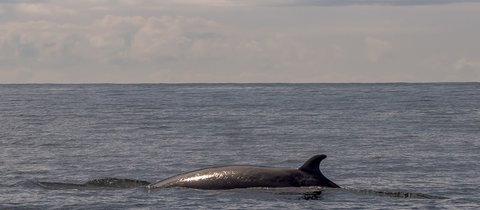
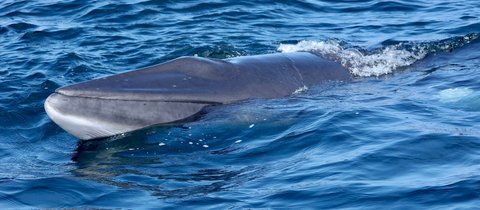
Northern minke whales are the smallest of the baleen whales commonly found in UK waters, yet they're still impressive in size - especially when seen up close. Their long back is often raised above the water’s surface, while distinctive markings on the lower body are difficult to see. A recognisable feature of northern minke whales are white "armbands" on their flippers, a trait not present in their southern peers.
Where can they be found?
West of the UK, including the Hebrides, and Bristol Channel.
Did you know... Minke whales are the smallest of the baleen whales and have been called "little piked whales" because of their size and their distinctive pointed nose
Key facts
Minkes are more reserved than other whale species and are less likely to breach or make any displays. However, minke whales can be quite inquisitive and have been known to approach boats to take a closer look! They generally swim alone, however, they've been seen swimming in small groups occasionally. This is more likely to occur during breeding season, or where there is an abundance of food, rather than for social bonding.
In UK waters, they're protected under the Wildlife and Countryside Act 1981 and the Marine (Scotland) Act 2010. However, northern minke whales are still hunted by other countries as historical cultural practices and even as part of the tourism trade.
| IUCN status | Least Concern |
|---|---|
| Length | 7-10m |
| Speed and distance | These agile whales can swim surprisingly quickly at around 15mph, achieving bursts of up to 24mph. They swim huge distances of around 3,000 miles annually - that's a lot of miles over a lifetime! |
| Weight | 5,000 - 10,000kg |
| Age lifespan | They have an average lifespan of around 50 years old. |
| Diet | They mainly eat krill, but will eat sandeels and other schooling fish too. |
| Habitat | Open ocean |
| Threats | Northern minke whales are still hunted by other countries as historical cultural practices and even as part of the tourism trade. |