Nursehound (large-spotted dogfish)
Scyliorhinus stellaris
IUCN Status:Vulnerable
What do they look like?
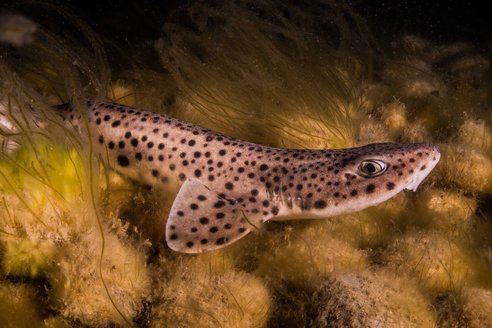
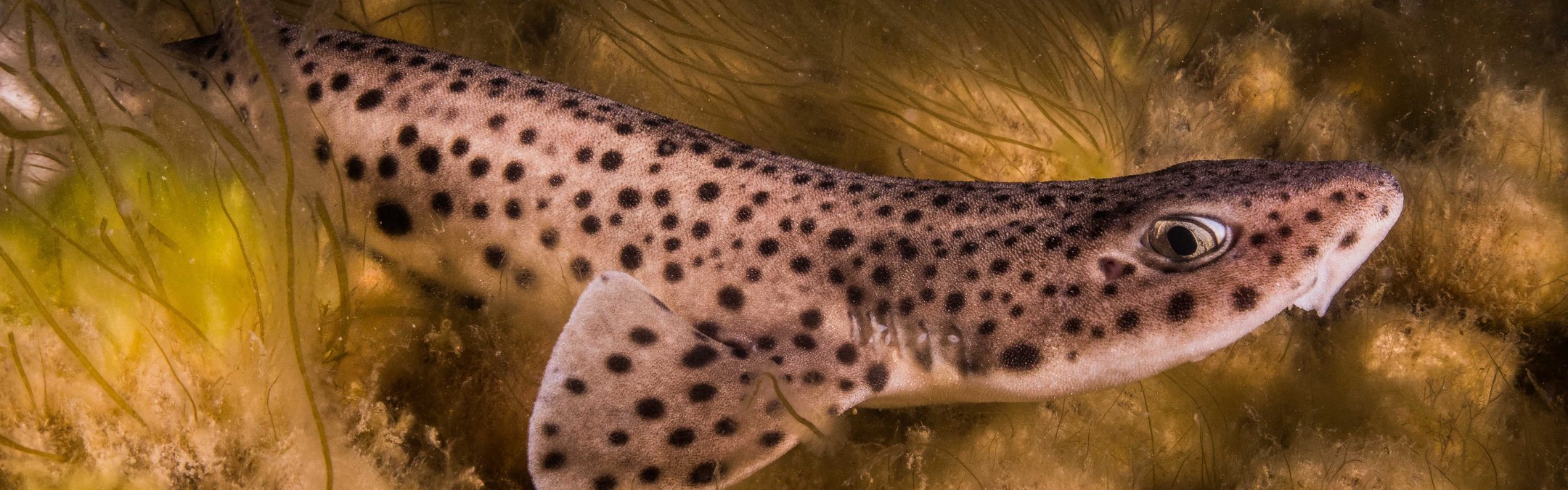
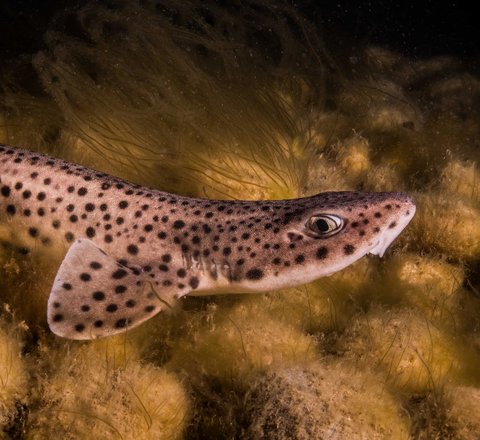
A creature with many names, the nursehound is also known as the large-spotted dogfish, greater spotted dogfish, or bull huss. It's a species of catshark that has a robust body with a broad, rounded head and two dorsal fins placed far back. It has small black dots covering its back and sides, interspersed with brown spots of varying shapes. The underside is plain white. They also have rough skin which is similar to sandpaper.
Where can they be found?
Northeast Atlantic from southern Scandinavia and the British Isles to Morocco, including the Mediterranean Sea.
Did you know... One theory as to where nursehounds got their affectionate name from was because English fishermen originally thought they "nursed" the small-spotted catshark as they are bigger than them and often found resting alongside them.
Key facts
Nursehounds usually spend the day resting in crevices amongst the rocks on the seabed sheltered from larger predators. They're fairly social in these holes and will happily share their hiding holes with other nursehounds and even small-spotted catsharks. However, at night they become solitary hunters, on the lookout for small fish, crustaceans and cephalopods to hoover up on the seafloor.
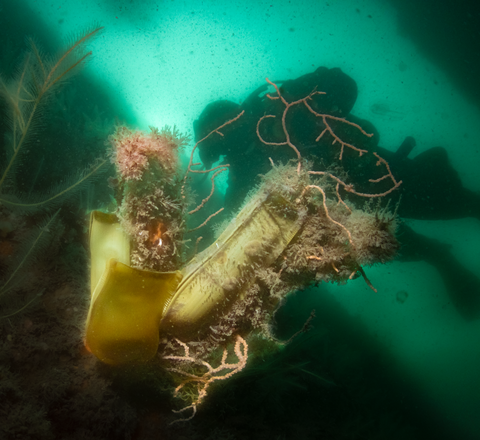
Female nursehounds will often lay their eggs on seaweed in shallow water and leave them to hatch on their own. The incubation can take between 7–12 months. These empty egg cases can often be found washed up on beaches which are often called mermaid’s purses.
They're quite docile creatures that will often swim away or hide when approached. However, they can bite with their small teeth if provoked. They've also been known to use their rough skin to scrape against any arm that gets too close, so it's best to leave these catsharks alone if found resting in a hole.
Nursehounds are considered locally abundant around the UK, but their numbers are far lower in the Mediterranean, where they are even thought to be locally extinct in some regions. This decline is believed to be driven largely by high levels of by catch and bottom trawling. Accurately assessing how many are caught accidentally is difficult, as they are frequently logged under a generic “elasmobranch” category or misidentified as the closely related small spotted catshark. Nursehounds are distinguished from the small spotted catshark by their size and small eranterior nasal flaps which do not reach the mouth. The two species are very similar in appearance, but small spotted catsharks are far more common and less threatened . However, misidentification is common, and as a result the number of nursehounds caught may be under reported.
| Also known as | Large spotted dogfish, greater spotted dogfish, bull huss |
|---|---|
| IUCN status | Vulnerable |
| Length | Approximately 125 cm, but some reports suggest up to 162 cm. |
| Weight | A rather stocky species, they can weigh between 4.5 to 9 kg. |
| Speed and distance | The nursehound is a slow moving shark but can produce a burst of speed when it's actively hunting prey or escaping from predators such as larger sharks and seals. However, they cannot sustain this speed for long. |
| Diet | Adult nursehounds are often found eating small squid and octopus as well as small bony fish such as mackerel. Young nursehounds are more likely to eat crustaceans such as crabs and large shrimp. |
| Lifespan | Maximum age is unknown, but an indication is 17 years like the small spotted catshark. |
| Habitat | Open ocean |
| Threats | Thought to be extinct in some Mediterranean regions due to by catch and bottom trawling. |