Pink sea fan
Eunicella verrucosa
IUCN Status:Vulnerable
A slow-growing type of coral that's in need of urgent protection for its survival as well as other species that rely on it.
What does it look like?
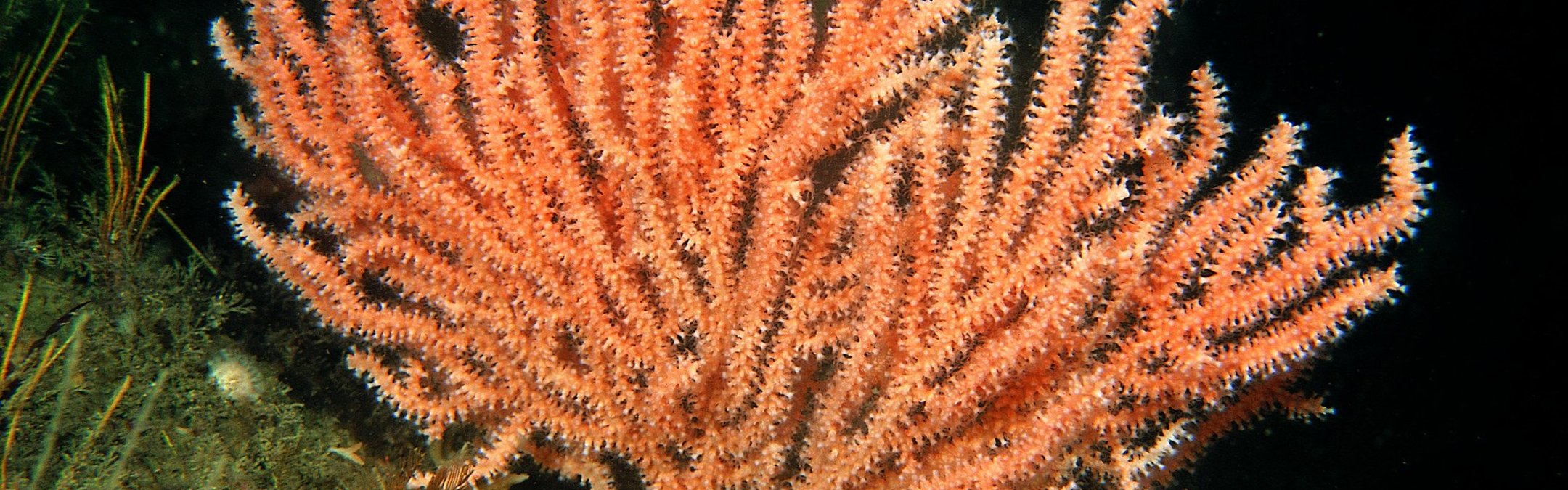
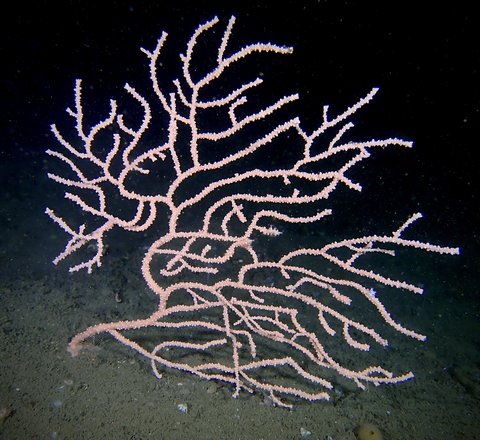
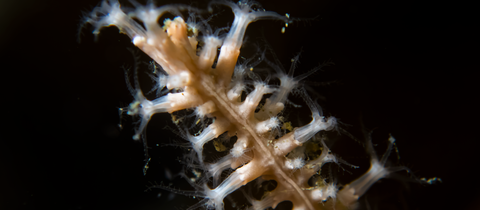
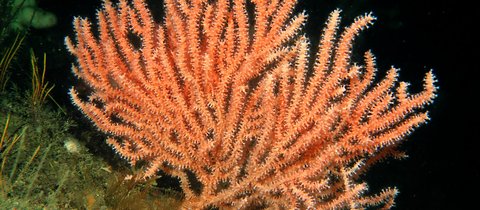
Pink sea fans are slow growing, branching corals found mainly in shallow, rocky waters. They get their name from how they grow out into fan shapes. However they can be colours other than pink, such as white or orange.
Where can they be found?
Pink sea fans live on the seabed, but dead specimens can be found on beaches washed up after a storm. Unfortunately, because of their fragility, pink sea fans can only currently be found in very few places in the UK. They are at the extreme edge of their range in Pembrokeshire and their numbers are declining.
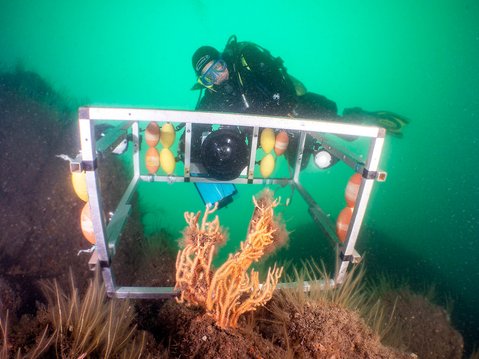
The Marine Conservation Society are helping protect this species by engaging with sea-users and communities about the vulnerability of this iconic species near the Skomer Marine Conservation Zone (MCZ) as part of the Natur Am Byth project.
Did you know... Pink sea fans grow incredibly slowly, at a rate of about 1 cm per year, which means the largest ones can be over 50 years old.
Key facts
Like all corals, it is an animal and not a plant. However, the pink sea fan is the only commonly found gorgonian coral in the UK. These corals are often recognised by their semi-bendable skeleton that is shared by a colony of polyps which make up the species. Its flexible design means that it can be moved by the tide and make the most of feeding on plankton carried by the current.
It is a key UK species as several animals rely on pink sea fans for their survival. From small fish and crabs that use it for shelter, to more dependent species like the sea fan nudibranch. This species' camouflage relies on the fan and it will eat and lay its eggs on them. Similarly, the rare sea fan anemone can only attach to gorgonian corals.
Unfortunately, as they grow slowly, break easily or can be destroyed by human activity like bottom trawling and mooring, they are in need of protection. Stronger storms caused by climate change can also increase breakage.
| Also known as | Warty sea fan |
|---|---|
| IUCN status | Vulnerable |
| Diet | Pink sea fans feed on plankton and suspended organic particles, captured by extended polyps. |
| Size | Most colonies reach 25-30 cm, but they can grow up to 50 cm. However this takes half a decade to reach if they do. |
| Speed and distance | Pink sea fans remain fixed to rocks and orient themselves to currents by positioning perpendicular to the tide. This means they are highly vulnerable to anything that destroys the seabed including anchoring and trawling. |
| Lifespan | They can live for several decades. Large colonies may be over 50 years old due to slow growth. |
A big thank you to those helping us support Pink sea fans
The Marine Conservation Society is helping protect this species with support from the National Lottery Heritage Fund, Landfill Disposals Tax Communities Scheme and the Welsh Government by delivering the Môr Project/Prosiect Môr as part of the Natur Am Byth! Programme.