Scarlet lady sea slug
Fjordia browni
IUCN Status:Not Evaluated
What do they look like?
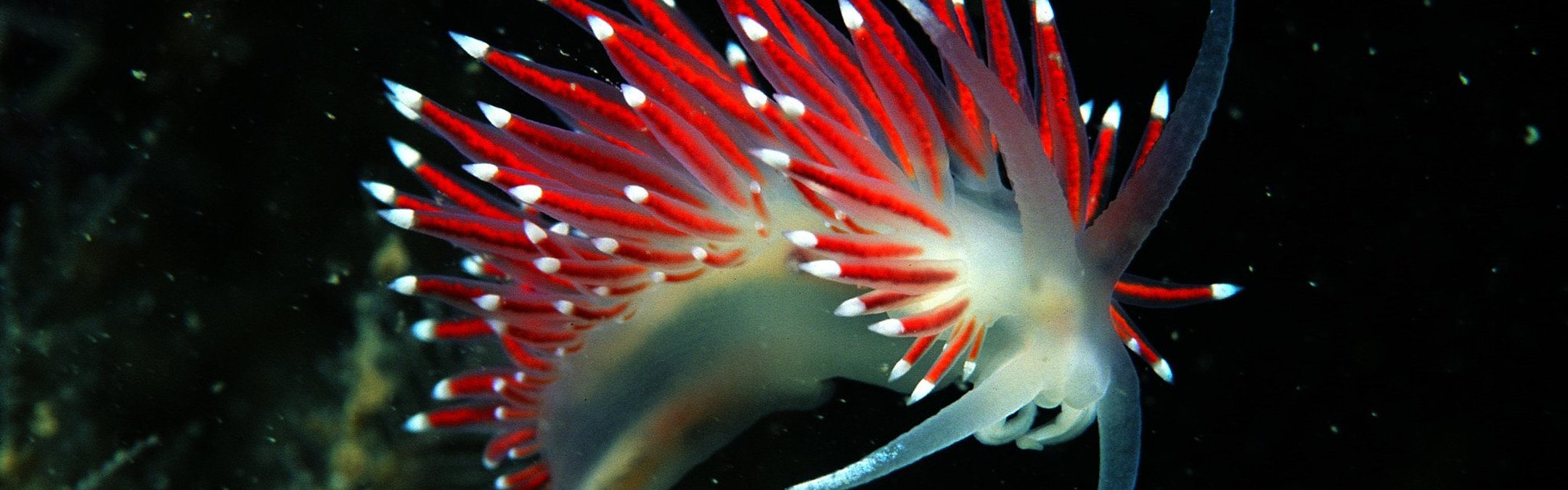
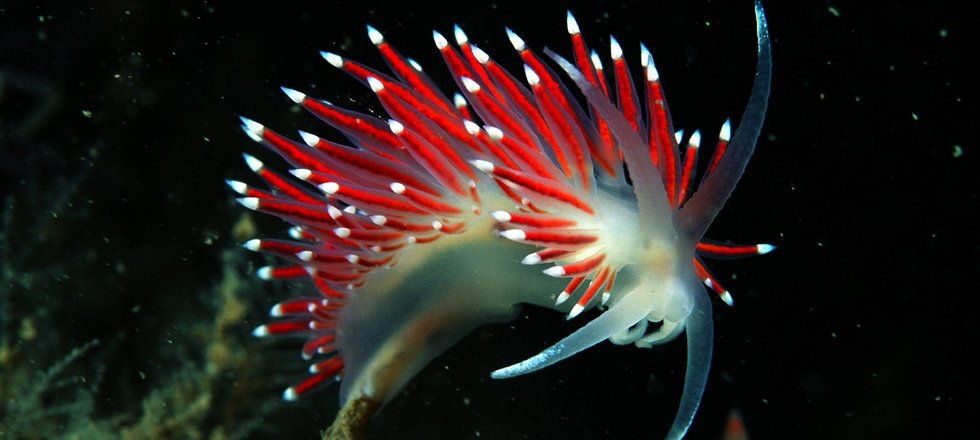
Red and white with 'spines' tipped with stinging cells.
Where can they be found?
Can be found in the Orkney Isles and west coasts of Scotland, England, Wales and Ireland.
Did you know... The scarlet lady sea slug feeds on stinging hydroids and incorporates them into its own colour tips, using them to defend against predators.
Key facts
It’s common to see this red and white sea slug in spring and summer, and it is typically found in shallow and deeper water exposed to tidal streams.
The sea slug lays white egg masses in a wavy spiral among the stems of Tubularia indivisa, a type of hydroid (marine invertebrates related to jellyfish), which is its main food source. It eats the defensive stinging cells of the hydroid and deposits them in its cerata tips as defence against predators.
| IUCN status | Not Evaluated |
|---|---|
| Length | Up to 5cm long. |
| Weight | Unknown |
| Speed and distance | Unknown |
| Diet | The polyps of Tubularia indivisa, Eudendrium and Corymorphia nutans (marine invertebrates related to jellyfish). |
| Habitat | Shallow and deeper water exposed to tidal streams. |
| Lifespan | Unknown |