Sea lemon
Archidoris pseudoargus
IUCN Status:Not Evaluated
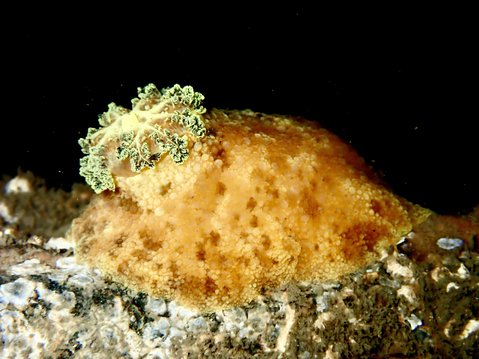
A master of camouflage, the sea lemon is one of Britain's largest nudibranchs.
What do they look like?
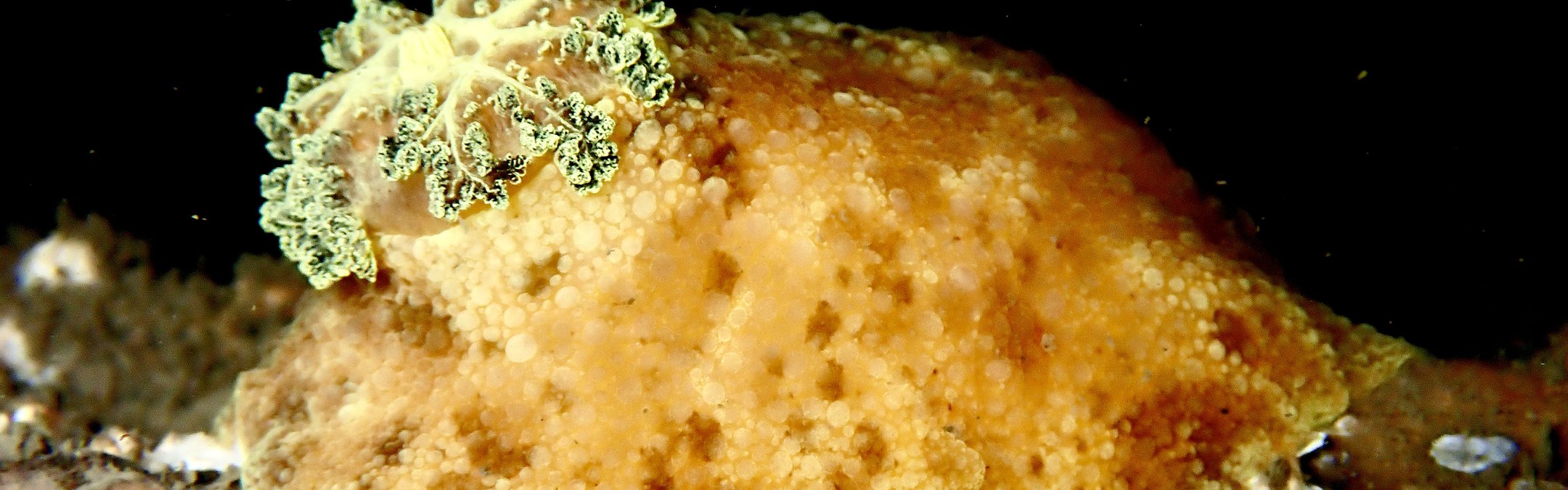
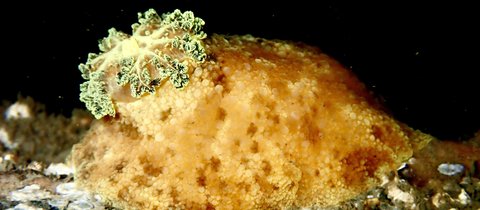
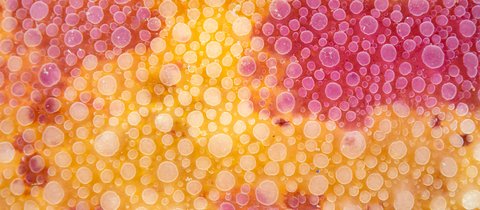
The aptly named sea lemon is usually yellow or orange, but can also be brown, green, or even pink and is often mottled with darker blotches which help it blend perfectly into the brightly coloured sponges that it feeds on. On its back sits a distinctive fan‑like rosette; an unusual structure that combines both gills and the anus which it can pull into itself to look even more like its surroundings.
Like most nudibranchs, instead of eyes the sea lemon has simple light‑sensing spots called ocelli (pronounced oh-sell-eye). However they mostly rely on touch and their rhinophores (which act as chemical sensors) to understand where they are and where to go.
Where can they be found?
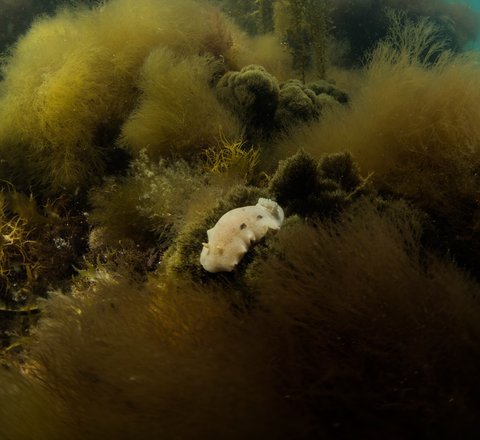
Sea lemons inhabit the Northeast Atlantic, from Iceland down to the Mediterranean, living on all rocky shores where their sponge prey thrives. You’re most likely to spot adults in spring, while smaller juveniles appear in late summer/autumn, tucked among the sponges that make them so hard to see.
You might also get lucky and see one while rock pooling, though they tend to avoid bright light and will hide in shaded areas.
Did you know... Despite its sweet-sounding name, the sea lemon has one final defence against would be predators. They absorb toxic chemicals from their food so that they taste horrible. Anything that might see it as an easy snack will often regret it after putting the sea lemon in its mouth.
Key facts
In spring, adults produce a striking bright ribbon of eggs, often coiled like a frilly fan on rocks. They can absorb pigments and toxins from their prey and can detect chemicals in the water which helps them find food and mates. They don’t need to worry about finding the opposite sex though as they have both male and female reproductive organs - meaning any two adults can mate.
| IUCN status | Not Evaluated |
|---|---|
| Diet | Sea lemons will only eat sea sponges, though they arent too picky which ones. Their favourite is the breadcrumb sponge which looks like a piece of yellowish-green bread crust. This is why a lot of sea lemons are this colour as they absorb its pigments for camouflage. |
| Size | Sea lemons are one of the largest nudibranchs in the Northeast Atlantic and can reach up to 12cms. |
| Weight | Determining the average weight is quite difficult because nudibranchs can gain or lose water rapidly, changing their mass within hours. However 50g is about the heaviest we can expect. |
| Speed and distance | Sea lemons are incredibly slow moving creatures, moving up to 30cm an hour. They don’t need to be fast as they eat sedentary sponges and have very few predators to evade. |
| Lifespan | Sea lemons have a one year life cycle. They hatch in late summer, then grow rapidly in winter before slowly deteriorating after laying eggs in spring. |