Common (short-beaked) dolphin
Delphinus delphis
IUCN Status:Least Concern
What do they look like?
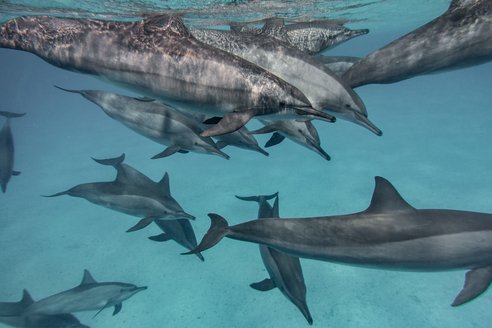
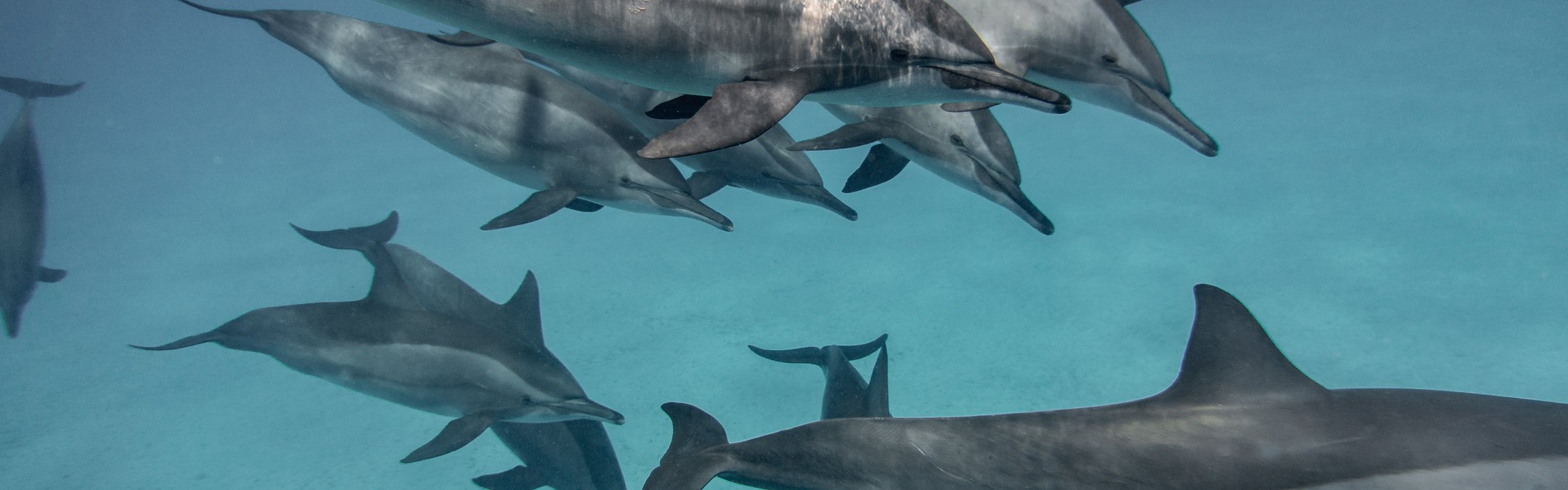
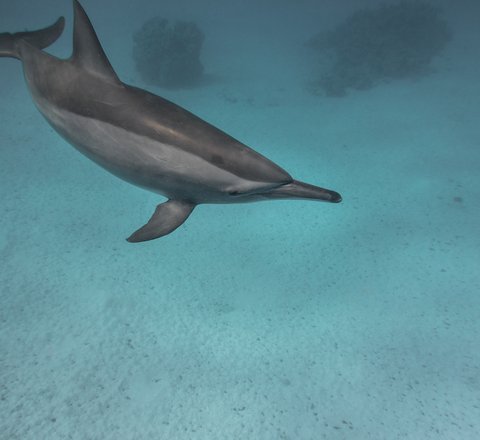
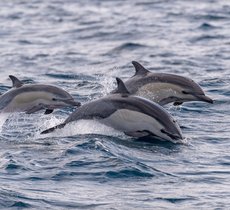
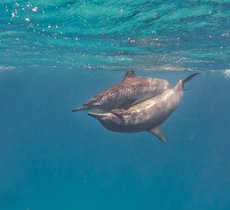
The short-beaked dolphin is most easily recognised by their distinctive two-tone appearance, with cream/light grey colouring to the sides and belly and dark grey colouring on top. Bottlenose dolphins (often the most recognised) are typically between 2.4 - 4 metres long, while common dolphins are smaller at between 1.8 - 2.5 metres long.
Where can they be found?
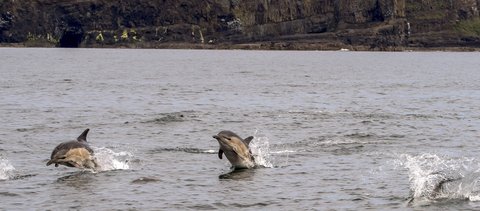
From clifftop or boat around the UK. They are most frequently seen off the western coast. Cardigan Bay, Cornwall and the Celtic Sea can be hotspots.
Did you know... Short-beaked common dolphins are believed to be the most numerous cetaceans globally - this is often incorrectly thought to be the bottlenose dolphin due to their greater presence in films and TV.
Key facts
Common dolphins are a medium-sized dolphin (unlike the larger bottlenose), and are really acrobatic - they will often “bow-ride” in front of a moving boat. There are many reasons why they might do this, including using the boat as a way to swim with less friction, shed dead skin or parasites, or simply just for fun. These dolphins have been known to do this for centuries, with ancient Greeks having documented it.
Occasionally, observers are treated to the spectacular sight of a “super pod”, where hundreds of dolphins gather together. These events are rare but can occur when large prey concentrations draw dolphins from the wider North-East Atlantic into UK waters. Such gatherings are not only a feeding opportunity but also a social event for these highly social animals.
| IUCN status | Least Concern |
|---|---|
| Length | 1.8–2.5m |
| Weight | 70–135kg |
| Habitat | Open ocean |
| Diet | They feed mainly on small schooling fish such as mackerel and sardines, as well as squid. They will hunt in pods and work to herd these fish into a tight ball called a bait ball. They then take turns swimming through the ball picking off fish. |
| Speed and distance | These dolphins are incredibly fast swimmers, swimming up to 60 km/h. They can use bursts of speed to chase and corral their prey. Though they don’t migrate vast distances, short-beaked dolphins will follow where food is abundant so they tend to be seen in the UK when waters are warmer and prey like mackerel and sardines are abundant. However, many pods will move into deeper waters in the winter. |
| Age lifespan | A wide ranging lifespan, with some living a relatively short 20 years and others living up to 35 years old. |