Snakelocks anemone
Anemonia viridis
IUCN Status:Least Concern
A species that is beautiful to see - but certainly don't accidentally touch! The snakelocks anemone is a perfect example of a mutual symbiotic relationship in the ocean.
What do they look like?
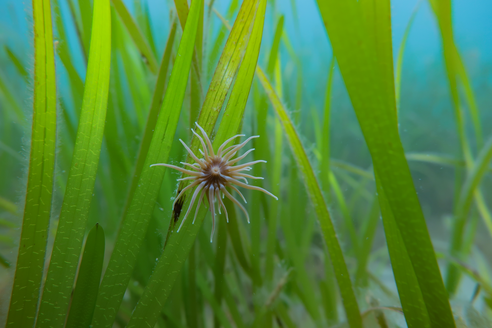
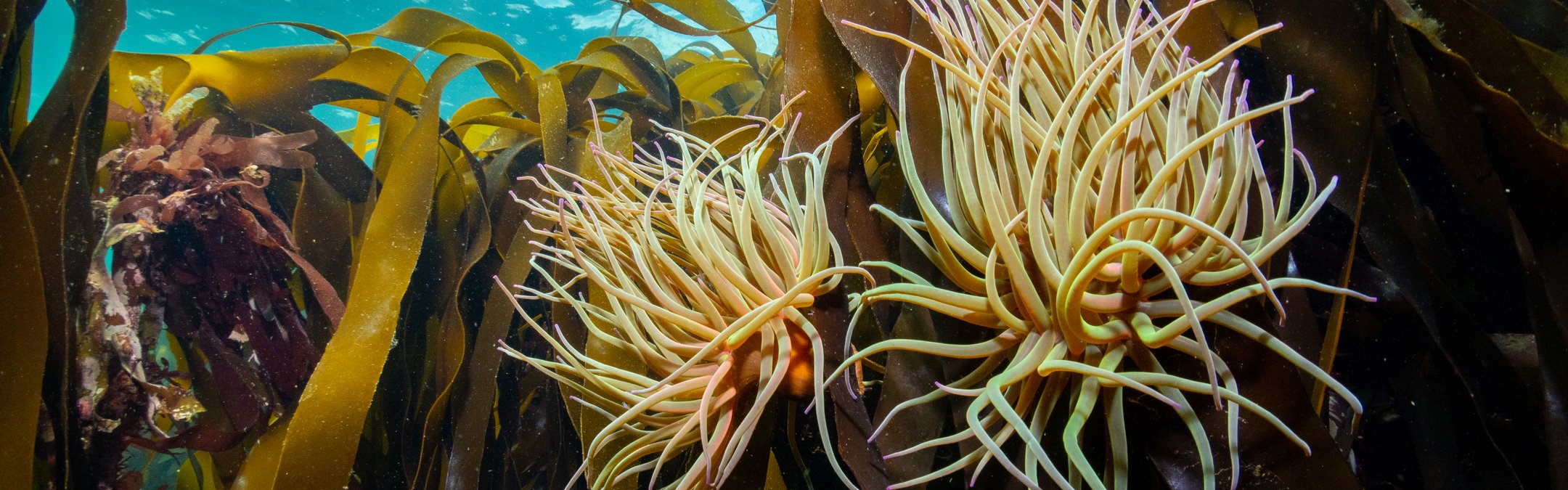
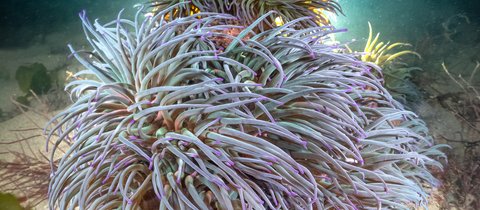
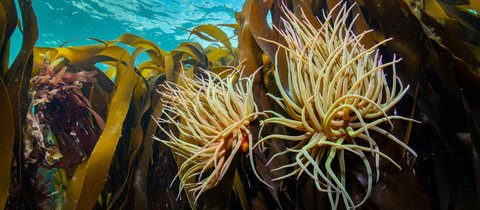
The snakelocks anemone is a brightly coloured sea anemone easily recognised by its long, flowing tentacles and colouring. It has up to 200 wavy tentacles, usually bright green with purple tips. This colouring comes from a microscopic algae called zooxanthellae which lives within its tissues. Without these algae, the anemone appears grey or brown.
Where can they be found?
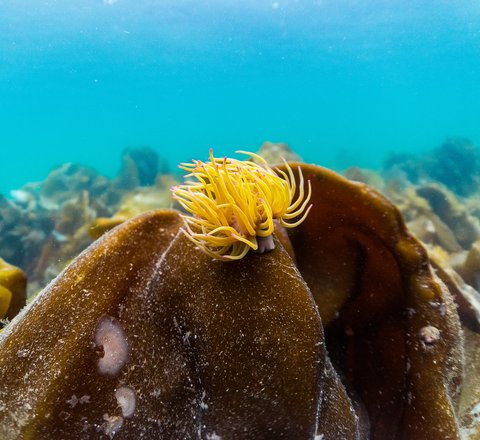
Like all anemones, snakelocks is rooted to one place. They can be found on the seabed, in rockpools and attached to large seaweeds. They are fairly common, but are less numerous on east UK coasts.
Did you know... The snakelocks anemone glows neon green under UV light because of a special protein found within it.
Key facts
Snakelocks anemones live on rocks, kelp, and eelgrass in shallow rock pools and coastal waters down to around 20 metres. They usually have a symbiotic relationship with a microscopic algae called zooxanthellae which lives within its tissues. Because of this they will be found where sunlight is strong enough for the algae to photosynthesise.
Though the algae will provide the anemone with some nutrients from photosynthesising, the anemone is not fully dependent on it. The anenome also captures prey using its tentacles, which are lined with specialised stinging cells that fire a neurotoxin into anything that touches them. This venom helps the anemone subdue small animals and also protects it from predators. In humans, contact with these tentacles can cause a painful rash.
Because of this natural defence, several species have evolved to also use snakelocks anemones as a protective refuge. These include Leach’s spider crab and the incognito goby, both of which shelter safely among the tentacles. Unlike the algae, these animals have formed a commensal relationship with the anemone which means thay they do not provide any benefit to the anemone, but they also do not harm it.
| IUCN status | Least Concern |
|---|---|
| Diet | The anemone uses its sticky, stinging tentacles to capture and eat small fish, prawns and sea snails. However, it also gets some nutrients from the algae Zooxanthellae which grows on it. |
| Size | Its body is usually only around 8cm but its wavy tentacles can reach approximately 20cm in length. |
| Weight | Snakelocks anemones can weigh up to 18g. |
| Lifespan | The snakelocks anemone can usually live up to 60 years. This makes it one of the longer‑living species found in a rockpool. |