Spiny spider crab
Maia brachydactyla
IUCN Status:Not Evaluated
Arachnophobes beware! This long‑legged crustacean is one of the many fascinating residents of our coastal waters. With its spiky armour and towering stance, it’s a true marine marvel hiding behind a fearsome silhouette.
What do they look like?
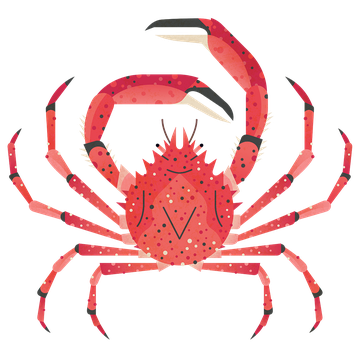
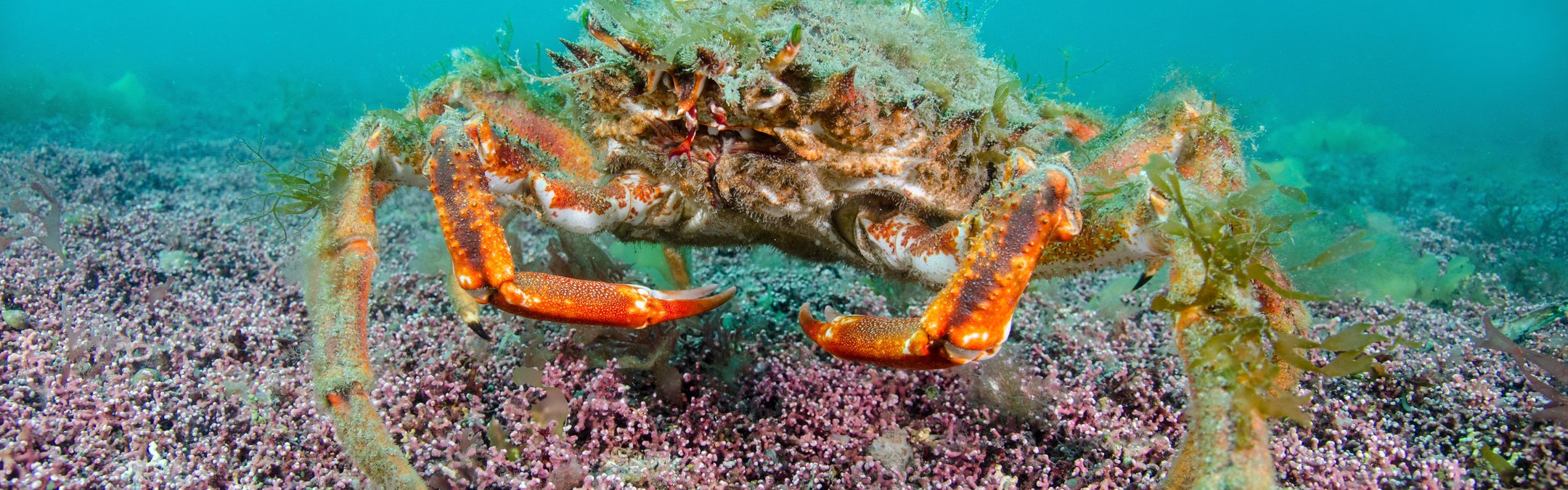
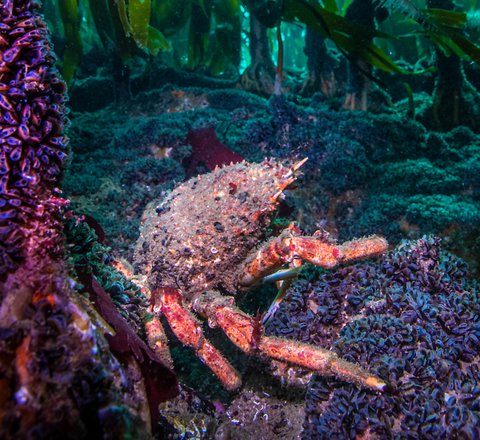
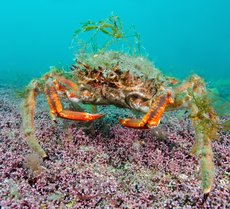
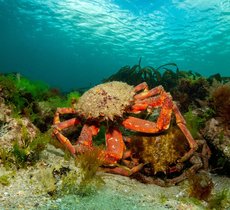
This large orange crab stands out with its long, jointed legs and distinctive spiny carapace. Often cloaked in algae, sponges, and seaweed, it blends seamlessly into the seafloor, making it surprisingly hard to spot. Their unusually long legs even allow them to walk forwards as well as sideways.
Where can they be found?
Spiny spider crabs are quite common, especially on the South and West coasts of England and Wales.
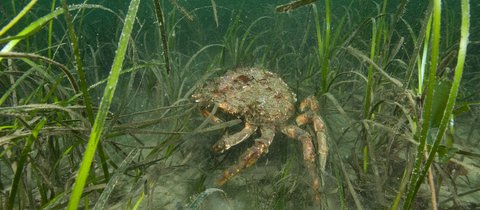
They love sandy or rocky seafloors from the lower intertidal zone to around 150m deep, often favouring coastal shallows in summer and moving to deeper offshore waters in winter.
Did you know... The spiny spider crab will transfer the seaweed, algae and sponges from their old shell to their new one after moulting for camouflage.
Key facts
Despite their intimidating appearance and gait, spiny spider crabs are far from invincible. Octopuses are skilled at breaking through their armour, and freshly moulted individuals are especially vulnerable to seabirds patrolling the shallows.
As protection, juveniles are experts at camouflaging themselves and will deliberately decorate themselves with seaweed and sponges to avoid predators. As adults, they may still remain partly camouflaged but usually this is caused by an accumulation of algae growing on them rather than them intending to do so.
Each year, spiny spider crabs gather in huge migrating masses, moving across the seabed, likely as another defensive strategy against predators. These great huddles become sites for moulting and mating, creating one of the most dramatic crab gatherings in our waters.
| Also known as | European spider crab |
|---|---|
| IUCN status | Not Evaluated |
| Diet | These crabs aren’t picky eaters and will eat seaweed, mussels, starfish and anything else they get their claws on. They play an important role on the seabed as scavengers and help recycle nutrients through the coastal ecosystem. |
| Length | Up to 20cm long |
| Speed and distance | During their annual migration into deeper waters, they sometimes travel over 100 miles. They can travel around 76m a day. |
| Lifespan | The spider crab is the longest living crab, with the Japanese spider crab living up to 100 years. However, the spiny spider crab only lives until it is 6 when it will moult one final permanent time and stop growing altogether. |