Squid (European)
Loligo vulgaris
IUCN Status:Data Deficient
What do they look like?
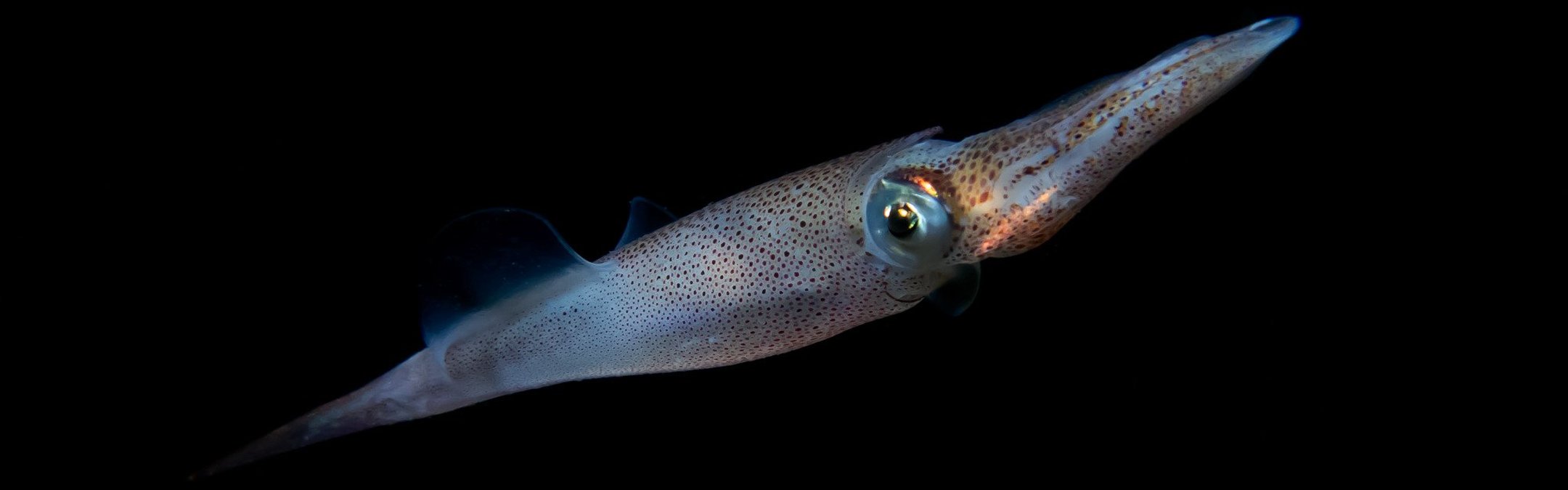
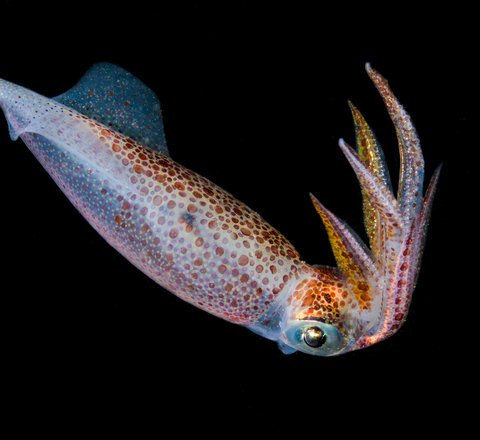
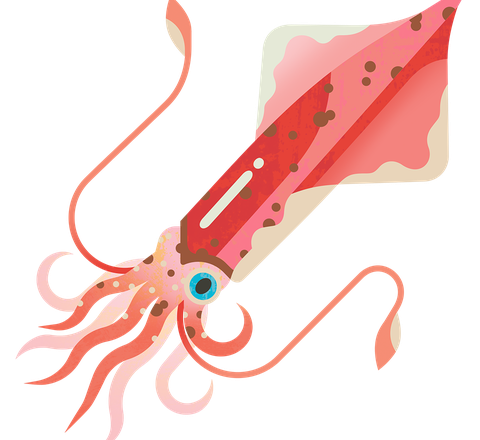
The European squid has a long, cylindrical pale body with a frilly fringe, large eyes, eight arms and two long tentacles. Similar to octopuses, they have the ability to change their skin colour and camouflage with their surroundings. They also use their colour-changing abilities to communicate with other common squid when trying to attract a mate.
Where can they be found?
They can be found all around the UK, although difficult to see as they're most active at night.
Did you know... Like other cephalopods, squid have three hearts: two to push blood through the gills and one to pump blood around the body.
Key facts
The female can lay up to 20,000 eggs in one go and will anchor them to solid structures on the seabed, including rocks and seaweed holdfasts. They lay a lot because many of them will be eaten by other animals - the squid does not stay to look after them and leaves them to hatch on their own. These long white eggs can also sometimes wash up as a mysterious bundle on beaches, especially after a storm.
European squid are nomadic, constantly moving from place to place to migrate to suitable water temperatures, from in-shore to off shore and between deeper and shallower depths for food availability and spawning. They can move between surface water to 250–500m depths, depending on the season and time of day. Because they are a key prey species for many marine animals, where they move, their predators often follow. Dolphins are one predator that will often track and follow squid movements to hunt them down. This also helps reduce predator pressure on other prey species that stay in one location.
The European squid can often be confused with the European common squid (Alloteuthis subulate) because of their name and that they can both be found in UK waters. However the common squid is smaller, more slender and usually has small purple spots.
| IUCN status | Data Deficient |
|---|---|
| Length | Can reach up to 54cm in length |
| Weight | 1.5kg |
| Speed and distance | They can use a jet propulsion for escaping a predator and for hunting, as well as fin flapping for slower, controlled general movement. |
| Habitat | Subtidal, open ocean |
| Diet | This species feasts mainly on small fish and crustaceans. |
| Lifespan | 3 years for males and 2 years for females. |