Wolffish (Atlantic)
Anarhichas lupus
IUCN Status:Data Deficient
What do they look like?
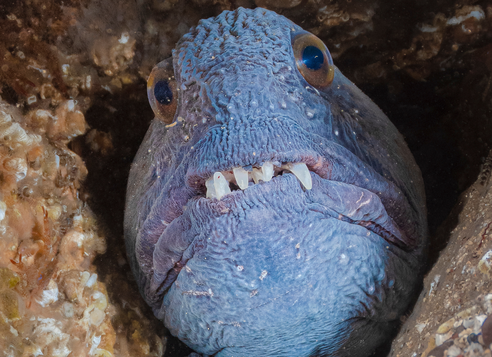
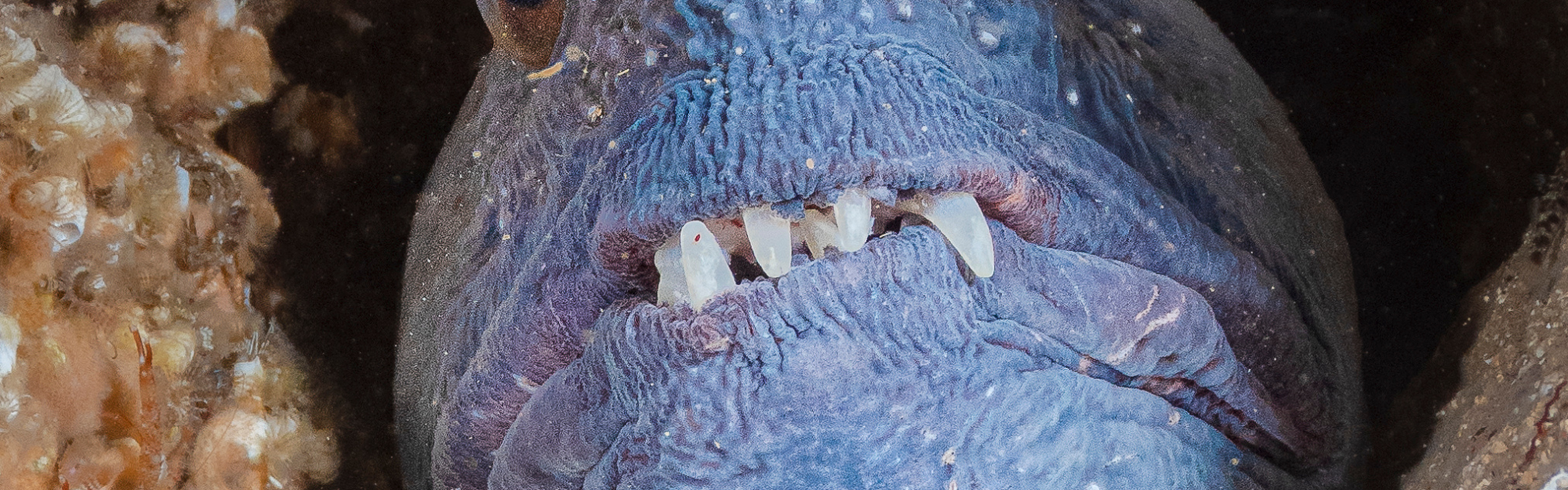
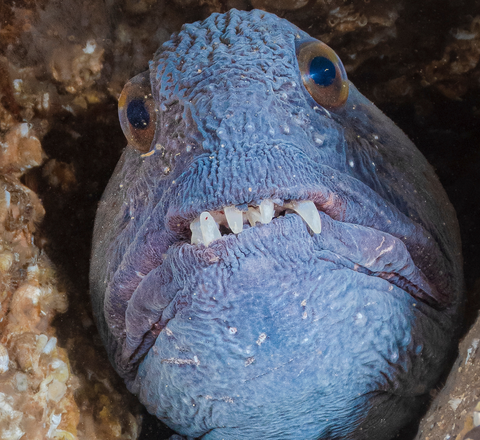
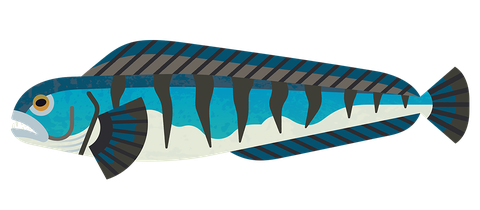
This large fish is typically light grey in colour and has large canines that protrude from their mouths and allow them to crush the food they eat.
Where can they be found?
Found in the cold waters of the Northern Atlantic. In the UK, they can be found in the North Sea and the waters surrounding the British Isles. Usually found in deep waters (100-300m) but young may be found in shallower 10-30m depths.
Did you know... The wolffish loses its teeth, growing new ones each year, typically after the breeding season.
Key facts
Despite their appearance, the Atlantic wolffish is shy and not aggressive to humans, but does become highly territorial during spawning season to protect eggs.
Solitary in nature, this fish can be found hiding behind rocks on the ocean floor in waters with temperatures ranging from -1 to 14 degrees Celsius. It produces antifreeze proteins that allow it to tolerate low temperatures.
The wolffish usually lives alone, except during mating season when they form bonded pairs. Unlike most fish, which release their reproductive cells into the water, wolffish must physically mate. The female lays 8,000 to 30,000 eggs in a bulky, compact ball. The male defends and ventilates them. When they hatch, the larvae are fully formed. They live for a short time in open water before dropping to the ocean floor to begin their life as adults
| IUCN status | Data Deficient |
|---|---|
| Length | Up to 150cm |
| Weight | Up to almost 20kg |
| Speed and distance | Generally sedentary, rarely moving far from their rocky homes. |
| Habitat | Deep water and rocky, broken ground with cracks and crevices to hide inside. |
| Diet | Molluscs, crustaceans and echinoderms (sea urchins and sea stars) |
| Lifespan | Up to 22 years |