Yarrell's blenny
Chirolophis ascanii
IUCN Status:Least Concern
Shy, well-camouflaged and charismatic, the Yarrell's blenny is a popular sight for divers.
What do they look like?
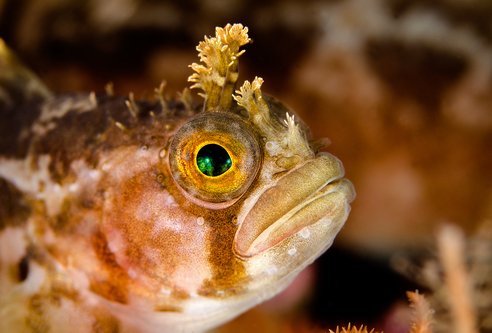
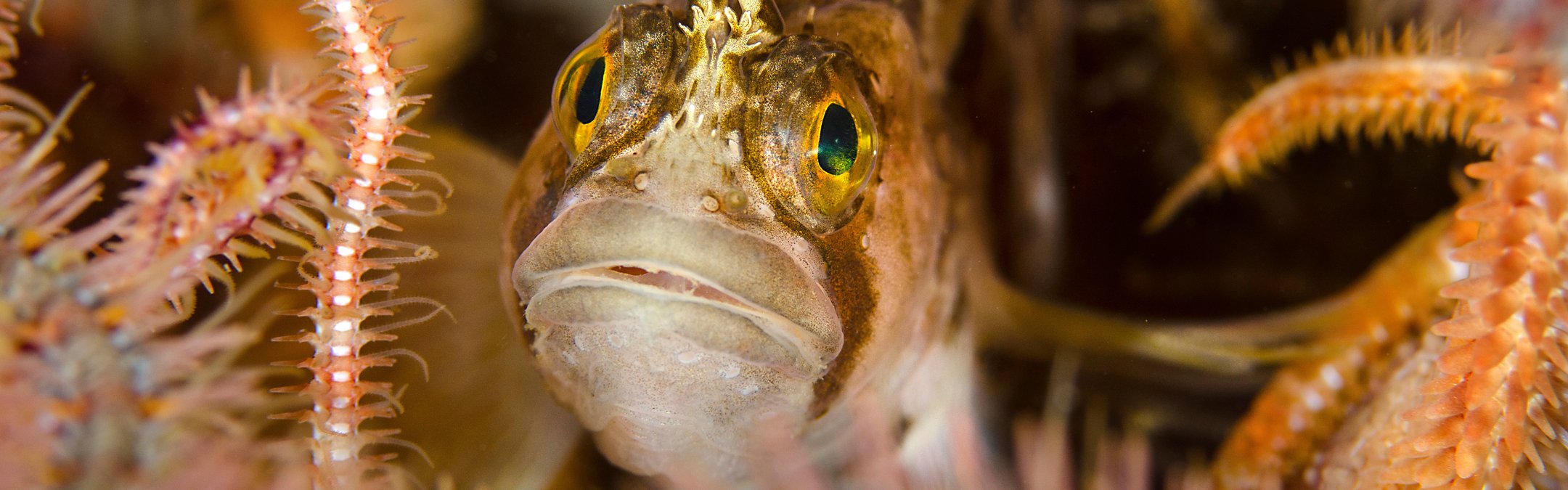
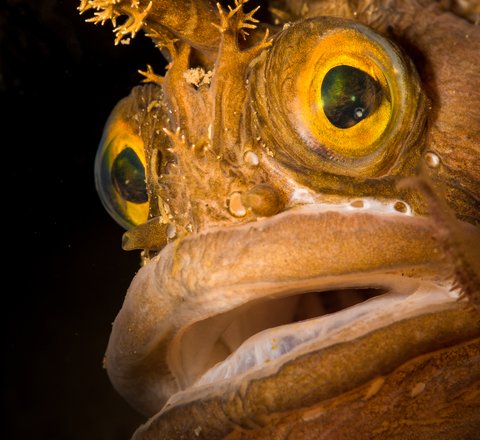
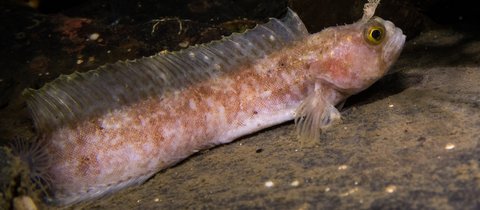
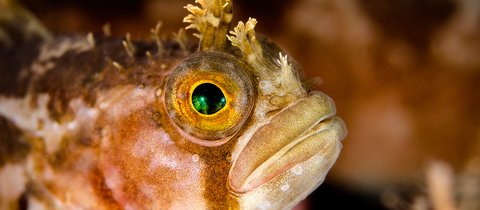
A slender, bottom‑dwelling fish recognised by its blunt snout, frog‑like mouth and the distinctive fringed tentacles above each eye. Its long dorsal fin runs almost the full length of the body, and its colouring ranges from bright red to brown, patterned with dark patches and bars. A characteristic dark ring surrounds the eye, continuing as a stripe down the cheek.
Where can they be found?
Usually found hiding among rock crevices and seaweed from around 20 m to over 200 m depth, this species is widespread around British and Irish coasts. They may be found living in shallow rocky shores and coralline‑algae rockpools, especially on exposed coasts. However they are more often spotted by divers than shore observers.
Did you know... Yarrell's blenny will often slowly nod their heads when they’re excited or defending territory.
Key facts
You can tell the difference between the Yarrell's and the tompot blenny in three key ways - the Yarrell's blenny is longer and more slender (eel-like), often duller in colour than the bright tompot, and has 'bushier' tentacles unlike the tompots' 'antler-like' appearance!
| Also known as | Atlantic warbonnet |
|---|---|
| IUCN status | Least Concern |
| Diet | Yarrell’s blennies are omnivores, but have a preference for small, crunchy seafloor creatures such as molluscs and shrimp. They’re opportunistic and will eat whatever they can pick off rocks, weed, or sand including worms and occasionally algae. |
| Size | Most adults grow to 12cm long making them medium sized compared to other species of blenny. |
| Weight | Approximately 10-20gs |
| Speed and distance | Like all blennies, Yarrell's blennies lack the buoyancy of a swim bladder and look more like they are wriggling than swimming. As territorial ambush feeders, Yarrell's blenny don’t need to swim for long distances, instead they make short, darting movements. They will spend most of their time guarding their hiding spots or looking for food. They usually dart to chase off intruders or catch unsuspecting prey. They won't leave their favourite spot for long though. |
| Lifespan | They can live between 3-5 years |