

Fishing methods explained
What does sustainability mean?
Today, over 90% of world fish stocks are fully or over-exploited from fishing. When we catch fish faster than they can reproduce, fishers can’t make a living and fish populations struggle to recover.
By choosing sustainable seafood, we can reduce pressure on wild fish populations and support local fishers and producers. It also encourages supermarkets and restaurants to demand sustainability measures from their suppliers, which in turn can reward fishers who use sustainable practices and encourage governments to improve management.
Below are some of the most common fishing methods that are used to catch the fish and shellfish on your plate. Each type of fishing activity can have completely different impacts, depending on where it’s happening and how well it’s regulated.
In all cases, we want to see better monitoring and reporting of fishing activity, especially where bycatch is an issue. We also want management plans for all species that fishers target, to stop too many fish or shellfish from being taken. We have a dedicated policy team working to achieve this. Read more about our policy positions and responses to public consultations.
The Good Fish Guide looks at all of these factors when deciding how sustainable fish and shellfish are.
Bottom-towed fishing
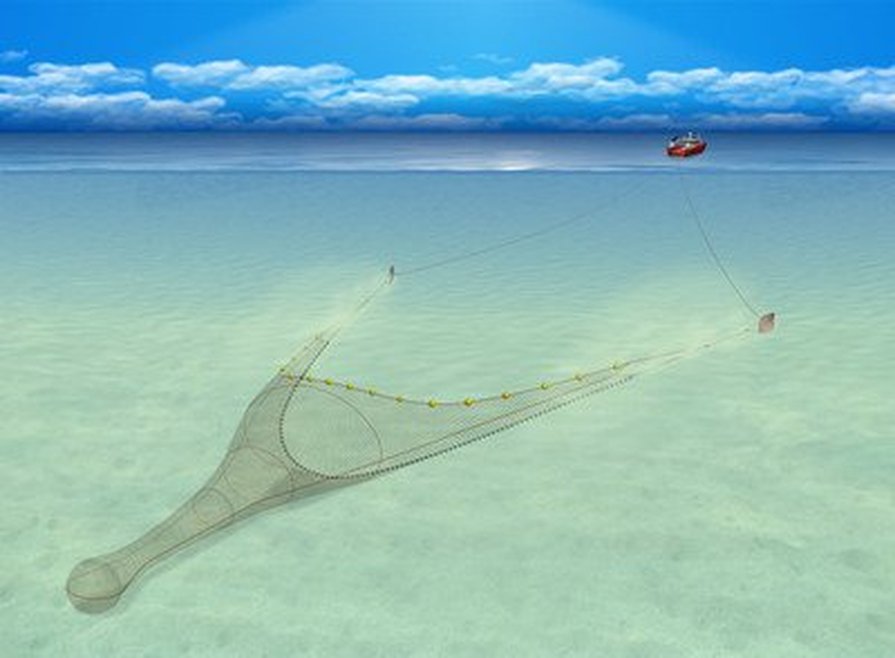
This is a term to describe all fishing gear that is pulled along the seabed. It’s also known as demersal fishing – demersal being the term that refers to the sea floor. It’s the most common way to catch fish in the UK. The main types are otter trawling, beam trawling and dredging.
Otter trawling
Otter trawling involves towing a net over the seabed. The net is held open by two panels, known as otter boards. Fish are herded between the boards and into the net, which is then hauled onto the boat.
Beam trawling
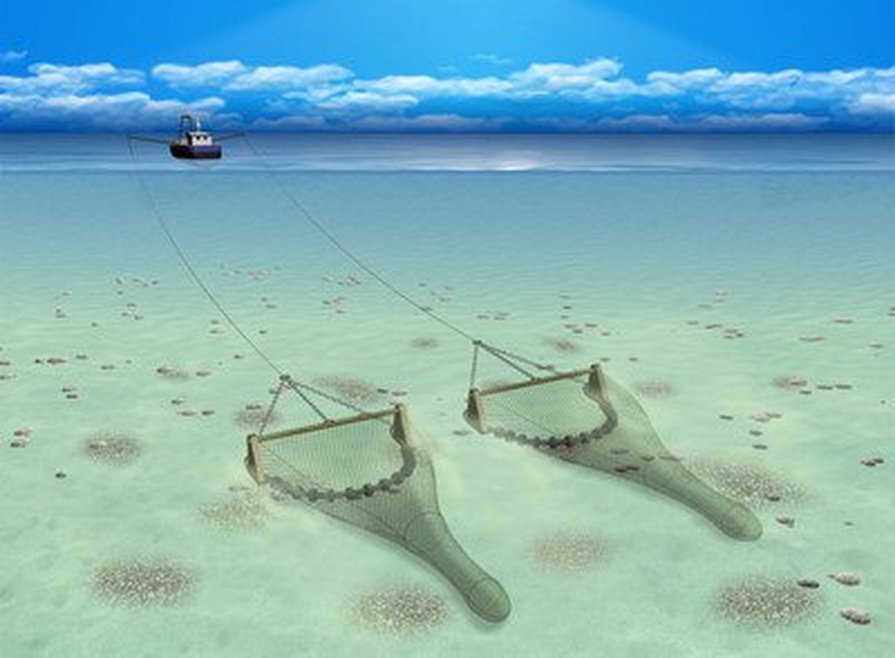
Beam trawling involves towing a net over the seabed. The net is held open by a heavy beam. There can be tickler chains or chain matting, which drag along the front of the net. They disturb the fish, causing them to swim up and into the net, which is then hauled onto the boat.
Dredging
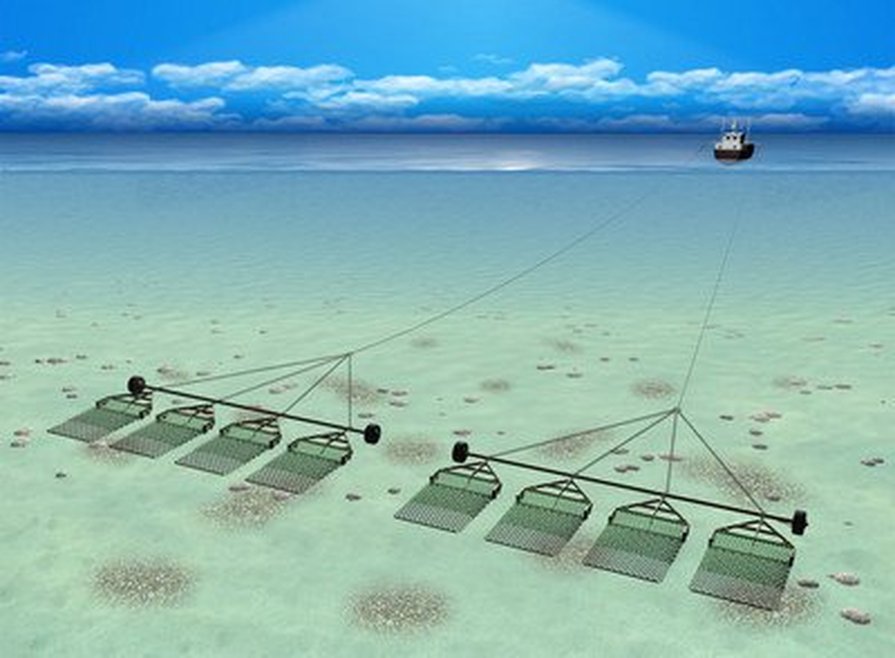
Dredging involves towing a heavy steel frame, attached to a chainmail bag, over the seabed. There may be teeth at the front to flip shellfish into the bag. Boats can tow up to 20 dredges at once, depending on how big and powerful the boat is.
Demersal seining
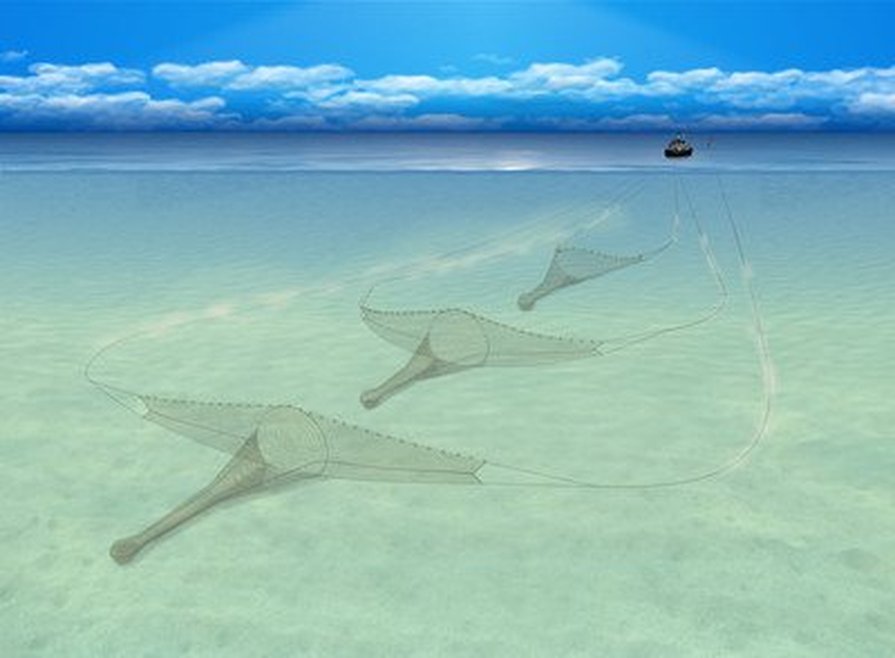
Demersal seining involves placing a net on the seabed and slowly closing it. As ropes move over the seabed to close the net, they herd fish into it. This method sometimes involves towing the net along the seabed. It is also known as flyshooting, Danish seining or Scottish seining, depending on how it's set up.
Impact
The main impact of these fishing gears is on seabed habitats. The level of impact is different depending on which fishing gear is used and where. Sandy seabed, for example, can recover very quickly whereas cold-water corals and maerl can take decades or centuries to recover. Demersal seining is the lightest gear and doesn’t dig into the seabed, whereas beam trawling and dredging are very heavy and can penetrate several centimetres, disturbing buried sea life as well as what’s on top of the seabed.
What we're working towards
We want to see better monitoring and reporting of all fishing activities, including bycatch. More data is needed to understand which habitats are affected and how, and urgent steps must be taken to prevent damage to vulnerable habitats.
In the UK, there are many Marine Protected Areas where seabed is supposed to be protected from damaging activities like bottom-towed fishing. Protections are missing in most of these sites, and UK governments need to do more to address this. We are campaigning on this right now.
Longline

Image credit: Seafish
What we're working towards
Better monitoring and reporting of bycatch is crucial. We also want to see steps taken to reduce impacts, such as using bird scarers, avoiding bait that attracts animals like turtles, and avoiding times or locations where these animals are most common.
Gillnets
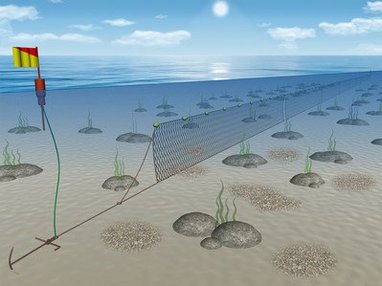
Image credit: Seafish
What we're working towards
Better monitoring and reporting of bycatch is crucial. We also want to see steps taken to reduce impacts, such as using ‘pingers’ that make a noise to deter animals from approaching the nets, avoiding fishing at times or in locations where these animals are most common, and reducing the amount of time that nets are left in the water.
In tuna, swordfish and marlin fisheries, gillnets can be up to 7 km long. The scale of bycatch is vast, so we consider all tuna, swordfish or marlin caught by gillnet to be unsustainable.
Mid-water fishing
This is where fishing gear is pulled through the water and doesn’t touch the seabed. It’s also known as pelagic fishing – pelagic being the term that refers to the mid-water zone.
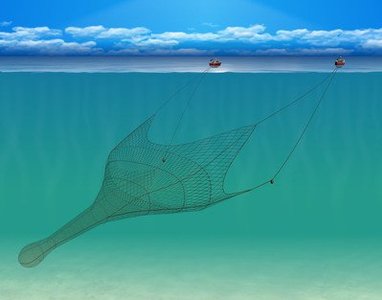
Image credit: Seafish
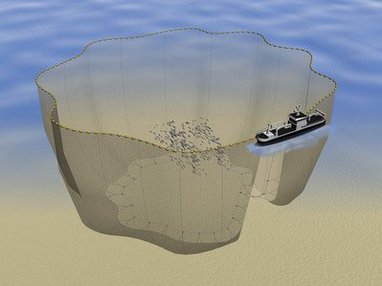
Image credit: Seafish
What we're working towards
We want to see better monitoring and reporting of bycatch. We also want to see steps taken to reduce impacts, such as avoiding times or locations where vulnerable animals are most likely to be encountered.
Pots, traps and creels
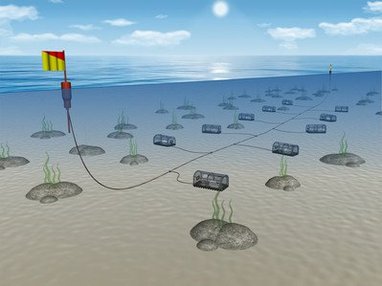
Image credit: Seafish
There are also concerns that unknown amounts of fish and shellfish are being used for bait – which could have impacts on the wild populations that provide the bait.
In many areas, potting can be unlimited. While it is a low impact method, if too many pots are being used in one small area, this could start to affect seabed habitats.
What are we working towards
We want to see better monitoring and reporting of entanglement, and more innovations such as rope-less pots to reduce the risks. We also want to see more monitoring and fishing controls for pots, to make sure we understand bait use and catches, and don’t have too many pots in one place.
Pole and line or handline
There are many types of fishing that involve using rods and lines in some form. They include handline, pole and line, and troll. These methods are also known as one-by-one fishing because the fish are landed onto the boat one at a time.
Handline
Handlining varies depending on where it is happening and what species is being targeted. In general, it uses a baited line from a stationary boat. The fisher pulls the line in by hand, rather than using rods or poles.
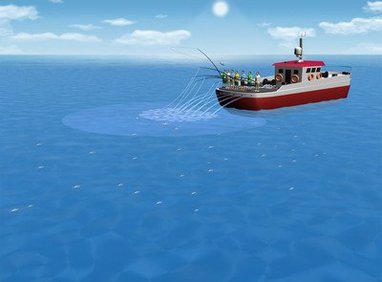
Image credit: Seafish
Impact
These are low-impact fishing methods because they don’t usually touch the seabed, and so don’t cause habitat damage. Often, it’s easy to make sure the right fish are being caught, and if other species are accidentally caught as bycatch, they can usually be released alive.
However, if bait is being used it’s important to know which species and how much, so that the wild populations of ‘bait fish’ are not adversely affected.
What we're working towards
We want to see better monitoring of all fishing activity to understand catch levels and bait use. We also want management plans for all species that fishers target, including bait fish, to stop too many fish or shellfish from being taken.
Hand-gathering
Hand-gathering involves collecting animals (usually shellfish) from the shore or the seabed by hand, one at a time. Hand diving may involve boats and scuba equipment.
Impact
This is one of the lowest impact ways of catching fish or shellfish because there are rarely any seabed impacts, and no bycatch. It is still important to control these activities. In some areas, hand gathering is so extensive that beaches have had to be closed to prevent too many shellfish from being taken.
What we're working towards
We want to see better monitoring and reporting of hand gathering, to make sure it isn’t taking too many fish or shellfish.
All of these impacts are considered when we look at seafood sustainability. Check out the Good Fish Guide to find out how sustainable your fish or shellfish is, and get recommendations for alternatives.
You might also be interested in...
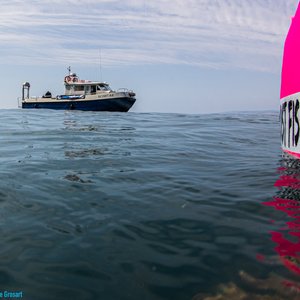
Why we focus on sustainable seafood
From why sustainable seafood is important to why as an environmental organisation we encourage people to eat fish, here we explain why we do what we do.
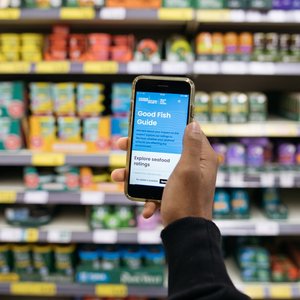
Seafood buying guides
Our top tips on eating sustainable seafood without breaking the bank.
Good Fish Guide
Worried about your impact on the ocean? Explore our ratings to discover whether your seafood choices are affecting the environment.

