

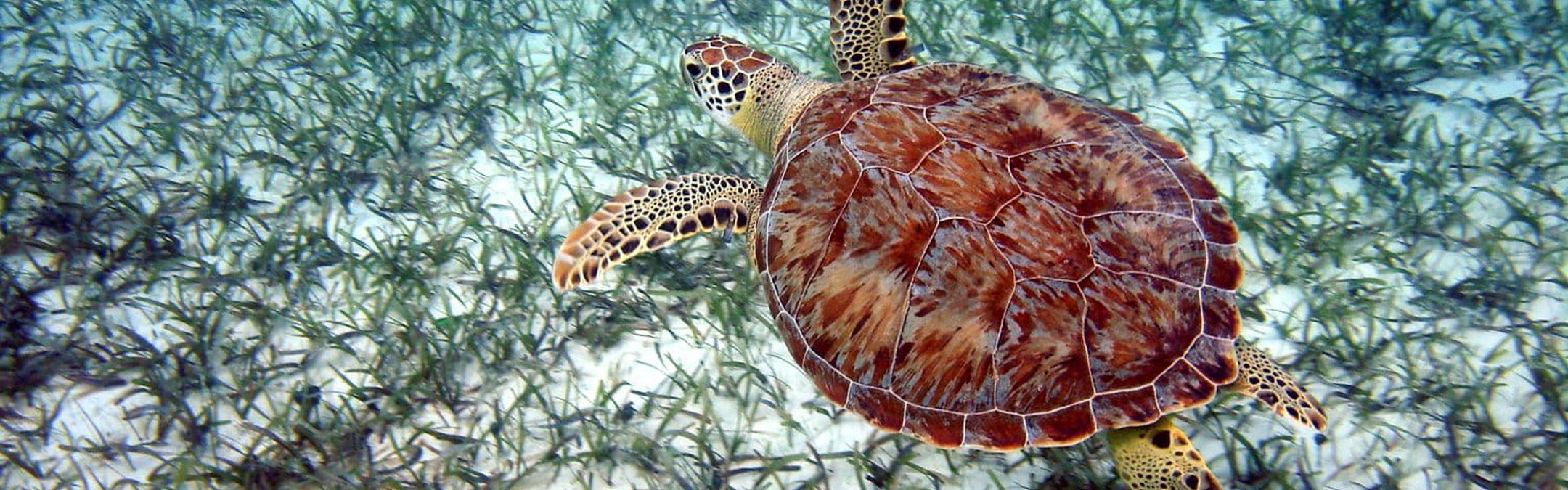
Protecting turtles
Threats to marine turtles
Decades of over-harvesting and exploitation have decimated marine turtle populations around the world. Other threats include:
- Incidental capture – turtles are often accidentally caught in fishing equipment such as long-line hooks or gill nets
- Habitat loss – industrial development and tourism can reduce the quality of feeding and and nesting grounds
- Climate change – turbulent weather, rising sea levels and increased temperatures are impacting turtle and their habitats
- Predation – while turtles have natural predators such as crabs, birds and sharks, introduced species such as feral pigs and dogs can take a great toll on turtle eggs and hatchings
- Pollution – turtles confuse plastic bags as their food source jellyfish, with many dying through ingesting this and other marine litter.
Conservation and restoration
The 14 UK Overseas Territories are a fascinating and diverse set of islands. Through various projects, we're supporting our UKOT partners in the protection and management of their fragile environments and species. Our projects in the British Virgin Islands, Turks and Caicos, and Montserrat work alongside local communities to develop management and conservation measures to ensure a future for these incredible species.
For over a decade, we've been working with communities to develop a shared appreciation and deeper understanding of the all the ways in which the ocean benefits them. We use the Community Voice Method to understand the values and views people have of turtles in the UK Overseas Territories which helps us shape management and conservation measures that work for everyone.
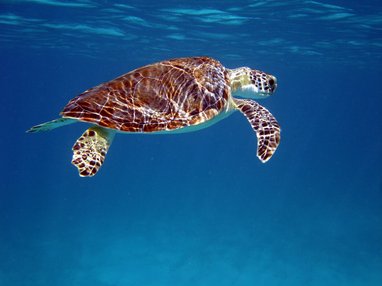
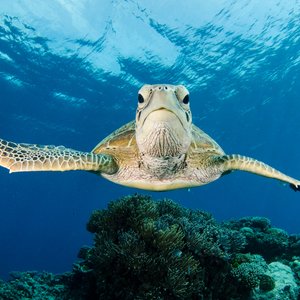
A green turtle | Image credit: Peter Richardson
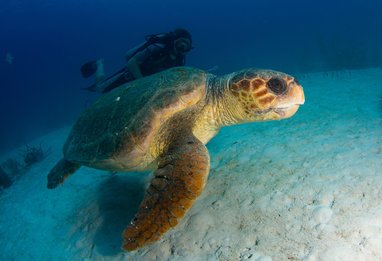
A loggerhead turtle swimming along the seabed | Image credit: Nat Taylor
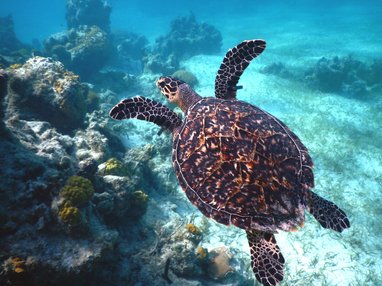
A hawksbill turtle swimming over a reef in the Caribbean UKOTs | Image credit: Peter Richardson
What you can do
Report a marine turtle sighting
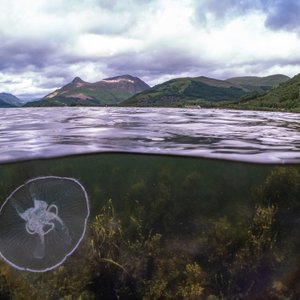
We want to hear about the wildlife you spot at the coast and at sea, especially marine turtles and jellyfish in UK and Irish waters.
Find out about turtles in the UK
Marine turtles have been around for millions of years and play a vital role in balancing marine ecosystems, especially controlling jellyfish numbers.

