

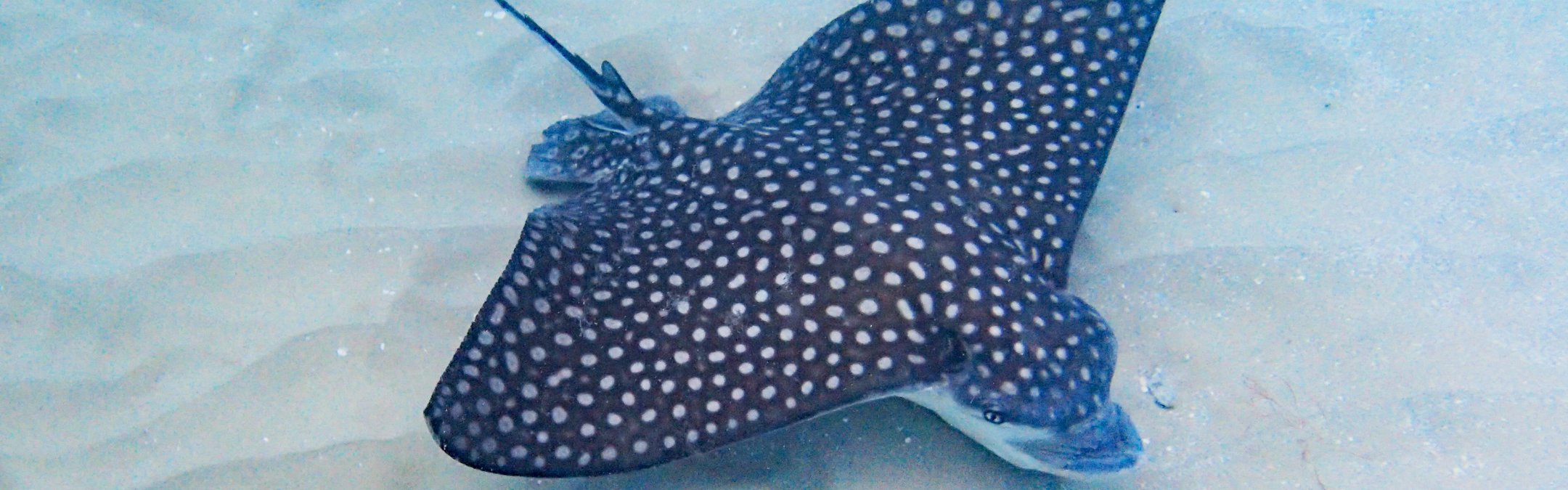
A spotted eagle ray

Sharks and rays in Anguilla
We’re working with communities and local partners in Anguilla to improve awareness and understanding of sharks, their role in local ecosystems and livelihoods, and how best to protect them.

    Anguilla as a whole

    Situated in the Eastern Caribbean, Anguilla consists of one main, low-lying, inhabited island, and 21 uninhabited, rocky islands and cays. It’s separated from another Caribbean UK Overseas Territory, the British Virgin Islands, by the 166km wide Anegada Passage.

    Anguillans have endured difficult times recently, experiencing two category five hurricanes that wrought catastrophic damage across the islands in 2017. The Covid pandemic then caused further damage to local livelihoods and the national economy of this tourist destination. However, Anguillans are resilient and the 15,000 or so people that call Anguilla home are on the road to recovery.

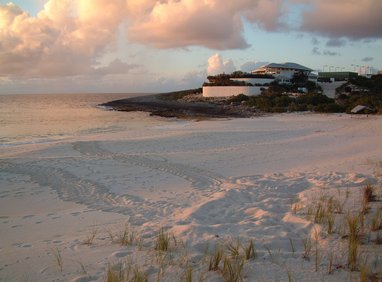
    A sandy beach in Anguilla

    Captain’s Bay in Anguilla, a turtle nesting beach.  |  Image credit: Peter Richardson
    Sharks and rays in Anguilla

    Anguilla’s stunning coasts and seas are home to majestic sharks and rays. However, little is known about which species are present, which marine areas they use or how well they’re doing.

    Sharks are used locally for subsistence fishing, and are also caught as bycatch. Fear of sharks and rays also hampers their public acceptance and conservation. With their ecological value as apex predators, more research is needed to better understand local shark and ray populations.

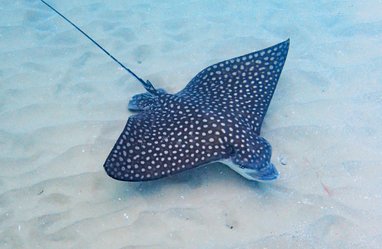
    A spotted eagle ray

    A spotted eagle ray found in Crocus Bay, Anguilla  |  Image credit: Peter Richardson

    It’s also important that the wider Anguillan society have the opportunity to openly discuss their opinions towards these species and their management, with a view to building evidence-based conservation that also reflects community needs.

    The Anguilla Shark Conservation (ASC) project
    The Anguilla Shark Conservation (ASC) project is a three-year, collaborative project funded by the UK Government’s Darwin Plus scheme. It focuses on understanding sharks better, and conserving sharks and their habitats. Working with local NGO the Anguilla National Trust (ANT), the Government of Anguilla, and the University of Exeter, it’s an exciting new partnership.

    What do we want to find out?

    We know very little about shark and ray populations in Anguilla’s waters.

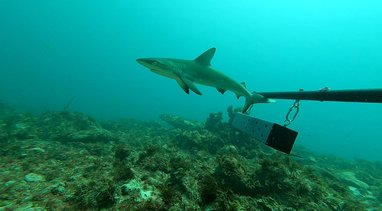
    Using cutting-edge biological research methods, including the deployment of Baited Remote Underwater Video (BRUVs) cameras across Anguilla’s marine environment, the project team seeks to learn more about local shark populations and record the species present, their demographics, population sizes and distribution in Anguilla’s waters.

    Juvenile caribbean reef shark. a baited remote underwater video system can be seen to the right.

    A juvenile caribbean reef shark. Reef sharks are often seen patrolling Anguilla’s reefs and wrecks  |  Image credit: ASC

    We also know little about the nature and value of shark and ray fishing in Anguilla. This project will work with the local community to find out more about these fisheries and their sustainability.
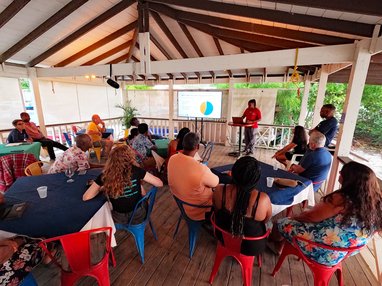
    Our Community Voice Method has involved extensive consultation with people around Anguilla, taking account of, views, values, perceptions and local knowledge about sharks and rays.

    What's our main aim?

    To develop a Shark Research Action Plan. Together with our local partners, we'll combine all of our early evidence to create a research plan that helps us understand Anguilla's shark and ray populations, as well as their key habitats and how best to manage and protect them. We've made sure the plan has plenty of community input and considers local cultural values.

    A CVM workshop in Sandy Ground  |  Image credit: Peter Richardson

    Using the Community Voice Method
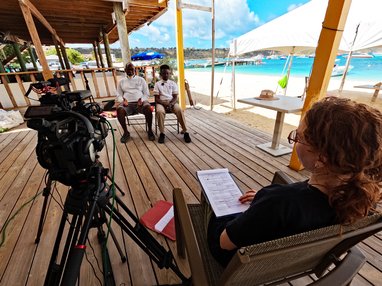
    Throughout the CVM process, the Trust and Fisheries Unit have been invaluable local partners, helping us connect with the community. We interviewed on film a variety of stakeholders including fisherfolk, restaurant owners, dive operators, students, educators, and members of government to ensure our Community Voice Method film is as representative as we could make it.

    After producing the film from an analysis of the filmed interview data, we then ran a series of community workshops in Anguilla where we screened the film. The film stimulated plenty of debate when we asked the workshop participants for their views on what additional data and research is needed to effectively manage Anguilla’s sharks and rays.

    A man and child are sitting on chairs with a camera pointing at them

    Marine Conservation Society staff interviewing locals  |  Image credit: Peter Richardson

    The team is using all the project data to draft the research action plan, and seeking funding to gather more biological and social science data to inform a future shark and ray conservation and management plan.

    Find out more about our UKOTs projects

    Dive in
