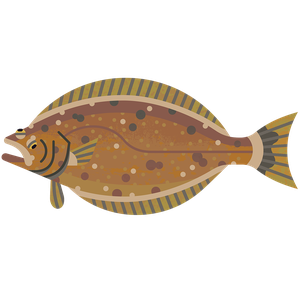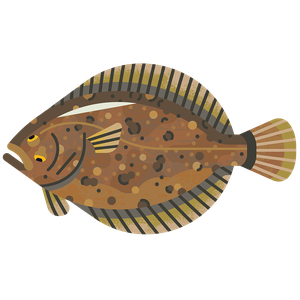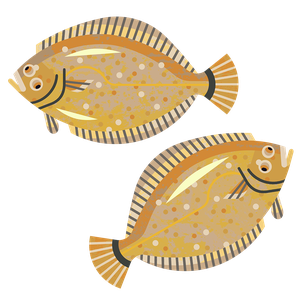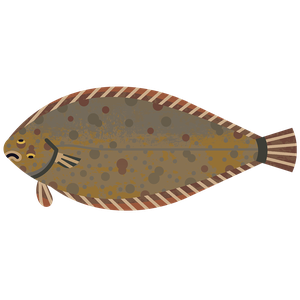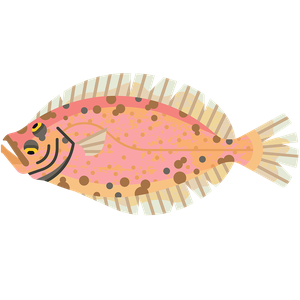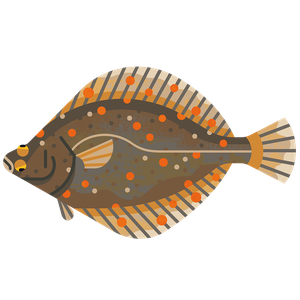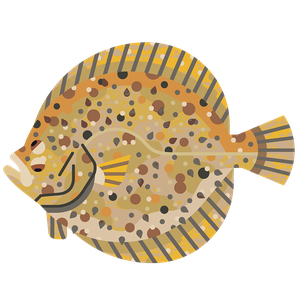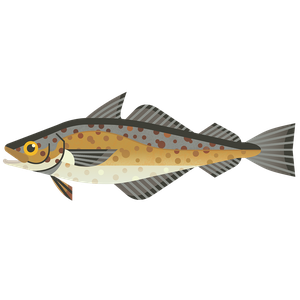

Red mullet
Mullus surmuletus
What to check for
Location
North Sea, Eastern English Channel and Skagerrak and Kattegat (Northern Area): All areas
Technical location
27 - Atlantic, Northeast, 7d: English Channel (East), 4: North Sea, 3a: Skagerrak and Kattegat
Caught by
Bottom trawl (otter)
Rating summary
Striped red mullet in this region are not subject to overfishing and are not being overfished. Few appropriate management measures are in place. The main concern in this fishery is that catches have been consistently higher than scientific recommendations. Some stripped red mullet are caught by otter trawls. Otter trawlers interact with the seabed and can modify bottom topography and cause damage and removal of some biogenic features including vulnerable marine habitats and benthic communities.Rating last updated January 2026.
How we worked out this Rating
Stock status
The size and health of a fish population, or 'stock', that is being targeted by fishermen is a crucial indicator of whether a fishery is sustainable. If the stock is too small to withstand fishing, it is at risk of crashing. We look at how big the stock is, and how much pressure there is from fishing, to assess this. The target level that many fisheries aim for is 'Maximum Sustainable Yield' - the most fish that can be caught year after year whilst keeping the population at a healthy size.
Striped red mullet in this region are not subject to overfishing and are not being overfished.Stock assessments are carried out annually by the International Council for the Exploration of the Sea (ICES). The most recent stock assessment was published in 2025 using data up to 2024. The next assessment is expected in 2027.The stock assessment defines reference points for fishing pressure (F) and biomass (B). For fishing pressure, there is a target to keep F at or below Maximum Sustainable Yield (MSY). For biomass, there is no target. However, there is a trigger point (MSY Itrigger). Below this level, F should be reduced to allow the stock to increase.The stock size indicator shows considerable fluctuation over the time series but has remained above the maximum sustainable yield trigger point (MSY Itrigger = 107.27 kg/km²) since 2017. In 2024, stock biomass declined to 266.48 kg/km², down from 447.93 kg/km² in 2023 and 280.46 kg/km² in 2022, but still remained above significantly above MSY Itrigger. Therefore, the stock is currently not subject to overfishing.Fishing pressure (F) has remained slightly above the Maximum Sustainable Yield target (FMSY proxy = 1) since 2019, but below 1.1 FMSY, and has generally been at or close to FMSY since the early 2000s. In 2024, fishing pressure was estimated at 1.035, a decrease from 1.056 in 2023 and 1.072 in 2022. Overall, fishing pressure remains slightly above target levels, though the stock is not considered to be overfished.ICES advises that when the MSY approach is applied, catches should be no more than 1,932 tonnes in each of the years 2026 and 2027. All catches are assumed to be landed. This is a 2.7% decrease in advice from the previous years.
Management
Good management is vital to be sure that fishing doesn't cause fish populations to decline. We look at whether regulations follow the best available scientific advice, how well compliance is monitored and enforced, and whether this is effective in maintaining healthy fish stocks.
Few appropriate management measures are in place. The main concern in this fishery is that catches have been consistently higher than scientific recommendations.The EU multiannual plan (MAP) for stocks in the North Sea and adjacent waters applies to bycatches of this stock. It aims to ensure that stocks are exploited sustainably and that the decisions on fishing opportunities are based on the most up-to-date scientific information. UK and Norway have not requested ICES to provide advice based on the EU MAP.Striped red mullet is not managed through a Total Allowable Catch (TAC) or quota system, and catches have consistently exceeded scientific advice since 2012, with the exception of 2013. Between 2014 and 2019, average catches were around 473% above recommended levels. Although this gap narrowed in recent years, to 48% and 102% above advice in 2022 and 2023 respectively, catches remain too high. In 2024, reported landings reached 3,289 tonnes, 66% above the advised level of 1,985 tonnes, indicating that management measures continue not follow scientific recommendations.There is no minimum landing size for striped red mullet, and small fish are commonly landed, with recent catches dominated by ages 0 and 1. The species begins maturing at age 1 but is not fully mature until around age 3. Therefore, the stock would benefit from technical measures such as larger mesh sizes, sorting grids, and spatial or temporal closures to reduce catches of juveniles and improve yield stability. Some protection exists in within some Inshore Fisheries Conservation Authorities (IFCA) districts. A 15 cm Minimum Conservation Reference Size applies in the Southern, Cornwall and North Western IFCAs, although sexual maturity typically occurs at approximately 16.9 cm for females and 16.2cm for males.Discards are assumed negligible.The EU and UK both have fishery management measures, which can include catch limits, population targets, and gear restrictions. However, compliance in the EU and UK has been inconsistent, with ongoing challenges in implementing some regulations. The goal of reaching Maximum Sustainable Yield (MSY) by 2020 was missed, with less than half of UK TACs in 2024 following ICES advice. In 2024, the EU and UK reaffirmed their commitment to sustainable fisheries by aligning management with scientific advice to gradually approach MSY. However, no new target date has been set for achieving MSY across all fisheries. The Landing Obligation (LO), an EU law retained by the UK post-Brexit, requires all quota fish to be landed, even if unwanted (over-quota or below minimum size). It aims to encourage more selective fishing methods, reduce bycatch, and improve catch reporting. However, compliance is poor, and accurate discard levels are hard to quantify with current monitoring programmes. The UK is in the process of replacing the LO with country-specific Catching Policies.The Marine Conservation Society views Remote Electronic Monitoring (REM) with cameras is one of the most cost-effective tools for providing reliable fisheries data and aiding informed management decisions. Fully monitored fisheries enhance collaboration, data accuracy, stock recovery, and reduce impacts on marine wildlife and habitats. However, the full potential of REM may only be achieved when it tracks fishing location and documents catch and bycatch, particularly where vulnerable species and habitats are at risk. As of January 2024, the EU is introducing a Remote Electronic Monitoring (REM) mandate for EU vessels, including CCTV cameras on vessels 18m or more that pose a potential risk of non-compliance, within the next 4 years. Across the UK, different approaches to REM are being taken and legislation is expected to be in place across all 4 countries within the next few years.The Fisheries Act (2020) requires the development of Fisheries Management Plans (FMPs) (replacing EU Multi-Annual Plans) in the UK. 43 FMPs have been proposed and are at various stages of development and implementation, these should all be published by the end of 2028. FMPs have the potential to be very important tools for managing UK fisheries, although data limitations may delay them for some stocks. It is also essential the UK governments define and adopt a standardised approach or model across the four nations to a universally defined FMP design, to ensure the consistence, quality and coherence of all the proposal FMPs.The Marine Conservation Society is keen to see publicly available Fishery Management Plans for all commercially exploited stocks, especially where stocks are depleted, that include:An overview of the fishery including current stock status, spatial coverage, current fishing methods and impactsTargets for fishing pressure and biomass, and additional management when those targets are not being met, based on the best scientific evidenceTimeframes for stock recoveryImproved data collection, transparency, and accountability, supported by technologies such as Remote Electronic Monitoring (REM)Consideration of wider environmental impacts of the fishery, including habitat impacts and minimising bycatchStakeholder engagementA Southern North Sea non-quota demersal FMP has been proposed, coordinated by DEFRA that incorporates this stock. At the time of writing, it is too soon to know whether proposed management measures will be effective in managing the stock. For more information about this FMP and expected progress and timelines, see [https://www.gov.uk/government/collections/fisheries-management-plans#published-fmps].
Capture method
Environmental impacts of fishing vary hugely, depending on the method used and where it's happening. We look at whether the fishing gear being used could have an effect on seabed habitats, and if so, how severe might this be. We also review whether it catches any other species by accident (bycatch), and what effect this might have on those species - especially if they're Endangered, Threatened, or Protected.
Some stripped red mullet are caught by otter trawls. Otter trawls interact with the seabed and can modify bottom topography and cause damage and removal of some biogenic features including vulnerable marine habitats and benthic communities.Some striped red mullet are caught by otter trawl. In 2024, 22% were caught by otter trawl, 74% by demersal seine, and 3.5% by other gears, such as gill nets. Young fish are distributed in coastal areas, while adults have a more offshore distribution.Most bottom trawler landing are from targeted fisheries using a mesh size of 70-99 mm in the eastern English Channel and in the south of the North Sea. These areas are also fished by trawlers of various types with stripped red mullet likely being caught as bycatch.Demersal trawling disturbs the seabed by penetrating sediments and abrading habitat features, with the extent of impact depending on where and how intensively trawling occurs. Habitats that naturally experience disturbance from tides and waves tend to be more resilient, while areas not typically exposed to mobile bottom‑towed gears are generally more sensitive.In the North Sea, the impacts of bottom trawling vary across fishing grounds. Fishing grounds for stripped red mullet are predominantly sandy and therefore less vulnerable to trawling compared to more sensitive features such as reefs or seagrass beds. Data from 2022 indicate that trawling occurred across approximately 70% of the seabed area at depths of 0-200 m and around 27% at depths of 200-800 m. Fishing effort in the region has roughly halved since 2002, largely due to reductions in trawl fisheries, reducing pressure on seabed habitats and bycatch species. However, concerns remain about the impacts of trawling on vulnerable habitats, including sea pen communities.Demersal otter trawls also have the potential to generate relatively high levels of bycatch. In the Northeast Atlantic, reported bycatch includes demersal elasmobranchs and endangered, protected and threatened (EPT) species such as sharks, rays and marine mammals. However, bycatch data are limited in many UK and EU fisheries due to low levels of observer coverage, making the full extent of these impacts difficult to assess.The main mitigation measures are Marine Protected Areas, some of which are designated for benthic features. If those MPAs were found to be subjected to bottom trawling, the Marine Conservation Society would consider it a default red rating unless there is evidence (e.g., environmental impact assessment) indicating the activity does not damage the integrity of the site.UK regulations to reduce the impacts of fishing on marine habitats and wider species are under development, in the meantime most EU regulation have been adopted. Under EU legislation, bycatch species should be managed within scientifically defined or, where data isn’t available, suitability precautionary sustainable exploration limits. If stocks fall below a certain threshold, measures can be brought in such as gear limitations (e.g., mesh size or depth of use), time and/or areas closures, and Minimum Conservation Reference Sizes (MCRS).
References
Angling Trust, 2026. Minimum Conservation Reference Sizes. Available at: https://anglingtrust.net/minimum-conservation-reference-sizes-mcrss/ [Accessed on 22.01.2026].
Cornwall IFCA, 2025. Cornwall IFCA byelaws, other regulations and codes of practise: Specified fish sizes (as amended). Available at: https://www.cornwall-ifca.gov.uk/Byelaws_Regulations [Accessed on 22.01.2026].
Eigaard OR, Bastardie F, Breen M, Dinesen GE, Hintzen NT, Laffargue P, et al. 2016. Estimating seabed pressure from demersal trawls, seines, and dredges based on gear design and dimensions. ICES J Mar Sci, 73(suppl_1):i27–43.
Hiddink JG, Jennings S, Sciberras M, Szostek CL, Hughes KM, Ellis N, et al. 2017. Global analysis of depletion and Recovery of seabed biota after bottom trawling disturbance. Proc Natl Acad Sci, 114(31):8301–6.
ICES, 2024. Greater North Sea ecoregion – Ecosystem overview. In Report of the ICES Advisory Committee, 2024. ICES Advice 2024, Section 7.1, Available at: https://doi.org/10.17895/ices.advice.25714239 [Accessed on 22.01.2026].
ICES, 2025. Greater North Sea ecoregion – Fisheries overview In Report of the ICES Advisory Committee, 2025. ICES Advice 2025, section 9.2. Available at: https://doi.org/10.17895/ices.advice.30710897 [Accessed on 22.01.2026].
ICES, 2025. Striped red mullet (Mullus surmuletus) in Subarea 4 and divisions 7.d and 3.a (North Sea, eastern English Channel, Skagerrak and Kattegat). In Report of the ICES Advisory Committee, 2025. ICES Advice 2025, mur.27.3a47d. Available at: https://doi.org/10.17895/ices.advice.27202704 [Accessed on 22.01.2026].
ICES, 2025. Working Group on the Assessment of Demersal Stocks in the North Sea and Skagerrak (WGNSSK). ICES Scientific Reports. Available at: https://doi.org/10.17895/ices.pub.29085995 [Accessed on 22.01.2026].
ICES, 2025. Striped red mullet (Mullus surmuletus) in Subarea 4 and divisions 7.d and 3.a (North Sea, eastern English Channel, Skagerrak and Kattegat). ICES Stock Annexes. 39 pp. Available at:https://doi.org/10.17895/ices.pub.29356481 [Accessed on 22.01.2026].
Kennelly, S. J. & Broadhurst, M. K., 2021. A review of bycatch reduction in demersal fish trawls. Rev Fish Biol Fisheries 31, 289–318. https://doi.org/10.1007/s11160-021-09644-0
Kynoch, R., Fryer, R. & Neat, F., 2015. A simple technical measure to reduce bycatch and discard of skates and sharks in mixed-species bottom-trawl fisheries. ICES J Mar Sci,72(6):1861. https://doi.org/10.1093/icesjms/fsv037
Leaper, R., 2021. An evaluation of cetacean bycatch in UK fisheries: problems and solutions. Available at: https://uk.whales.org/wp-content/uploads/sites/6/2021/02/cetacean-bycatch-uk-fisheries-problems-solutions.pdf [Accessed on 22.01.2026].
Mahé, K., Coppin, F., Vaz, S. and Carpentier, A., 2013. Striped red mullet (Mullus surmuletus , Linnaeus, 1758) in the eastern English Channel and southern North Sea: growth and reproductive biology. Journal of Applied Ichthyology, 29(5), pp.1067–1072. doi:https://doi.org/10.1111/jai.12266.
Marine Conservation Society, 2025. MPA Reality Check. Available at: https://mpa-reality-check.org/[Accessed on 22.01.2026].
North Western IFCA, 2025. Minimum sizes. Available at: https://www.nw-ifca.gov.uk/minimum-sizes/ [Accessed on 22.01.2026].
Seafish, 2026. Demersal Trawl - General. Available at: https://www.seafish.org/responsible-sourcing/fishing-gear-database/gear/demersal-trawl-general/ [Accessed on 22.01.2026].
Silva, F., Ellis, J. & Catchpole, T., 2012. Species composition of skates (Rajidae) in commercial fisheries around the British Isles and their discarding patterns. J Fish Biol., 80:1678–1703. Available at: https://doi.org/10.1111/j.1095-8649.2012.03247.x
Southern IFCA , 2025. Minimum sizes. Available at: https://www.southern-ifca.gov.uk/da/164147 [Accessed on 22.01.2026].
van Denderen, P., Bolam, S., Hiddink, J., Jennings, S., Kenny, A., Rijnsdorp, A. and van Kooten, T., 2015. Similar effects of bottom trawling and natural disturbance on composition and function of benthic communities across habitats, 541, pp.31–43. Available at: doi:https://doi.org/10.3354/meps11550.
Sustainable swaps
Learn more about how we calculate our sustainability ratings.
How our ratings work
Add impact to your inbox
Join the movement: get updates on the issues you care about.
We'll email you inspiring stories about the work we're doing to save and recover our oceans, and news about our urgent campaigns for positive change.