
Jellyfish: Helpful hero, not stinging villain
2 minute read
Jellyfish often get bad press for their stinging sensibilities. But they’re actually remarkable creatures which not only benefit our seas, but the wider environment, too.
From helping to transfer carbon, to providing food and shelter for other fish and controlling fish populations – there’s so much more to jellyfish than their sting.
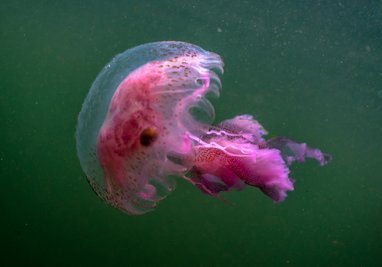
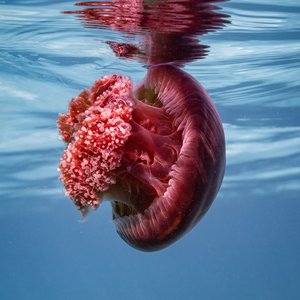
A mauve stinger jellyfish | Image credit: Peter Bardsley
Collections of jellyfish remains on the seabed are called ‘jellyfish falls’ and it’s estimated that one of these falls could deposit four times the amount of carbon that’s input to the sea annually.
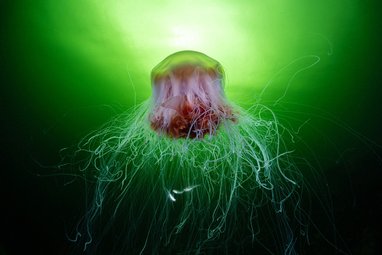
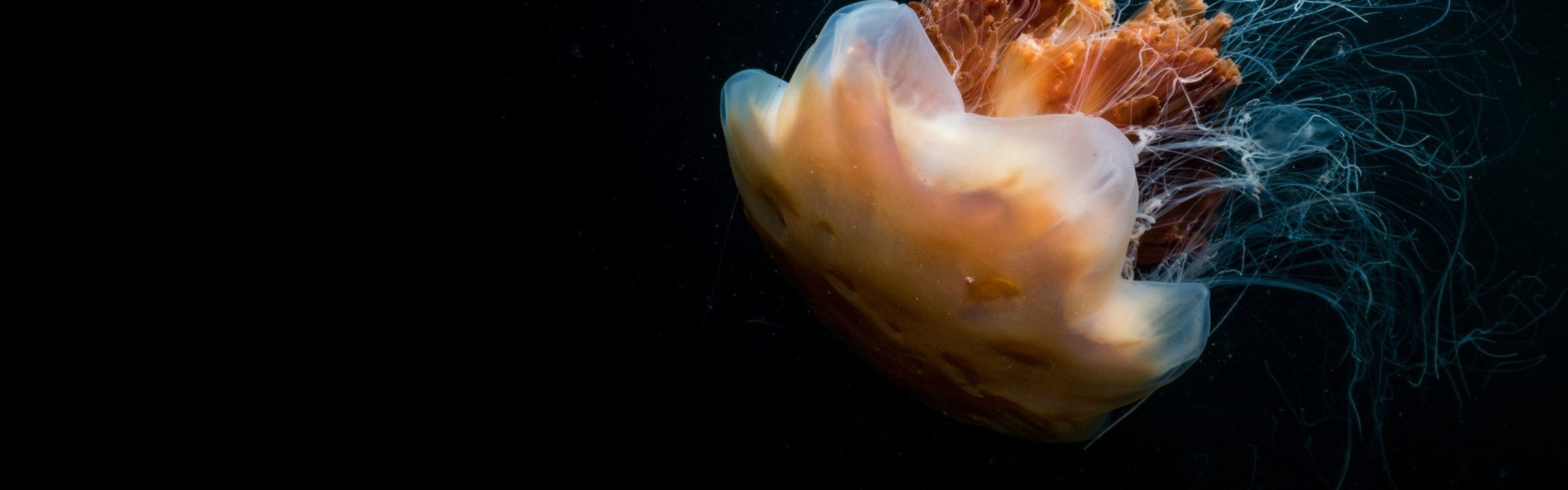
A lion's mane jellyfish spotted at Loch Leven, Scotland | Image credit: James Lynott
When an invasive species of jellyfish called Mnemiopsis entered the Black Sea and preyed on fish, it had a devastating impact on the fish populations and the Turkish fishing industry. But jellyfish later came to the rescue, when the Bereo species was introduced to the waters. Bereo prey on Mnemiopsis and almost nothing else – this meant the number of invasive jellies decreased, the number of fish increased once again, and the ecosystem was able to recover.
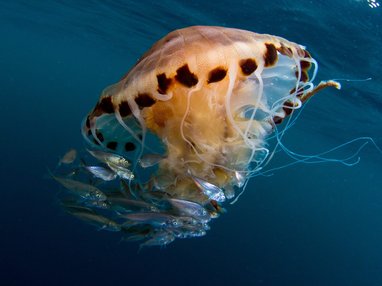
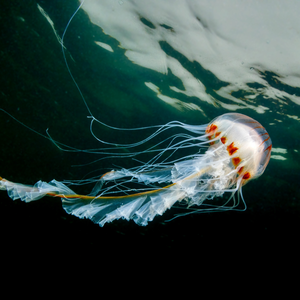
A compass jellyfish | Image credit: Mark Kirkland
Nutrient cycling
As they move through the sea, jellyfish displace water which helps with oceanic mixing. By swimming between different layers of water, they help to transport nutrients and other matter through the sea. These nutrients can be recycled and used by various marine organisms, before being released back into the ocean, where the cycle repeats.
Jellyfish release products such as mucus and faeces into the sea which bacteria use for respiration. This helps to cycle carbon between jellyfish, bacteria, and other marine organisms. It's estimated that between 3.7-6.8 billion tonnes of organic carbon can be traced back to jellies each year - a similar amount to the USA's annual carbon emissions.
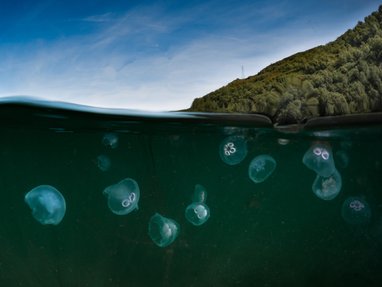
A bloom of moon jellyfish | Image credit: Mark Kirkland
Cultural
Jellyfish provide people with entertainment. They’re amazing creatures to watch, and many enjoy the relaxing, beautiful nature of jellyfish flowing through water at displays in zoos and aquariums.
Places like Jellyfish Lake in Palau - which has become one of the most popular snorkelling sites in the Pacific - rely on jellyfish to attract tourists, as people come from far and wide to see large populations in the water.
Recruiting volunteers to count jellyfish at beaches is a great way to encourage members of the public to take part and contribute to science. In 2021, over 1,500 jellyfish sightings were reported around the coast in the UK, providing us with important data to help understand where leatherback turtles might be feeding.
You can report your jellyfish sightings here and check out our ID guide to help you identify which species it is.
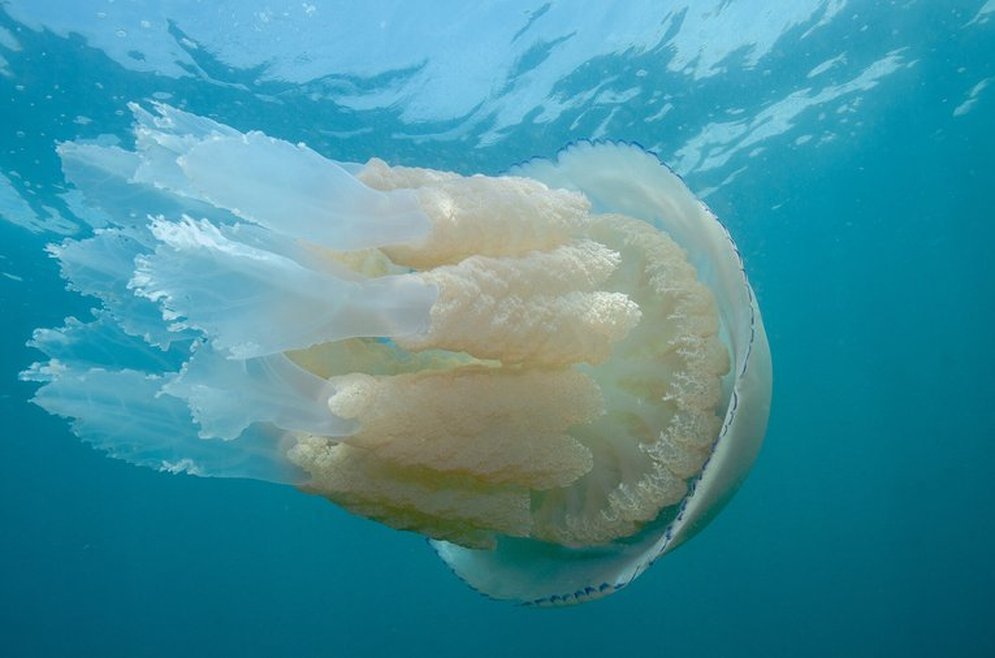
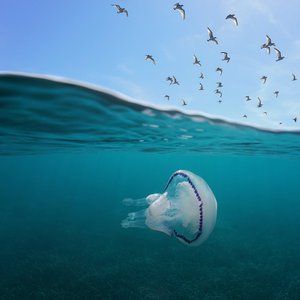
A barrel jellyfish
Image credit: Cathy Lewis
As you can see, jellyfish are fascinating creatures which provide a whole host of benefits to marine life, the wider environment and to us, too. They should be recognised for the helpful heroes that they are, not the stinging villains they’re made out to be.