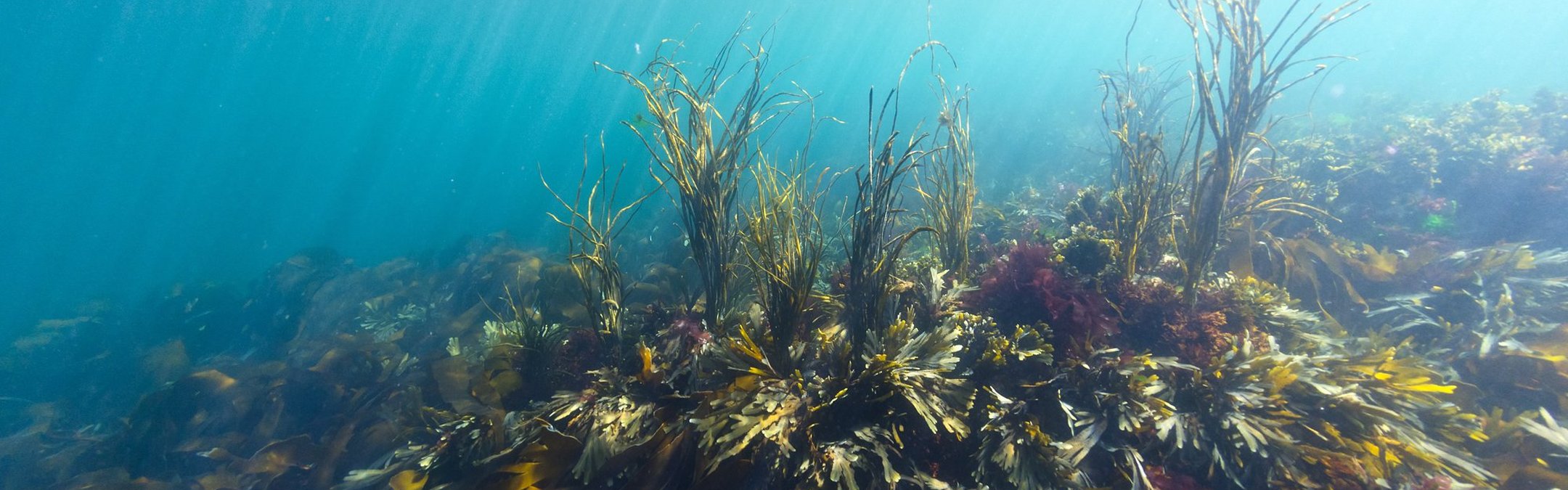
An underwater shot of seaweed

Amazing ocean (5-7)

With these resources your students will explore incredible underwater landscapes and the many creatures that live above and below the water's surface.

    1. From coast to ocean

    Our ocean plays a major role in the water cycle, provides oxygen, stores carbon, regulates the climate, reduces storm damage to coastal areas, provides food and is important for health and wellbeing.

    Explore how your school is connected to the ocean, wherever you are, and how we can all help look after it.

    1. From coast to ocean (ages 5-7) Lesson plan
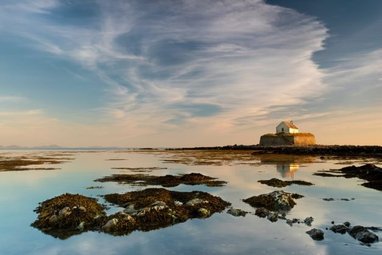
    This image shows St Cwyfan's Church, commonly known as the "Church in the Sea," located on the tiny island of Cribinau off the coast of Anglesey, Wales.

    St Cwyfan's Church, famously known as the "Church in the Sea," located on the island of Anglesey in North Wales.  |  Image credit: Neil Mark Thomas
    2. Ocean habitats

    Explore some of the fascinating marine habitats that can be found here in the UK, and discover the creatures that call them home.

    2. Ocean habitats (ages 5-7) Lesson plan
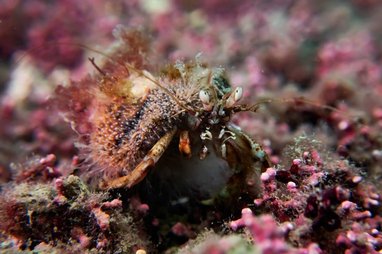
    A close-up of a hermit crab. It has a hairy, speckled appearance and prominent eyes on stalks. Its large right claw is visible at the front. The background consists of pink, red, and brown maerl coral agae.

    A hermit crab on maerl  |  Image credit: Georgie Bull
    3. Super seagrass

    Seagrass is the only flowering plant in the ocean, and is found in calm, shallow, sunlit coastal waters around the world. Seagrass beds are an important habitat for many species as well as being an important carbon storing habitat.

    Use this lesson to learn more about these superhero habitats and why we must look after them.

    3. Super seagrass (ages 5-7) Lesson plan
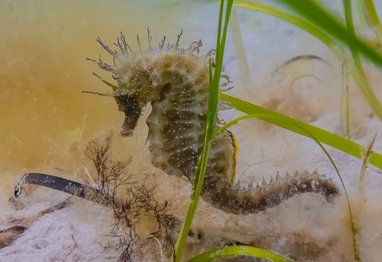
    A close up of a yellowish brown seahorse. A blade of seagrass is in front of it

    A spiny seahorse, which is one of two seahorse species found in UK waters.  |  Image credit: Georgie Bull
    4. What is a food chain?

    All plants and animals need energy from their food to live. A food chain shows this transfer of energy, or who eats who. Within an ecosystem, there are many food chains interlinked to create a food web.

    This lesson will take a deeper dive into the interconnection between species and the importance of ecosystem health.

    4. What is a food chain? (ages 5-7) Lesson plan
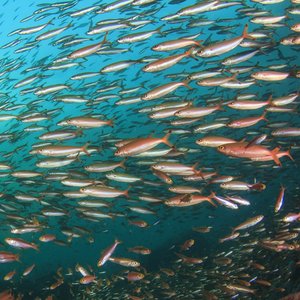
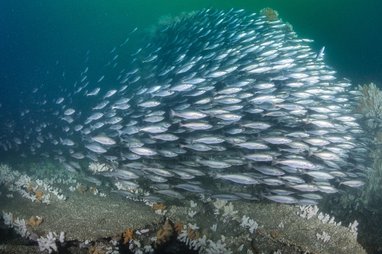
    A large school of silver fish known as coley swimming together. Below them is a reef

    Coley shoal at Glanmire, Scotland  |  Image credit: Kirsty Andrews
    5. Grouping animals

    Animals are grouped according to their physical and behavioural characteristics. Vertebrates are animals with a backbone and invertebrates have no backbone. Within each broad group, there are sub-groups or classes.

    This lesson focuses on the characteristics and features of marine mammals, amphibians, fish, birds and reptiles.

    5. Grouping animals (ages 5-7) Lesson plan
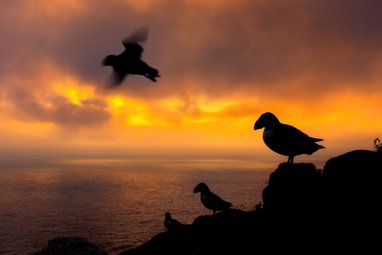
    Silhouettes of 4 puffins on a cliff edge. They are overlooking an orange sunset with the ocean behind them. One of the puffins is flying towards the left.

    Silhouettes of 4 puffins on a cliff edge.  |  Image credit: Kevin Morgans
    6. Ocean lifecycles

    UK coastal waters are home to a wide range of marine habitats and species. This lesson focuses on how marine animals grow, their life cycle and how seagrass beds act as a nursery habitat.

    Download our Seagrass Image Reel

    6. Ocean lifecycles (ages 5-7) Lesson plan
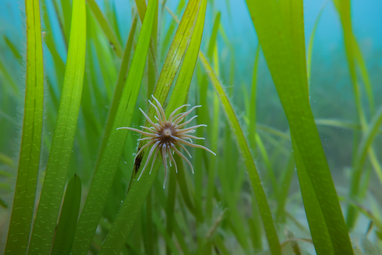
    A star-shaped snakelocks anemone can be seen in seagrass. It is quite alien-like, with a dark centre and over a dozen tendrils swaying.

    Snakelocks anemone on seagrass  |  Image credit: Georgie Bull
    7. Rockpool explorer (outside)

    Rockpools are mini ecosystems - for a few hours each day they are cut off from the sea, providing a safe haven for creatures while the tide is out. Every rock, crevice and clump of seaweed is important to the anemones, crabs, shrimps and small fish that live there.

    Download the Rockpool Image Reel

    This session includes a rockpooling trip - if you can’t access the beach, use the following lesson, Rockpool Explorer (Inside).


    7. Rockpool explorer (outside) (ages 5-7) Lesson plan
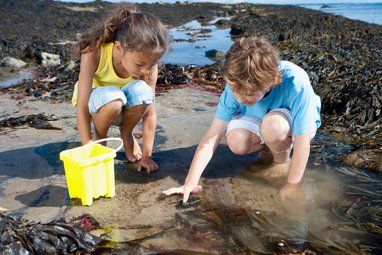
    2 children engaging in an educational coastal activity known as rock pooling. The gil has a yellow bucket next to her.

    Children exploring a rockpool.  |  Image credit: Air Images
    8. Rockpool explorer (inside)

    Rockpools are mini ecosystems - for a few hours each day they are cut off from the sea, providing a safe haven for creatures while the tide is out. Every rock, crevice and clump of seaweed is important to the anemones, crabs, shrimps and small fish that live there.

    Download the Rockpool Image Reel

    This is a classroom-based lesson - if you can access the beach, you could use our lesson Rockpool Explorer (Outside) instead.


    8. Rockpool explorer (inside) (ages 5-7) Lesson plan
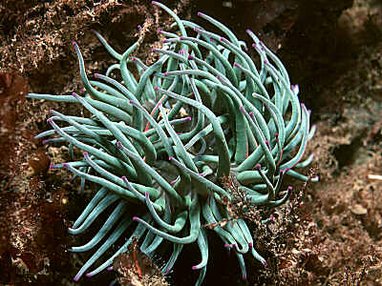
    Snakelocks Anemone, commonly found in the eastern Atlantic Ocean and Mediterranean Sea.

    Snakelocks anemone, commonly found in the eastern Atlantic Ocean and Mediterranean Sea.  |  Image credit: Fiona Crouch
    9. Life in the deep

    More is known about the moon than about life in the deep ocean. The deepest part of the ocean, the Mariana Trench, is 11,000m deep. If Mount Everest were to be placed in the trench, it would still sit 1-2 miles below the surface of the water.

    This lesson will introduce students to the challenging conditions animals face in the deep, and look at some of the fascinating adaptions they've made to survive.

    Download the Life in the deep Image Reel

    9. Life in the deep (ages 5-7) Lesson plan
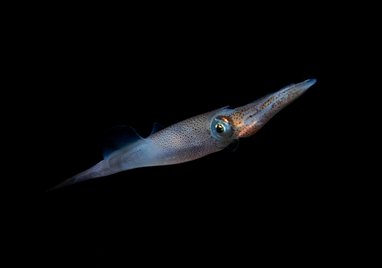
    A close up of a squid. It is almost completely translucent. The background is completely black.

    Night dive squid at Hive Beach, Burton Bradstock, Dorset  |  Image credit: Georgie Bull
    10. Stupendous sharks

    Sharks have been around for millions of years, but today they are in serious decline with many shark species under threat of extinction. Sharks are at the top of the food chain in virtually every location they’re found. Their body shape and structure, scales and teeth are all perfectly adapted to being apex predators. 

    We're lucky to have 40 species of shark visiting our UK seas - this lesson will explore some of these species and the threats they face.

    Download the Sharks Image Reel

    10. Stupendous sharks (ages 5-7) Lesson plan
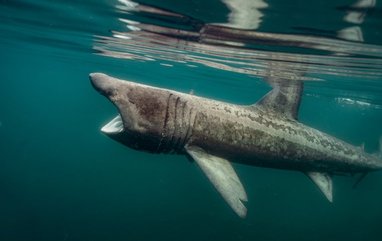
    Basking Shark (Cetorhinus maximus), which is identified as the largest fish in British seas and the second-largest fish in the world.

    A basking shark  |  Image credit: Peter Bardsley
    Check out the wildlife A-Z

    Learn about our amazing local species

    Check out other ocean topics for 5-7 year olds